
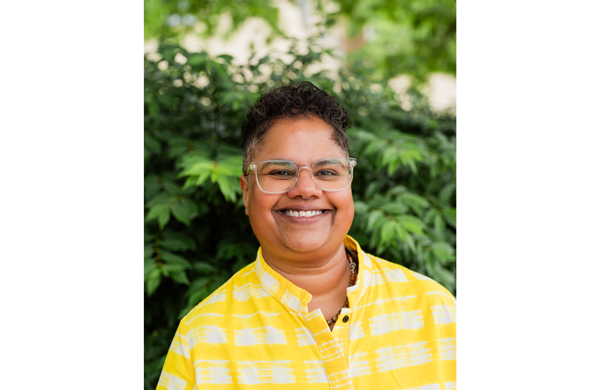
Gissele: [00:00:00] Hello and welcome to The Loving Compassion Podcast with Gissele. We believe that love and compassion have the power to heal our lives and our world. Don’t forget to like and subscribe for more amazing content. Today
Gissele: we’re talking about coming back together after estrangement, and I have my good friend, Iona Sky, who is a globally recognized social worker, consultant, and educator whose work is rooted in compassion and systemic change. For over two decades, they’ve helped organizations transform policies and cultures through equity, inclusion and accessibility strategies.
Gissele: Iona inspires leaders and students alike to see compassion, not just as a value, but as a powerful tool for justice. Please join me in welcoming my good friend. Hi Iona.
Iona: Hi Gissele. Thank you for having me here.
Gissele: Oh, you to be a part
Iona: of this.
Gissele: Thank you for being on the show and I’m so grateful to be able to chat with you.
Gissele: I mean, you and I have worked together for many years in the field of child welfare and [00:01:00] we did as we were talking off camera, we did some transformative work around the voices of children and the voices of families and how to work in more empathetic and compassionate ways. You were talking a little bit in your story about estrangement that happened between yourself and your parents, ’cause you’re part of the LBTQ community .
Gissele: I was wondering if you could share a little bit about Helped you make the decision to come back together
Iona: Mm-hmm. Thank you for that question. When people see me and my my mother now, my dad passed nine years ago you know, I think they would, they would be very surprised to hear perhaps that, we did not have any contact for seven years and that that was purely based on, who I am as a person, my sexual orientation, and what my parents’ journey in understanding and what their story was.
Iona: So seven [00:02:00] years of no contact and I got married, my partner had a son, all of these things. And it was actually at my brother’s engagement party. When I was invited, I went by myself and I saw my parents and from across the room after seven years and I looked at them and I, wow.
Iona: And I. I remember looking at them and seeing how they had aged in seven years. And in my heart, I was sad that I didn’t get to be a part of that experience. And I thought to myself, I miss them and I don’t wanna continue in this way. And so I went and gave them a hug and said Hi. And then I went and sat with my sister, and, we didn’t really talk, I don’t [00:03:00] think much that day.
Iona: And then it was a series of really slow steps my brother’s wedding. Slowly starting to communicate via email. And then because my parents they weren’t living in Canada at that time for for periods of time. And so I decided to go and see them and spend some time back home after I separated from my ex-wife because I needed to go back home and just get rooted again.
Iona: Mm. And, and I remember being very nervous. ’cause I’m like, whew, okay, how’s this gonna go? Right? Yeah. ’cause not only have I not seen them, you know, I haven’t been home for a long time. And I saw them at the airport and it was like old times. you know, my family,
Iona: We don’t talk about emotions, [00:04:00] we don’t talk about this kind of stuff, right? Mm-hmm. And, but we show, so for me it’s been learning especially with my son, talk about emotions, those kinds of things. We show us reactions, right? And so, you know, through cooking, through care, through those kinds of things.
Iona: And so that’s how I knew we were slowly rebuilding that relationship. And it takes time, right? And it also takes navigation of of your own boundaries also. And what’s healthy and what’s not, right? How much time, how much space will help you maintain that healthiness, you know?
Iona: Mm-hmm. Because I had to have boundaries as well with how much time do I go and spend, because in the beginning it was just me. And so I had to still, you know, dichotomize my life and not talk about my life. And it was only, in the past few years you know where my mom has gotten to know my [00:05:00] partner, my son, where I can live my full life with my family.
Iona: I can say this, that
Iona: the one thing we cannot stop in our life is time. We can’t stop time, we can’t get it back, you know, and if I would have time with my father on this earth, I would’ve perhaps had some more conversations with him. But it’s okay, because I have it with him on the other side.
Gissele: Hmm.
Iona: And that’s, sometimes no matter what you believe in, however, what, whoever, whatever, if you believe in anything, trying to find your peace, right.
Iona: Your peace through a compassionate way. And, it’s an ongoing journey, so, right. Like, I’m not arrived, you know, I would love to see I’ve arrived but it continues to be small steps. Right.
Gissele: Yeah. Thank you for sharing that. So in order for you to get to the point where you could invite even just the [00:06:00] reconciliation, was there a level of forgiveness that needed to happen for yourself and for your parents?
Iona: Mm-hmm. I think for both. You know, I think for both. Because once again, we both have our stories, right? Mm-hmm. And I’m sure that my parents were hurt profoundly, and that’s their journey. I don’t own their hurt, right?
Iona: Mm-hmm. Yeah. ’cause that’s their journey of their lost hopes, their lost dreams, their whatever it is, right? And for me, I’ve reframed it. I tried to reframe it for them. It’s not lost, it’s just different. Just looks different. Just looks different than what you imagine. I live a full life with a loving partner, a beautiful son, a beautiful home with my two dogs.
Iona: when you think about those things, right, like what parents dream about a success, right? To have a good family, a good life. I have those things.
Iona: I just wanna say that forgiveness is an ongoing journey [00:07:00] because also. what I’ve realized about my brain is that my brain has been traumatized by significant events in my life, right? And the disowning was a significant event in my life. And so there are things that I don’t remember or that come to me as I get older.
Iona: And so in the sense that forgiveness is an ongoing journey, and I’m sure that it is from my parents as well.
Gissele: Hmm. Yeah. Yeah. Thank you. in order for you to be able to have some sort of reconciliation, you had to deal with your internalized homophobia.
Gissele: Can you talk a little bit about that and that journey?
Iona: Mm-hmm. Mm-hmm. Absolutely. So my parents are from India. I identified as a outgoing, I’m from Gowa.
Iona: I give that context, right, because India was colonized. I grew up, in a family but strong Catholic [00:08:00] faith. I grew up not seeing any images.
Iona: Or any representation of L-G-B-T-Q identities. Mm-hmm. we didn’t really talk about, you know, being gay, being queer, being lesbian, and the only times that we did it was in a way that was derogatory and, if there were people who we thought might be part of the community, it was always like people spoke negatively about them.
Iona: Right. Yeah. and also back home, it’s illegal. And so mm-hmm. To me, you know, like it’s against the law. And so I grew up with a strong sense that it’s not okay to be gay, and also there’s no, no words in our language, in Conquer for the word gay, lesbian, like, you know?
Gissele: Hmm.
Iona: And so I had no exposure and so, it’s that whole, cliche, I always knew I was different kind of thing. Yeah. But not recognizing, what that might be. And so when I came to Canada and started in [00:09:00] university to be exposed to different communities and identities and, you know, it can be such a formative time for folks and for me it was also being exposed to different people and that I had never been exposed to and starting to understand myself in different ways.
Iona: And I had huge internalized struggles learning that growing up, thinking, oh my God, being gay was bad. To now going, oh my God, I think I’m gay. And then going, oh my God, what is that going to mean? Like, am I gonna lose people? Like, am I gonna be in trouble? what’s wrong with me?
Iona: And I also saw people in the queer community and university, but they were all white. Mm-hmm. so as I was working through my internalized homophobia, you know, I tried to find space in the queer community, which was predominantly white.
Iona: So then I [00:10:00] had to experience racism.
Gissele: Yeah.
Iona: And it was that living in liminal spaces, right. Not really belonging in either space and so I had really had to process through, you know, and for me, I’m the kind of person who I have to feed my brain before I feed my heart
Gissele: Mm-hmm.
Iona: And so for, for me, it helped me to learn about, the history of sexual orientations and gender identity in my culture’s pre colonization. And how we were welcomed, you know, we’ve existed from time immemorial.
Gissele: Mm-hmm.
Iona: And it’s only colonization that’s come and hap and said, okay, no, it has to be male and female, this and that and that, and all of that.
Iona: Right. And so it was the finding some roots. Mm-hmm. Finding community, but you know, you take the best. With All right. Yeah,
Gissele: yeah, yeah.
Iona: [00:11:00] And but have I arrived, Gissele, once again, it’s my own ideal. I, I question my own internalized racism, homophobia internalized ableism every day, right?
Iona: It’s an ongoing process.
Gissele: It’s interesting how in, in colonization, all the fundamental things that make us caring human beings sort of got eliminated. living in communities generosity, equality, empathy you know, and compassion acceptance, inclusion, all of those things.
Gissele: Sort of like, it’s almost like we divorced from ourselves, right? We became so separate from who we really are in ourselvesthat led to the propagation of colonization, which is. Really, really interesting. And I think now we’re in the process as humanity to come back to ourselves and to each other.
Gissele: Because when I think about, we don’t live in community anymore. our communities are like our nuclear family, if you may. But when you think about caregiving, in [00:12:00] the olden times when we lived in sort of like villages, there was the grandparents and the kids and the grandparents usually took care of the kids, which makes them younger.
Gissele: And then the older people would do lots of different things. And so, and we sort of lost that connection. We’ve sort of created all this space between us
Iona: Yeah.
Gissele: our communities were so small, I don’t think that, that kinda separation would’ve been possible.
Iona: Exactly. Exactly. And that is just it Gissele, we have become so separate because that is part of colonization with. Tied to capitalism, right. And it is about, mm-hmm. Yeah.
Iona: it’s about creating classes of income. It’s about who can achieve I grew up in a collectivist culture, you know, my humanity is tied in yours to self, you know, and that is what drives everything that I do. And I will offer a reframe that it was olden times in here, but in other parts in the world, it still exists.
Iona: Right? And so how do we bring [00:13:00] this community of compassionate care together in a new way, right? Because you’re right, like. I just returned from Nunavut, you know, and from Ranking Inlet and Cambridge Bay. And, you know, you can see the sense of community there, the sense of caring there, the sense of connection.
Iona: And then it is, it is rooted in their values. it is not only. Because of who they are, but it was the necessity. Yeah. Necessity that they had to care, led to be together. Right. Because of the land. Mm-hmm. And the landscape. And, and so what I would love to see is for
Iona: for us to find that urgency of necessity to be together and to care, care for one another.
Gissele: Mm-hmm. ‘
Iona: cause until we find that necessity where your humanity is tied up [00:14:00] into mine, we’ll just continue on with this dominance. Right.
Iona: With the same, the same tyranny of time that I talked about a little bit earlier on in a different meeting.
Gissele: Yeah.
Iona: Which pulls that compassion away from us.
Gissele: Mm-hmm. Yeah, and we can’t be in survival mode and be in compassion. We can’t be in fear being in love. It makes it really, really difficult. And so, you know, I always think of the colonizer.
Gissele: I’m like, what must their life have been like that they needed that, that they felt like they didn’t have enough? So it’s always more and more and more and more like, having to fill that empty hole, right? With more money, with more things and more materials and more land. it just, it’s never enough.
Gissele: But I find when you’re trying to fill it with stuff that doesn’t fit there, it’s just, it’s a pit, it’s a never ending filling.
Iona: Yeah. Absolutely. Yeah. I know. I’ve often wondered that too, right? I would love to go back in time and listen to their stories.
Gissele: Right. And try to understand.
Gissele: Yeah. And you [00:15:00] mentioned listening to stories, and I think for me, curiosity is the stepping stone to compassion, right? I’m trying to understand your story and so the more I listen to you, the more I understand. and, you know, I’m a big lover of Louise Hay, which is like, everybody’s doing the best they can with the understanding, knowledge and awareness that they have at the time they have.
Gissele: Yeah. Right. For some people, their story makes sense to them, even if it’s just a justification, right?
Iona: Yeah, absolutely. And, you know, what you have just said on is the essence of where I am at this point in my life, I truly believe that people do the best that they can at the point in their life with the resources that they have, just as my parents did, you know, just as I did.
Iona: Just as I do. Yeah. As I say to my son, I’m an imperfect person, you know, and please have patience with me as I have patience with you. Right.
Gissele: Yeah. and it’s amazing Like, I wasn’t taught that parents could be [00:16:00] questioned. Right? And so for me to be able to be honest with my children and say, I’m not always gonna get it right.
Gissele: I don’t always know what I’m doing. Please forgive me. I’m sorry that I hurt you. It’s such a like, departure from my parents, right? Because there’s a lot of denial and there’s a lot of oh, this isn’t true, it hasn’t happened. And so to be able to actually do that for our children I can’t remember where I heard it, but this is sort of like these generations are the ones that are re-parenting themselves and at the same time trying to parent the next generation.
Gissele: And that’s how I feel. I relate to that to have to address all my fears, my limitations, my thinking, my trauma, my biases, so that it stops with me and it doesn’t get transferred to my children and their children’s children and so on. And so. The willingness to be able to do that even so it’s difficult, it’s necessary.
Iona: Yeah, absolutely. That I felt that in my heart, Gissele because
Gissele: mm-hmm.
Iona: Yeah. I really feel like I’m trying to reparent [00:17:00] myself and do things differently so that certain things end with me and don’t get passed to my boy. You know? I want lots of good things to get passed to my boy.
Gissele: Yeah, yeah, for sure.
Iona: But not the difficult trauma, the impacts of those, Things. And also the intergenerational stuff. Right. And that’s the compassion I think we can have for our ancestors as well. Because, I stand before you and sit before you as a representation of those who came before me, just as you do with you.
Iona: Right. And so how can we carry on that? That torch and those values that, you know, that we’re sharing today and moving it forward. Because I think, you know, I think the world needs a little bit more compassion and love and light and
Gissele: empathy.
Iona: Empathy.
Gissele: Yeah, definitely. I was thinking about, as you were talking about how I’ve had to really shift my perspective on my [00:18:00] ancestors.
Gissele: I was very mad at my ancestors. ’cause there was a lot of trauma passed down. There was a lot of like neglect, there was a lot of abuse, there was a lot of poverty. There was so many different things. And so I think when I was younger there was an aspect of me of like, why couldn’t you get their, your HIT together?
Gissele: Yeah. So that my parents weren’t so traumatized when they raised me. Now I have a different perspective it’s interesting once I sat down with my dad and he was telling me the history of all the things that they went through and they managed to survive. They managed to survive the war.
Gissele: They managed to survive poverty. They managed to survive deep, deep trauma. And so it gave me a new perspective around how can I have appreciation for their strengths? How can I acknowledge the strength they gave me? How can I acknowledge the resiliency they gave me? How can I acknowledge all of the history in a way that comes from a place of gratitude rather than from a place of judgment?
Iona: Yeah.
Gissele: Yeah. And so, and I, and as I go through my own journey of healing my own trauma and doing all of that, I see how difficult. It is, I [00:19:00] see how, how dynamic it can be and feel and how much courage it, it even took I mean, when you’re in the middle of the war, you’re not thinking, I really gotta deal with my trauma.
Gissele: You’re just, you’re just coping. You gotta live right. I you gotta live. so I’m so proud of my ancestors for having survived so much and for everything that got me here. Right? Yeah. But I, I didn’t always feel that way.
Iona: Yeah. and that’s humble of you to say Gissele, right?
Iona: and I think that that’s part of also our development and our growth is people, right? Is how do we come to understand it. Because yeah, like there were times I was angry too and you know, I come to see that they. They have all done their own healing work in their own ways. Right.
Iona: Whatever that is, which has cumulatively helped me reach this point where I can sit in this room in Canada, have this conversation with you. Yeah. It was unimaginable to me as [00:20:00] a child in Bahrain. So, you know, I thank you for this opportunity. So,
yeah.
Iona: You know
Gissele: for sure. And I’m, I’m so grateful that you were here.
Gissele: I wanted to go back to you had said that, you had to go through your own process of dealing with your internalized homophobia. What things really helped you to be able to do that for yourself?
Iona: Well, the first thing is finding a community was huge. So finding resources, finding support, because once again, there’s nothing like being with people who are, in the same situation, you know? And finding somebody to help you process things through.
Iona: So of whether it’s a counselor, whether it’s your I mom, or whether it’s your, whoever it is, you know somebody who is knowledgeable in dealing and helping people to process through, their [00:21:00] internalized homophobia. I’ve had people who did it well and people who did not. Mm-hmm. So I’ve learned from both.
Iona: And also now we are in the time and the space, Gissele, we have so much access to information. Right. Like, I was out in the nineties, like in the nineties, we didn’t have Google, we didn’t have podcasts, we didn’t have, or
Gissele: TikTok Yeah.
Iona: Or TikTok or those things connects millions and millions of
Gissele: people.
Iona: Yeah. Or those kinds of things. Right. So there are lots of resources out there. Find ones though that feed your soul. And now, there is also representation from folks in the L-G-B-T-Q-Q community from different identities, you know, who are racialized, who are, when you think about intersectionality of, of identities.
Iona: And I think that that is, was also a really huge thing for me, which I did not. Experiences people with a good understanding of intersectionality and how all the different parts of [00:22:00] me impact my experience of homophobia and internalized homophobia. And so, you know, finding resources that speak to you as a person.
Gissele: Can you just tell my audience what intersectionality is for some of them that we’re not gonna know what that means?
Iona: Yeah. Great. So intersectionality is a term that was coined by Dr. Kimberly Crenshaw, and it is used to describe how intersecting forms of oppression impact on people.
Iona: So when I say intersecting forms of oppression, so if you look at me, I experience on an average day, when I go out in the world, I can experience racism because of the color of my skin. I can experience homophobia because of my sexual orientation. I can experience transphobia because of how I dress and present in the world and my gender identity.
Iona: I can also experience ableism because I live [00:23:00] with different forms of invisible disabilities. So when you take all of those things together. They, they don’t work in silos because I say when I enter the room, I’m not just Brown Iona or, you know queer Iona. I’m Iona in all of the pieces that I am. So intersectionality is how all of those forms of isms work together and impact on people.
Iona: And so when I think about, supports for people who, might be coming out, might be experiencing their own internalized homophobia the first thing I want to say to you, to the people who are out there who might be listening is that you are beautiful and perfect just the way you are.
Gissele: Yes.
Iona: And that you know, you belong in this world, in society exactly how you are and [00:24:00] that you are worthy of love, of safety, of joy, and to live a life where you not just survive, but where you thrive. And there’s a resurgence of a lot of homophobia, a lot of transphobia.
Iona: I was just saying to my partner the other day, you know, I can’t believe I’m still fighting over the same fight and protests like 25 years later about people who are protesting the existence of our lives. You know? And so so to be mindful of what you also expose yourself to with social media mm-hmm.
Iona: Because it does impact on your brain and your wellbeing. And to find your places and your pockets of safety and hope find your communities because they’re out there.
Gissele: Hmm. Oh, thank you. That was wonderful. You know, it’s interesting [00:25:00] that. The world is so vast and people’s perspectives are so different, right?
Gissele: That there’s still people who think it’s a choice. And I remember our mutual friend that, you know, he would tell me like, why would I choose this? Why would I choose to not belong? it would be just so easy for me to make this choice versus this other choice. And so it’s not anything that I would be choosing because I don’t wanna choose to be different.
Gissele: Everybody wants to belong, right? That’s just our RN innate nature . But you know, from my perspective, God source universe never makes a mistake. And so we are all perfect, we’re all beautiful. We may make choices that are maybe not so loving sometimes, but we always have the ability to come back to our true selves, which is from my perspective, our original most compassionate selves.
Gissele: But yeah, it’s interesting. and I don’t know if I’ve shared this with you, I’ve heard the best reasoning behind. Homophobia and all, actually all isms.
Iona: Oh, okay. Tell me, tell me.
Gissele: So it’s from have you heard of the comedian?
Iona: Oh yeah. [00:26:00]
Gissele: Yes. they then had said in an interview and I loved it.
Gissele: they were talking about the acceptance of trans people. And they mentioned the fact that the reason why some people struggle with that is because they, them are being the most authentically themselves.
Gissele: And in a world where we don’t like authenticity, where we’re so terrified of it, when we’re not allowed to be our authentic self,
Iona: it’s
Gissele: threatening. It’s threatening to see people being authentically themselves. ’cause then do we have them to be authentic ourselves and it shines a light on us when we are not being authentically ourselves.
Gissele: It took a while for me to figure out where I was being authentic and where I wasn’t Like how many things did I think I had to have, like the marriage and the specific job and the specific income and the specific car and the type of house and all of that stuff.
Gissele: How much was it something that I was conditioned to accept as something I should want versus how much is [00:27:00] it that my soul really wants? the worst part is I wasn’t aware that that. There was a different me, a little me that was screaming to come out and say, you know, those things don’t really resonate with us.
Gissele: I wanna do this, I wanna do that. I wanna play, I wanna be joyful. I don’t wanna care about how much money I make. I don’t wanna care about the things that people told me that I should care about.
Iona: Yeah.
Gissele: And so that is sort of the journey and coming home to ourselves and doing things that s authentically align with your higher self, your joyful self.
Gissele: Right. I never thought I’d be doing a podcast. this brings me extraordinary joy. This is me, this is who I am. You know, and all the things that I’m doing right now are things that bring me incredible joy. I don’t know if it’s on the recording, but you were talking about how you never thought you were gonna stay in child welfare two years and then I’m out. Yeah. For me it was the reverse. I had wanted to work in child welfare since I was 15. I appreciate that.
Iona: Yeah.
Gissele: I thought I was gonna live and die in child welfare.
Gissele: I [00:28:00] thought if this is my dream, this is me rescuing myself and my mother, and my family, my ancestors, you know, I’m gonna revolutionize child welfare and then it’s all gonna be good. And then to think that I’m doing something totally different. It was not in my bingo card.
Gissele: Yeah. Right. But that’s when you start to connect with more of your authentic self and say, okay, who am I really? And what do I really love? What do I really want to do? And in a world where you are punished for not conforming, it feels very difficult. Mm-hmm. And it, and I don’t think it’s purposeful, but as I’m co-writing a, a book with my daughter I did my first book re-Imagining Work.
Gissele: Yeah. And now we are doing re-imagining education. We don’t realize how in the education system system we are reinforcing consciously or subconsciously the belief that difference is bad because there has to be one right answer. Mm-hmm. There’s only one way to do things. And so diversity is not welcome.
Iona: That’s
Iona: in
Iona: systems.
Gissele: Yeah. Right? Yeah. Yeah. But it [00:29:00] starts when they’re very little. Yeah.
Iona: Yeah, yeah,
Gissele: yeah.
Iona: Oh, absolutely.
Gissele: And so how do we educate our children to be open to diversity and to differences and to sit in the gray and to be more critical thinkers?
Gissele: I wanted to, to ask you a question about your work, because this is something that I’ve observed and so I wanted you to comment on it.
Gissele: there’s many organizations that wanna do the DEI work that wanna bring, you know, the representation, inclusivity, but they don’t do the work to cultivate the ground. And so when they bring in the people, you’re setting them up to fail. Yep. Can you talk a little bit about that and how do we help these organizations
Gissele: Establish the ground?
Iona: Yep. Great question because I have worked with many folks who want to do the right thing, increase diversity, increase representation, all of those good things, right? But it has to be done in a thoughtful way, in a thoughtful and strategic way because I always say that it’s very easy to hire to get diversity, but it’s the retention. It’s [00:30:00] whether people stay. And so this is where it requires leadership to create the climate where people can join and where people feel a sense of belonging, contribution, and inclusion. So not just, we have a racialized person.
Iona: Oh, we have a whatever person, right? How do they feel? A sense of belonging? How do they feel that, their voice is being heard? So what leaders can do is create the groundwork right from the beginning, right on. And the fact that this is work that the organization is going to be doing to hire folks from different communities, different identities.
Iona: Talk about why that’s important. Tie it in to your organizational goals and outcomes and and prepare your organization and staff in the sense of not making it about the [00:31:00] person, oh, Iona is coming, but about the organization and the growth and the direction we want to go in.
Gissele: Mm-hmm.
Iona: Because I have been in organizations where people have hired me and that’s great. They want me, but then. When I get in there, I’m like, okay, so you want me, but you don’t necessarily want my ideas. And like, like what work has been done here to get ready to create spaces and places where people can have different conversations, are open to, various perspectives.
Iona: Right. Yeah. And you said something really important around children and education And where, where do these conversations start? They start at the kitchen table. They start when you tuck your kid in at bedtime. And if they don’t start there, then they start at university.
Iona: They start When I’m sitting with somebody who is 70 years old and we’re having a conversation, it can start. You know? Mm-hmm. That’s the beauty of humanity and of growth. [00:32:00] We can grow and learn anytime. but if you’re looking at it for, from an organizational perspective, there are certain tangible things that leaders can do to get spaces ready.
Iona: So that people can not only exist and join your organization, but they can thrive there. Because when you look at your data and if you see people coming in and leaving shortly after that tells me that y’all have work to do in creating places that demonstrate true inclusion.
Gissele: Yeah. I love that. I appreciate that. Yeah. I wanted to go back to your journey of reconciliation after estrangement and talk a little bit, about your partner’s journey it must have been really challenging and, and so I’m just, I’m curious you must have had to kind of balance the relationship with your partner and also the relationship with your parents in a way that led to the reconciliation.
Gissele: how [00:33:00] difficult was it to manage and were there things you found that helped?
Iona: What helped the most, I think is that my partner is the pillar of patience.
Gissele: Hmm.
Iona: Because that could have broken our relationship. Quite honestly. Yeah. And, you know, I appreciated that she allowed me to walk that journey in the way that I needed to walk it with her by my side when I needed her to be and alone when I needed to do it alone.
Iona: Was it easy? No. Was it painful? Yeah. Did we cry? Yeah. Were there times where, you know, we had to have serious conversations about, my relationship with you is, is primary and they are my parents. and she never made me choose, and I always appreciated that.
Iona: And she never made me feel guilty for any choices that I made, But it, did it come at a cost? I’m sure it has. Well, I know it has profoundly impacted [00:34:00] her and that’s her journey. And I I can’t speak to that, but for me, you know it was, it was definitely something we had to navigate for many years.
Iona: And you know, and it was hard. It was hard for me. It was hard for all of us, but I think it was hard for me because, you know, I mean, and you know, my partner, she’s amazing and and I feel sad that, you know, my dad gets to know her from the other side, but didn’t get to know her in this, in this dimension.
Iona: Yeah. and I like your perspective in terms of the being able to still connect. ’cause even if you don’t believe that there is more to this life than this, write a letter to someone and
Gissele: burn it, it’s just a way to get your voice out, right?
Iona: two more questions.
Gissele: The first one is, I’m asking everyone this season what their definition of self-love is.
Iona: Oh, that’s a profound question that gave me chills. I think it’s so profound for me at this point in time because I’m still figuring that out. What does that mean for [00:35:00] myself?
Iona: You know? Because I’ve lived with so many voices in my head telling me things about my worthiness or unworthiness or whatever, right? That have impacted how I see myself and my ability to love myself. And so now I’m actively working on, who do I allow in my space, in my body?
Iona: Who do I allow to occupy space in my brain, you know? And being very conscious also of how do I feel on a very IM visceral, so really paying attention. So for me, because I’ve spent from the age of six to now, like being like disconnected from disjointed from my body due to traumatic events, now my self love is how to bring myself back together in a new way.
Iona: And thinking about also, you know, who do I expose myself to? What do I expose myself to because that [00:36:00] releases different chemicals in my body and I want to release chemicals of joy. And positivity and not to be naive, because there’s pain and heartache in the world. Yeah, I know that.
Iona: But I think for me, my self-love is how to, experience those moments honor them and walk through them and continue to find joy and beauty every day. Really. Every day, even in the smallest things. Even if it is justlaying on the ground with my penny, who’s my puppy, and just staring at her eyes for 10 minutes.
Iona: Mm. You know, we do that sometimes, you know? Yes. And that’s what my self-love is, it is finding my way to, to myself and. I think my biggest thing, Gissele, is learning how to talk to myself, like somebody who I [00:37:00] love. Because I think this is the first time in my life as an adult that I’m learning how to do that
Iona: that’s what my self-love is.
Gissele: it’s been interesting for me in my journey learning to understand that my body is not my enemy.
Gissele: your body is what? That my body is not my enemy. Yes. Yeah. That my body is not separate from me. It’s actually my house. right. So, so feeling like it’s not separate from me that it can’t, it, it can’t hurt me. It’s actually my very best friend and it’s my home for this lifetime.
Gissele: Right? last question is where can people find you? Where can people work with you? What’s your website? What do you wanna share with the audience ?
Iona: Awesome. People can find me. Check out my website at iskyconsulting.com. You can email me. I sky@iskyconsulting.com. I’m on LinkedIn.
Iona: drop me a line. You know, I always say that I work, who is anybody who really [00:38:00] wants. to do this work in a meaningful way and make real change and take the principles of equity, diversity, inclusion, accessibility, and put it into action. And I’m also a social worker, right? And I love supporting folks with their clinical work and social work skills and leadership.
Iona: Because to me, this work is about how do we show up every day, whether we’re a leader, whether we’re a fundraiser, whether we are a parent, whether whoever we are, right? You know, Gissele you came into my life like a gift when we worked together. Oh. And I’m grateful for you and for this opportunity because I count you as one of the people who have impacted me and continue to.
Iona: And so thank you for having me on your show.
Gissele: Oh, thank you. Thank you Iona for coming to the show. I feel the same way. You’re such a gift to me in the times when we worked together were just some of the best [00:39:00] times I’ve had, honestly . And thank you to everyone who joined us for another episode of Love and Compassion, which Gissele and we will see you soon.