
TRANSCRIPT
Gissele: [00:00:00] Hello and welcome to the Love and Compassion Podcast with Gissele.
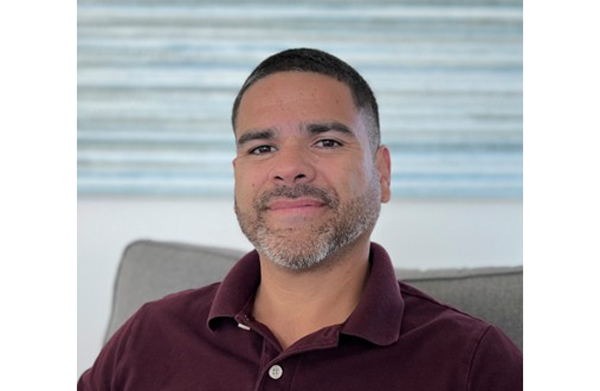
Gissele: We believe that loving compassion have the power to heal our lives and our world. Don’t forget to like and subscribe for more amazing content. Today we’re talking about dignity and humanity within the prison system. And our guest is Fernando Murillo. Fernando Murillo is program manager for the palliative care initiative at the Humane Prison Hospice Project, where he trains incarcerated people to provide hospice and palliative care.
Gissele: for aging and dying peers. During his 24 years of incarceration, Fernando served as a pastoral care support worker in California’s only licensed prison hospice, and received end of life training from USC and uc Davis. He previously contributed to projects in California, Washington, and Norway focused on transforming prison culture and improving quality of life for both incarcerated [00:01:00] residents and correctional staff.
Gissele: Please join me in welcoming Fernando. Hi Fernando.
Fernando: Hello. Thank you for welcoming me. There’s not too many places on this planet that I’m welcoming, but thank you.
Gissele: Absolutely. I heard your story through a colleague of mine and I was really excited to talk to you. ‘Cause one of the things we focus on this podcast about is sharing compassionate and caring stories.
Gissele: I was wondering if you could share with the audience your own journey through incarceration and how that led you to become a leader in prison, hospice, and palliative care.
Fernando: Wow, that’s such a loaded question. Wow. So I spent approximately 24 years in prison.
Fernando: So my first 19 years I spent in some of the most harshest environments that the California prison system has to offer. These places are classified. One through four. Four being the highest level low, one being the lowest. I spent approximately 19 years in the highest levels of level four.
Fernando: Level fours have restricted movement, [00:02:00] limited amount of programming, limited access to family, and these prisons are typically located in some of the most rural areas in California. And just for context for folks listening when it comes to geography California is I believe the third largest state in the United States of America and area first in population with four approximately 40 million people.
Fernando: So when I say rural locations, they could be anywhere between 700 to four to 300 miles from location, or place of origin. I’m from the Bay Area in California. I’m living in San Francisco now, and it would be very difficult for not just my family, but. Other family members that would be traveling to visit their family members.
Fernando: So just a little context about like area and topography and distance. So yeah, spending the majority of my time in these locations, there was a limited access to anything that would help improve myself as a human being. So I would do a lot of self-learning self-educating [00:03:00] on this journey. And they were very perilous and difficult violent environments.
Fernando: So I, I spent from the age of 16 all the way till the age of 35 in these environments at the age of 35, I was lucky enough to be allowed to get transferred to a place called the California Medical Facility in Vacaville, which is located between the Bay Area and California and Sacramento. So it’s located in city centers and near coastal and valley communities.
Fernando: Not only did this transfer enable me to have access to my family that could come and visit me but it enabled me to have access to employment and education that I didn’t have access to previous, in my previous 19 years of incarceration. Also I was learning, trying to learn how to integrate myself into a population that was like moving freely throughout the prison so they could go to their vocations, their education programs.
Fernando: This is something very new for me. In my 19 years in level fours, there’d be [00:04:00] times where I would leave myself for three, three years at a time. And I hear this narrative from the community yeah, like some of the most harshest environments in California prisons or prisons in general in the United States is where people would be locked in a cell for 23 hours a day.
Fernando: I would chuckle at that sitting in cell for years at a time, because I knew what it was like to not leave my cell. Period for years at a time. That’s in its totality. No breaks, throughout the day. Just for that long duration. That this would happen because of murders that would be happening in the prison, shootings and riots.
Fernando: These places are pretty brutal. So I was learning when I was transferred to the California medical facility on one, how to speak to people, how to interact with people how to come out for employment for something that wasn’t, working in a dining hall or a kitchen. So the correctional staff members that encountered me were really [00:05:00] shocked to learn that I had a resume prepared.
Fernando: I would utilize my my housing space at the time it was a cell. I would refer to it as my simulator, where I would practice freedom in there. I would like create these scenarios on what it would like, be like to, interview for a job, submit my resume, just, having conversations with people in the hallway that I was preparing to like hopefully sound normal while engaging in them.
Fernando: What is normal? I have a friend who would affectionate, refer to normal as just a setting on a washing machine, but, that’s a conversation for another day. But these are things that I had to practice because I spent so many years in isolation and in places that only form of communication that was done was through violence.
Fernando: So one of the lowest forms of communication. So while submitting resumes to different jobs, I landed a job that brought me to a space [00:06:00] that I never even heard of, and that’s the California Medical facility’s Hospice is located in ex corridor, and a section of the prison that’s referred to as the green side, or Unit four and opening the door to X corridor.
Fernando: The hallway looked so pristine. I would jokingly refer to it as like the stairway to heaven because it was just so filled with these neon lights that would reflect the well manicured wax floors, off the walls. It was just so bright and at the end of it was a door that read hospice, and I had no idea what was beyond the door, what happened in there.
Fernando: And I peeked in there with my employer, and I seen these patients being well cared for in their jerry chairs, and they had these wonderfully knitted blankets and hats on them that obviously did not come from the carceral space. I was witnessing peer caregivers that were a part of a multidisciplinary team.
Fernando: I didn’t have the [00:07:00] language at the time to describe what that meant, but that’s what was happening, working side by side with each other, with the focus being the patients. It looked like I was looking through a portal of another time and place that was not, in California nor the United States.
Fernando: And it was definitely a space of normalization as normal as can be in, in those environments. And I was asked by somebody that I knew for quite some time if I wanted to work in there. I was like, you gotta be kidding me. I’m working on just trying to. Be able to speak to people in a normal fashion, open up my mouth and be somewhat, conversational and not so literal, prison is so good at stripping people’s autonomy and their individual characteristics and replacing it with numbers and jumpsuits and it worked quite well on me.
Fernando: So I spent the majority of my life, fighting, uphill to retain my identity in some capacity. And coming in as a 16-year-old kid, I just didn’t really know what that meant as a 35-year-old. But I was working [00:08:00] on it in real time, so I said absolutely not because, I didn’t see a job looking through that window.
Fernando: I’ve seen an investment in people, I’ve seen, the responsibilities that it took to be a part of a multidisciplinary team with the focus being the patient. And the question was being presented to me as time went on. And by the third time that this gentleman asked me to work in there I agreed.
Fernando: And it was a couple months later and I agreed because I would go back into the simulator my cell and weigh out the pros and cons about working in the space and like investing in people and offering myself to make a difference. And, I told myself that I thought I can do it. And so I agreed and I began training for 80 hours or so, but I forget the exact number.
Fernando: And at the conclusion of my training, I would do these, this, the hands-on training with the nursing staff in the hospice. And this was year 19 of my incarceration. And I was [00:09:00] entering a space in which like I was prepared to offer myself in a very authentic and kind way empathetic to offer some of the most medically fragile people that were my neighbors, a resource to be cared for end of life to be treated, very human and compassionately.
Fernando: It was quite challenging And, there were so many benefits and there were so many lessons that I learned from the patients. I say this quite often. I’m pretty sure if anybody’s met me before that watches this podcast, they will hear me say something repeatedly.
Fernando: It’s like the patients who are a proverbial mirror just being held up to me, so I can see myself, in the lessons that were being taught to me. And it was important for me to pay attention. Over time after working in this space, I would take so many of the lessons that the patients and this environment was teaching me, and I was bringing it outside of the hospice, and I was interacting with people the same way that I would [00:10:00] interact with patients with the same level of dignity and kindness and empathy.
Fernando: And that would be with correctional staff members, that would be with correctional healthcare members. I would make sure to use human-centered language and respectful language and ask people permission about like, how would you like me to refer to you as what name would you like me to call you?
Fernando: I wanted to respect people’s autonomy, especially after having so many years of my life of having my autonomy managed and, stripped. So I wanna make sure that was part of the conversation when it comes to interactions in the setting. So my incarceration journey was complex and hard in the first 19 years where, I was left, to sit in the cell without any sort of consequences, but just with punishment and idle time to figure out like, what do I do with myself while looking in a scratched mirror above my toilet, and watching my face get older. So I would challenge myself to not [00:11:00] succumb or immerse myself in an environment that was not a reflection of who I was nor my humanity.
Fernando: So that was part of my focus, part of my efforts to retain. My, my sanity, my mind without having the institutional norm strip me of my basic humanity. And it paid dividends when the time came to work into, in the hospice. And while working in the hospice, like as I mentioned, my skills, like my processual skill development and like enhanced my capacity for, skill development, through education, was Vastly improved the socialization that I was able to be exposed to Interacting with professionals in the space helped me to have language and well defined definitions. I know this redundant, but refine definitions about what I was doing with my job and my day-to-day activities with the patients and being a part of a multidisciplinary team was super helpful for what was gonna happen in the next leg of my journey.
Fernando: [00:12:00] So I would like to say that what I was doing was like a like I was ascending above the norms of prison environments by the efforts that I was making in these spaces. And essentially taking the time out to humanize people that were worthy of being humanized both inside the hospice and out.
Fernando: That’s what I mean by that was such a loaded question because I try to cover as much relevant information that helped bring us to like where we are in this conversation.
Gissele: it was so beautifully said and you mentioned so many key things. The prison system is not designed for improvement.
Gissele: It’s not designed to help individuals become more loving and compassionate to themselves and others. You mentioned you’re stripped of your identity. You are given a number, and I think part of the reason why that happens is that it’s really hard to dehumanize individuals. At a human level.
Gissele: So you have to make them less than human in order to be, put in [00:13:00] those sort of environments. I’m curious as to what helped you maintain that humanity and what helped you maintain that hope that there was something better considering that you were there at such a young age.
Gissele: 16 is so young, I have a 16-year-old right now and he’s a kid. So what do you think helped you maintain that level of humanity for yourself and for other people? When the environment itself was one where, all you were taught was basically, violence and dehumanization.
Fernando: thank you for asking that question. My observations of people. Observing what like an environment did to the human being that I met when they first started in the system and the human beings that those individuals became were lessons. And for me to digest about what I wanted for myself.
Fernando: The mirror that I mentioned earlier to you, the scratch one above my toilet, was something that was like [00:14:00] a, it helped me to center what I wanted for myself. And what I mean by that is I wanted to look into that mirror as often as possible and be comfortable with who I am, be at peace and be okay with the person that I was day to day, hour to hour, minute to minute.
Fernando: Because I would witness so many young men as well as older men, take on these characters that were no nowhere near a reflection of their unique sense of being to protect themselves from a very predatory environment. They compromise everything about their themselves and their unique sense of being and their talents in order to survive.
Fernando: And I wanted to make sure that I was able to like adequately compartmentalize my interactions with people, but ultimately have this most authentic and sincere relationship with myself. So that’s how [00:15:00] I was able to maintain my unique sense of being and work hard and be very focused about making sure that I don’t become institutionalized.
Fernando: I would often sit cross-legged, and just face the wall and close my eyes and just put myself in different places outside of prison in order to like, retain, sanity and my frontal lobe and my amygdala and the rest of my brain because it, being in those isolating environments is really challenging psychologically, emotionally, just the humans were not meant to be caged in a tomb like that to get better.
Fernando: So I was determined to make sure that I retained my humanity in a space that was just so inhumane. And, this is what I’m sharing is not unique or deteriorating, just to the incarcerated. This is something that affects the staff members that work there as well.
Fernando: The life [00:16:00] expectancy for correctional officers in the United States, if the age of 58 they tend to die five years after retirement. And it’s because of the, the very predatory and hypervigilance of this environment in which they’re exposed to. And a lot of the times, when it comes to the psychology of the situation or the psychology of prison a lot of the same anonymity that I would experience while wearing my costume of inferiority.
Fernando: Is the same level of anonymity that a correctional officer would experience when leaving prison every day. Not many people in their community, let alone their homes even know what they did. So when it comes to incarceration there was a lot of institutionalism, not just with the incarcerated, but with the staff as well.
Fernando: So I was witnessing like a, a sociologist
Gissele: and
Fernando: just weighing out and just observing what prison does to people. And I would write extensively in my journal and in [00:17:00] my mirror would be like the checks and balance of what I did with my life on making sure that I had a center that I would always return to, to help me focus on prioritizing my humanity.
Fernando: All, all while, having the conversation at a very young age that I was gonna die in prison. I went to prison with a 41 year to life sentence. And for anybody that is familiar with California politics from the 1980s and nineties governors would run and share in their campaign, that the only way that they ever would’ve let a lifer outta prison is either in a box or in a bag.
Fernando: Meaning that they had to be dead. So this is some, a harsh reality I had to come to grips with as a young man that I was inevitable that was gonna die in prison, but while I was there, I was determined to retain somewhat of whatever autonomy I could have internally. So I really fought hard for that.
Fernando: Yeah.
Gissele: in terms of the crime that led [00:18:00] you to be there at 16, to be honest, I’m still baffled at the fact that a 16-year-old could be deemed and go to that high level of correction. I’m curious as to what led you to a high level of correction and whether or not part of what helped you see the humanity in other people could be a level of self-forgiveness, ’cause being able to look at yourself in the mirror, there’s gotta be a level of self-forgiveness
Fernando: So in order for me to answer this question I have to help you or the audience understand the climate politically and the efforts from Lawmakers in the country at the time. During the time of my arrest, it was during the mid 1990s during this time there was an effort from lawmakers in this country to lock up as many young boys of color as possible.
Fernando: They called us super predators, and as you mentioned earlier, it’s so much easier to dehumanize somebody when you don’t see ’em as human. You give ’em a title that it’s something other [00:19:00] than what their humanity actually is. People that look like me were literally swooped up by the thousands and we are being put into prisons by the thousands.
Fernando: It didn’t matter if you’re committing crimes or not. If you looked like you were a super predator, especially if you were a young African American young man, or a young Latino Hispanic young man and. In this country, you were a target and it was up to you to prove your innocence after your apprehension.
Fernando: And society is well familiar with the fact that most of us didn’t have the financial means nor the mental capacity to sit in an adult courtroom and to defend ourselves in a proficient and legal way. So it was a very successful campaign by the United States of America to lock up as many young men of [00:20:00] color as possible.
Fernando: Now, this is directly linked to what happened in New York City with the Central Park Five, where they were falsely accused of raping a woman while she was jogging in Central Park. And, that incident where there was wealthy people throwing money at making sure that people that look like them received death penalties and they were just taking, as many of us were taken off the street as possible.
Fernando: So with that backdrop, it enabled me to see people in a different way, in a different light. I seen the level of struggles that they experienced, the the limited capacity that they had to be complete citizens in a country that we ultimately felt like guests and not really welcome.
Fernando: So my level of empathy and compassion for them was present even in those circumstances. And what I wanted to do was offer that same level of compassion and empathy to myself while [00:21:00] prioritizing fighting for my own humanity and sanity in those spaces. I just wanted to make sure that narrative was not something that defined me.
Fernando: That I fought to define myself by what I was doing, what I did, the efforts that I made, the people that I chose to care for, even the correctional officers that came to work every day, to humanize them, to ask them like, what is your name? And call them by their name because regardless of uniforms or even if you dislike me, it doesn’t change the fact that you’re human, that you have the same needs that I have, and I wanted to speak directly to that human component of the needs when it came to people that I came in contact with. And it took a great deal of self-reflection self-education, delving within and just, asking myself the hard questions that I. couldn’t possibly be received from looking outward or reading, in a book.
Fernando: And this is something I had to do through self-discovery. [00:22:00] So I hope that was helpful when it, so when it comes to individual crimes, when it comes to harming people it is never okay to harm folks. I feel like the lowest form of communication is violence. And what I would like to say about the question that you asked me is that we do really good in our country when it comes to classism in preventing people from experiencing true freedom.
Fernando: And with that comes desperation. And with desperation comes poverty. And with poverty comes a, a level of desperation to meet the most basic of human needs that are not able to be accomplished through legal means that are not able to be accomplished when you’re a conditional citizen and unable to secure a loan through a bank for a house, or you’re blatantly, dismissed because of the way you look or what your last name or your first name is.
Fernando: That’s what is called structural racism. And that that is essentially how the poor are [00:23:00] exploited. The non-privileged are exploited for reasons for cheap labor in places like the carceral setting. The how the mass industrial prison complex, is, sustained over time. So that’s my answer to your question.
Fernando: And like when it comes to my individual accountability, all I would like to say is that’s the initiative I took on my myself. Prison does not hold people accountable. It just warehouses folks. I was never held accountable for anything that I did. Even after being in prison for 24 years, I never had the opportunity to sit in front of the people that I’ve harmed and offer myself to make amends even when I wanted to.
Fernando: I was never asked by my community to make restitution to it. I was never even offered the opportunity to make restitution to my community. The judicial system does so good at separating me from and the folks that are apprehended from making [00:24:00] amends and being held accountable. It’s a for-profit.
Fernando: System that is not designed to help anybody. And I hear so much from victims of crimes, that the system was never there for them. So it works both ways where there’s just a focus on the exploitation aspect of judicial, criminal as well as correctional system.
Fernando: That was a long-winded answer to my question. No,
Gissele: it was perfect. Thank you. I have a friend who is a victim who has gotten beyond the forgiveness aspect where actually cares about the young man that murdered her son and has been wanting to communicate, and they won’t let them talk to one another even though this young man is no longer the same young man that murdered her son.
Gissele: He’s changed and she has forgiven and the inability for them to come together and have that healing. the system it’s preventing them from doing it. And like you said, I don’t believe these [00:25:00] systems are meant to help us or help the individual prisoners heal. that’s why I’m a big supporter of restorative justice.
Gissele: and the prison system’s not the only system that does that separation, isolation, punishment. If you look at so many systems that we have are based on separation, isolation, or mental health system as well has historically had been on separation, isolation, punishment.
Gissele: And so it’s extraordinary that you were able to see beyond these systems and still maintain and keep your humanity. I wanna go back to the palliative care initiative, and I want you to talk about when you first became involved with it, What was some of the impact that you saw that it had on prisonersAnd the guards as well?
Fernando: Yeah, I’ll talk about the incarcerated first, where for so long, and I like sharing this when I come in contact with a lot of my colleagues that this [00:26:00] environment does so well at where other people are telling this my story. My story is on a rap sheet.
Fernando: That’s all I’m known for.
Fernando: And this enables this environment and hospice, a California medical facility enabled people to redefine themselves. They were rewriting their story in real time. I also seen how these efforts got the attention of staff members and how they were able to see how authentic and sincere their efforts were.
Fernando: And we’d have conversations around, like how, the crimes of most of the people that, the correctional staff members would come in contact with, were the least interesting things about them, that there was so much more to who they were. And the more that we spoke in this environment that I refer to as normalize in the hospice, the [00:27:00] more alike everybody was when they opened up and shared, the realities of their experience and what they were, going through it was just like greatly human and relatable.
Fernando: And so it was super empowering, people’s vulnerability. Was there superpower? And it helped them to connect in ways that the system did so good at separating them and their, relatability. It helped them to, collectively, make efforts in a very intentional way to care for patients, as they were in the most vulnerable state.
Fernando: And I watched correctional staff members that were influenced by this entire process, answer call lights when patients would press their button and ask them like, how can I help you? When the entire staff was like, probably busy providing total care to a patient that was, that, that needed a lot of care.
Fernando: I got to see this in real time, how the transformation from correctional officers that when they started their correctional journey, had [00:28:00] this narrative and belief that just lock ’em up and throw away the key. That’s the best thing that we can do for our society to keep ’em safe. But as I had the privilege of seeing through this environment, I got to see the entire, like total transformation that if I invest, and connect with the incarcerated and help them to bring their humanity to the surface. And support that. That is a true, essence to how I could support public safety by helping somebody develop pro-social skills and skill development in their profession that could be transferable for them to come back, make contributions to the greater gathering beyond the wall.
Fernando: This is something that I witnessed in real time and the wheels turning, for the correctional staff members to see that, oh, if I make this effort then like things totally change. And not only that, but I have someone around me that is, that is on a journey of healing and ascension.
Fernando: So it’s a much better environment when there’s people in place like that to support folks that have obvious needs that need [00:29:00] to be met, and are helping them to meet ’em. So that’s one of many examples of the benefits and the progress that I witnessed there and enabled me to get involved in profession, outside of my incarceration where I could come back in and train people with the lived experience in places outside of California medical facility to harness and skill sets, as well as educate them about what they can do with their profession or what they could do with their training after working with the Humane Prison Hospice Project.
Gissele: That’s beautiful. And did you see a difference between the hospice that is practiced within the prison system and outside, or they fundamentally the same?
Fernando: Are you saying the type of caregiving that happens in prison? Yeah. And outside. I’m sure like the intricacies of course are different.
Fernando: The backdrop is different where, there’s, a motto in with a carceral setting where people are making sure that nobody dies alone, in, in that environment. [00:30:00] And now here I’m pretty sure it’s pretty similar, but it’s done in a different way. The process is different, the the employees could go home at the end of the day here in the community, whereas in the carceral setting, people where they’re permanently and they just rotate shifts and just come, back.
Fernando: And a lot of the folks that are being cared for in carceral setting, these were their neighbors, that they were once, spent time with meaning the peer caregivers and the patients once spent once upon a time, spent time with each other. Where as I’ll hear the the caregivers and the hospice staff may not have had any interaction with the patient before they came in.
Fernando: I’d say that’s probably like a. Fundamental difference, but the actual care in itself is very similar, where there’s this tenderness and compassion and love, that’s present. I feel like those are pretty in line with each other, regardless of the side of the fence that they’re on.
Gissele: Have you, you mentioned that you attempted to see the [00:31:00] humanity in the, correctional staff and providing hospice care is another way of bearing witness to somebody’s experience. How did that transform the people that were receiving the care
Fernando: Whoa, this, I love this question and the reason why is because when most patients would come into the hospice, they were apprehensive about. Accepting what they were experiencing. Why? As I mentioned earlier, prison’s a hard place. The baseline is like mistrust and predatory activity and, an effort to, survive.
Fernando: That’s all part of the baseline of the experience. So when we walk up and welcome a patient into this environment for the first time, they look around and they’ll ask someone like me that was just like them, they’re incarcerated. Is this real? I’ll let ’em know. This is very real.
Fernando: sometimes it takes a while for the patient to accept that this, and what they’re referring to is, like it’s the humane treatment. The kindness, [00:32:00] the level of compassion that’s present from everybody. It’s like shocking to them because they’re so accustomed to be told their needs and wants are irrelevant.
Fernando: They’re faking, they’re they just want to manipulate the system for some, some reason that is, unrelated to their needs, so they were so accustomed to like being dismissed and not treated in a humane way. So that in itself was, it’s worth mentioning how transformational this environment can be.
Fernando: I also witnessed, like how everybody involved, starts processing what they would like their legacy to look like, what their end of life experience should look like based on what they’re constantly doing every day. And one of the things that they would reflect on is if I treat people with a great deal of compassion and care, not only is it like is it free to do without any sort of monetary, stress but it [00:33:00] feels good.
Fernando: And I am helping to create an environment that is healthy not just for them, but for everybody involved. And then for everybody that lives and works there they were doing prisons together in a way that was super healthy and sustainable. I guess you can say. Under the circumstances. Those are some of the most notable, like things that I witnessed of working in that space or, and immersing myself in that space.
Fernando: So
Gissele: Were there any challenges that you face in implementing a program such as this? Any pushback?
Fernando: Yeah, The pushback will come from primarily like staff members that have never seen it before. Oh, these. Inmates or these incarcerated people are gonna take advantage, just manipulate whatever’s around, for their benefit.
Fernando: And I’m thinking the entire time they’re saying that is because some of the most basic needs that are not being met, they feel like they have to take in the moment to meet the most basic of needs. But when people are seeing that the, this environment because of [00:34:00] sustainable over time, that is, the need that is being met that they know that it’s gonna be present permanently, there’s no need to take it because they know it’s gonna disappear in the next few weeks or so.
Fernando: Planting the seeds of sustainability and we’re the desired outcome is achievable through everybody’s collective efforts helps to address that when they can see, feel that it’s attainable and real that helps to address it. But that comes with time. But of course, yes. I don’t know how it is in Canada, but here in, in our country and our culture, like we’re reluctant to implement, new things and accept change.
Fernando: I think the first step of Alcoholics Anonymous is like admitting right? Or na, admitting, that I have an addiction or, an alcoholic problem that whatever. But once people are able to admit and acknowledge that there is a problem, that there is capacity there to heal and, help [00:35:00] to advance and progress from everything that has been just so dysfunctional. So of course, yes, pushback all the time, especially for new initiatives that will help humanize and create an environment of normalization or compassion to patients that are medically fragile are the focus of the care. Especially when we are planting seeds of creating a multidisciplinary team where the incarcerated peer caregivers that are well trained are the eyes and ears of this environment.
Fernando: Helping to bridge information between the patient and staff members, especially after the patient has experienced a baseline of, neglect or dismissal. Or exploitation, and there’s somebody in place that has a lived experience that looks just like them, like communicating information, to the rest of the multidisciplinary team, while there’s an effort to create collective information where the patient’s speaking to everybody and not just the peer caregiver.
Fernando: So [00:36:00] sometimes it takes a little bit of time for this programming, for this training to be accepted over time. But this is also a culture change initiative. We’re helping to implement a resource that helps to provide, assistance to folks that are super medically fragile and otherwise would be receiving a lot of unofficial caregiving.
Fernando: if we’re not there providing them, the education that they need to have the well-defined language and the buy-in from the administration about what they’re doing. So yes, there’s always some sort of pushback and resistance to our program implementation, our program training, and the thought of, normalizing having peer caregivers being a part of the multidisciplinary team in these spaces.
Gissele: Yeah. Yeah, I can imagine that a lot of it is the fear, right? they’re gonna take advantage. I think there’s also, are they gonna replace
Fernando: me?
Gissele: Yeah. There’s also the desire to punish [00:37:00] perpetually. You and I were talking about the fact that you can’t go to some specific countries, and for some people are gonna be like if you’ve ever been incarcerated, you shouldn’t be.
Gissele: Going to a specific country, but if you’ve served your time, what point is there a forgiveness? At what point is there you are no longer that same person. And so the narrative that I have heard usually about people that have been in prison is that like from the public’s perspective, is that they’re stuck in that always going to be this person.
Gissele: so at what point then are we working on rehabilitation? Like even if you do, you served your entire time or you were forgiven for your time or whatever, at what point do we actually allow that forgiveness? And that goes to the fact that people are really uncomfortable with compassion.
Gissele: Like some people they think that, oh you’re gonna get away with it or that it’s, somehow it’s condoning the behavior. But the truth of the matter is, like you said, it really is about seeing [00:38:00] each other’s humanity because the other thing doesn’t work. the punitive, hurtful punishment approach doesn’t help to heal our communities and our society
Fernando: No. I’ll share really briefly that I had the privilege of working in Norway in my previous profession, and I had, once again, I’ll use the word again, privilege of being able to travel to quite a few of their prisons. And in and around Oslo. I won’t say each prison I went to, but it was quite a few.
Fernando: And one of the Norwegian philosophies in their correctional, as well as their judicial system is that people go to court. To get punished. They go to prison to become better neighbors, and that’s their goal in their country, is to create better neighbors and their entire prison system’s designed to create a successful integration for somebody that’s incarcerated to [00:39:00] successfully reenter the community and integrate back into the community.
Fernando: And it’s done in real time every day by everybody involved. And it’s just so mind blowing to see exact opposite philosophy in practice where the recidivism rate is less than 20%. Where the prison system is more the environment is more reflective of college dormitories or vocational schools as opposed to this very punitive, static heavy environment where, there’s an emphasis on bars and gates and barbed wire and the expectation is for people to sit in a cage and get better. So to see these things spontaneously Yeah, to see these things in practice. And nor, these efforts and these philosophies and practice in Norway was just, it was at first for me to witness was very emotional to see, this is, I was witnessing people receive services, [00:40:00] while they were incarcerated that I wasn’t even receiving in the community after 24 years of incarceration. And so I had to retain my, maintain my professionalism, for the reason why I was there. But everything inside of me and innately was screaming like, what the, what planet is this?
Fernando: And how can I be a citizen? Because anybody that can get on board with a very basic philosophy that is comprehensive is it’s just mind blowing for me. I just never seen it in practice or being done before. And I get to see the aftermath the desired end result where people were in the community successful and they’re sharing like the benefits of being in that system and how and enable them to have a successful career, business or cafe, whatever it is that they were operating, running, or part of developing with their entrepreneur spirit.
Fernando: It was just fantastic to see, I’ve watched correctional officers in Norway dress up in plain clothes [00:41:00] and practice going to work with somebody that was incarcerated. I was just like, I couldn’t believe it. Like they were practicing what it was like to be free. The same way that I was speaking earlier about practicing in my cell, about how to just speak to people in prison that weren’t isolated for years at a time.
Fernando: This is something that was being done officially, and it was refreshing, but also mind blowing to see in practice.
Gissele: Just very quickly, how are the peer caregivers selected?
Fernando: They’re doing, they’re done. The peer caregivers are selected in collaboration with the CEO of Medical and the California Department of Corrections, as well as correctional healthcare administrators that are familiar. With the dynamics of the institution.
Fernando: So not only are people selected that are candidates, that are programmers that are doing all the right [00:42:00] things with their time, but also are vetted through the official capacity of the institution where their files are being reviewed. Of course, people are restricted from working in these environments that have a history of like elderly abuse or narcotics trafficking.
Fernando: Of course. There’s a lot of opioids that are being distributed in to patients in this environment. So there is ultimately like layers of restrictions and a level of approvals vetting that the incarcerated peer caregivers have to go through after the selection process. Even though somebody might be a great candidate, they’re.
Fernando: Some of their activities may restrict them from working in this environment. So it’s done in collaboration with the internal system of whatever institution we’re working in,
Gissele: What’s your vision for the future of palliative care in prisons nationwide or globally?
Fernando: That they wouldn’t exist.
Gissele: [00:43:00] Oh, okay. There,
Fernando: yes. I would like to see an environment where people are punished to the point where they’re so medically fragile that they require end of life care in a prison. I would hope that my hope for the future is that they would be in the community receiving this. Care from their medical providers or from their family members but not in prison, and yes, that would be my, that would be my future vision and goal. But since this is part of the realities of what’s happening in this country I would like to make sure that the people that are in this space are treated with a great sense of dignity and have the best resources accessible to them.
Fernando: And that they’re being cared for by healthy folks that are also being cared for. Where people are caring for each other, that this environment of sustainability and human-centered practices where folks are respected, everybody and not just the incarcerated, so people could go home at the end of the day knowing that they’re making a difference with their [00:44:00] profession and that people at home know what they’re doing and that they come to work and have a fulfilling sense of what they’re doing with their profession.
Fernando: All while interacting with somebody that’s also feeling the same way that what they’re doing with their training and what their profession gives them a sense of purpose, they develop a pathway to success in the community and the patients are cared for in a way that the people that are caring for them hope to perceive when their time comes to have that same level of care.
Gissele: Yeah. Agreed. I thought a lot about this in terms of, even if it’s a society or as individuals, we might feel that certain people like certain criminals might not deserve it. Who are we choosing to be? Are we choosing to be compassionate and caring people for everyone? Because that’s the thing that people don’t realize that they might think that other people don’t deserve it, but the withdrawal of love and compassion comes from our own hearts.[00:45:00]
Gissele: I don’t wanna be the type of person that thinks that people don’t deserve even just the basics of humanity. I don’t wanna be that type of person. And so I often think about that. Okay, so who am I choosing to be and what would I want for people and what would I want for myself? like you were mentioning, poverty,
Gissele: It’s not an individual issue. It’s a manmade societal issue that we’re all responsible for. So how can things look different starting with ourselves? I did wanna mention one thing which I found really fascinating ’cause you were talking about rehearsing being free in your cell when you had received much a life sentence.
Gissele: Correct?
Fernando: Yep.
Gissele: So I feel like you manifested being free. Can you tell me a little bit about how that came about in your mind? You were free. Yeah. Go ahead.
Fernando: I have a different definition of free. And what I mean by that as just being liberated from the prison of my, of the mind, of the heart, [00:46:00] of, the space, to be liberated in any environment, in, in a way where I can freely express myself, freely share the talents that I have freely interact with people to prioritize, like speaking to their humanity.
Fernando: And that’s what I mean by being free. Like I was practicing freedom because I wanted to live in a way that would be beneficial to me regardless of what side of the fence I would be on. And I’m still living in the same way that I was living in prison. I’ll tell you like a brief story of how that, like that came to be, is that when I received the call from the governor.
Fernando: Of California on November 10th, 2020. And he shared with me that he was letting me go home as a result of a commutation. I paused and he was like, are you okay? I was like, yeah. He said most people cry at this time. I was like I’ve cried enough and I’ve been preparing for freedom for quite some time.[00:47:00]
Fernando: So for me, it’s not good enough to just be on the other side of the fence. I have to make a difference with what I am capable of doing. And he was like, I think I made the right decision in selecting you for freedom because you’re very focused and you know what you want to do. I was like I’ve been living this way for quite some time.
Fernando: And then what I mean by that, this way is like in a way that’s that’s free and yeah. I wasn’t institutionalized in a way where I couldn’t envision myself working in a professional environment or making a difference
Fernando: So yeah, I was very proud that I was able to make those efforts. I was active with it, and when the time came, I was able to communicate directly to the person that was liberating me from prison what my focus was and what I’ve been working on for quite some time.
Gissele: You have to be very disciplined in that environment to still focus on that.
Gissele: And I think of Nelson Mandela who said, I had to leave the jail there. I had to be free in my mind. ’cause if I [00:48:00] wasn’t free, I wasn’t ever gonna leave it. And so it made me think of that. Yeah. So a couple more questions. The first one is, sure. What’s your definition of self-love?
Gissele: I’m asking everyone this season.
Fernando: Wow. I like that question. I don’t have a active definition of self-love that I work on daily, that I’m journaling about that are present to the, in a way that I’m talking about it and conversation. But my definition of self-love is really taking the time out and set boundaries around me and prioritizing the things that bring me a sense of purpose, gratitude stability.
Fernando: Happiness. And I’ll name some specifics. I like silence. I like turning everything [00:49:00] off in my house, opening up the bay windows. I live here in San Francisco. I, there’s bay windows here. I like just opening up and just listening to the breeze, looking at the clouds. The environment and just laying my eyes on them is just, to me, is just like the definition of love sitting in the park here in Alamo Square and the city.
Fernando: And I have such a spiritual connection to that place. And just feeling the grass beneath my feet, is self-love, eating. The things that make me happy is self love.
Gissele: Yeah.
Fernando: You, but those boundaries that I am very mindful of and specific about our how I’m able to achieve and help to accomplish the self-love, but also being true to myself and authentic with myself and other people is, helps me to love myself that much more because that mirror is something I’m still looking into.
Fernando: And at the end of the day when I look at it, [00:50:00] I give myself the thumbs up play while playing my day back. I feel pretty good. I feel like that’s a sense of self-love, like having that relationship with myself, that connection, the connectivity being in tune with, what brings me centered and that’s the delving within and knowing what I like externally.
Fernando: I feel like my definition of self-love is being able to sit down. And be completely honest with myself about mistakes that I’ve made and help to address them, because blatantly, dismissing them as ah, I’m just human is like a cop out. Or, the prevents me from like truly having this authentic relationship with myself.
Fernando: So I feel like that’s an additional component of like self-love. Yeah, a nice cup of coffee early in the morning is some good self love. S subjective, it’s just for me. Yeah I could go on and on, but [00:51:00] whatever.
Fernando: That was very powerful.
Gissele: Thank you. Now, last question. Where can people find you? Where can they work with you? What’s your website? Please share anything you wanna share.
Fernando: So I had someone accuse me earlier of calling me weird and strange because I do not have social media.
Gissele: Oh, thank,
Fernando: I have a LinkedIn. Okay. So that people can something find me on LinkedIn.
Gissele: Nice. They
Fernando: can find me on LinkedIn. They can find me at the Humane Prison Hospice Project website. And that’s pretty much it. Or they can email me. That’s pretty much the only way you could get in contact with me. I will say if there’s like a call to action, I work for a very small nonprofit organization that is very mighty and we’re expanding nationally to provide care, peer caregiving, and, carceral spaces and we can use any donations that people are willing and kind enough to offer to us so we could continue this work. And as I mentioned earlier, the recidivism greatly lowers for people that are incarcerated, that go through our [00:52:00] training and care for other folks that are medically fragile.
Fernando: And we hope to create a model in which their sustainability and healthier people return into the community where there’s less recidivism and more harmony and a lot more integration back into the greater gatherings.
Gissele: Beautiful.
Gissele: Please go check out and donate at the Humane Prison Hospice Project. We’re gonna put the website on our site. Http://www.humaneprisonhospice.org.
Gissele: And thank you so much Fernando, for coming and sharing your experiences with us. This has been really enlightening. It has been an amazing conversation. Thank you. And thank you to everyone who tuned in. If you like this podcast episode and wanna support us you can go to buymeacoffee.com/loveandcompassion
Gissele: Have an amazing day.
Fernando: See you guys.