
TRANSCRIPT
Gissele: [00:00:00] Hello and welcome to the Love and Compassion Podcast with Gissele. We believe that love and compassion have the power to heal our lives and our world. Don’t forget to like and subscribe for more amazing content. And if you’d like to support the podcast, you can go to buymeacoffee.com/loveandcompassion.
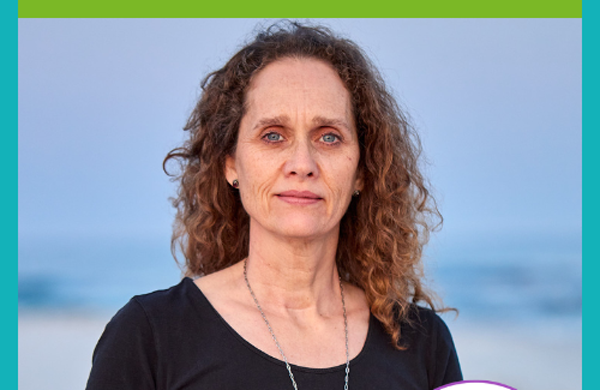
Gissele: Today, we’re talking about cultivating resiliency when in the thick of it, and we’re talking to Sinta… Ebersohn-
Sinta: who is a globally acknowledged and respected pioneering voice in the field of post-traumatic growth.
Gissele: With decades of lived experience and professional experience, she empowers individuals, families, and workforce to turn adversity into strength and disruption into transformation. Known for her heart-led approach and sharp insight, Sinta walks besides those navigating trauma, separation conflict, and high-stakes stress, offering evidence-based tools grounded in neuroscience, resiliency theory, and human compassion, to name a few.
Gissele: As a [00:01:00] multi-award-winning founder of Get Up and Grow and Fair Divorce, the creative force behind global initiatives that build fractured systems, she’s redefining what it means to recover, rebuild, and rise together. Please join me in welcoming Sinta. Hi.
Sinta: Hi. Thank you so much for having me as a guest. I’m honored, Gissele.
Gissele: Oh, thank you so much for being on the show. I was wondering if you could tell the audience a little bit about how you got into this work.
Sinta: Sure. I’ve been supporting people through the difficult times for decades, and I’ve done lots and lots of volunteer work. But a few years ago, I realized that it’s actually my calling and that my own lived experience of trauma specifically has been qualifying me all the years.
Sinta: I actually was on an event and s- I heard somebody say, “God doesn’t call the qualified, he qualifies the called.” Yeah. And it stuck to me, and I realized that I’ve [00:02:00] actually been living my whole life getting training for this, and I decided that it’s… I’ve got to go into it full time, and that’s when I founded Get Up and Grow.
Gissele: Ah, beautiful. And when you and I were chatting, you were talking about how, the ACEs, right? The childhood adversities,
Sinta: Yes.
Gissele: Do you wanna tell a little bit about some of the challenges you faced and What helped you get through those challenges?
Sinta: Yeah, I might have to give a trigger warning here. The childhood experiences that are adverse are based on abuse, neglect and that’s emotional, physical, sexual, and it’s also around circumstances that happen in families like divorce, like substance abuse and that sort of thing. So I experienced all of them in my lifetime and spent many years as a teenager and as an adolescent in therapy.
Sinta: I did different kinds of m- modalities and processes and things. But most of them were always talk therapy, [00:03:00] so I did a lot of work sorting things out in my head, how I thought about them and so on. But I never really … realized how much my nervous system w- system was at play and what the big role it was and how I was carrying things in my body.
Sinta: So in 2018, 2019, I went through a series of events where I was diagnosed with a number of life-threatening illnesses and diseases and we can … I’ll, I’m happy to tell you about that in more detail. That made me realize that my body is saying, “Hang on, something else is going on.” So apart from talk therapy, I went into somatic work and EMI eye movement integration, which I think is absolutely wonderful.
Sinta: So a lot of other modalities that I had to employ. And I think we need to do a little bit of everything to come to terms with those things because the bottom line for me is always what I’ve learned from my own experiences, especially [00:04:00] things that happened to us in early childhood, we can never really make sense of them But we need to acknowledge that we take on behaviors at that time that we desperately need to do to survive or to cope with our circumstances, and those behaviors become patterns.
Sinta: And in our adult lives, that influences our relationships, our parenting, our coworkers and colleagues that we interact with. So we need to do work to figure out what those patterns are that we took on and how it’s that we can improve them so that we can do better. So to answer your question, it’s a lot of complex things that you have to do to resolve them, to overcome them, and I’m not a big fan of using the word overcome, because I believe we never really overcome it.
Sinta: We learn to carry it with dignity, so we get better at it as we grow older. But there’s a lot we need to do. In our heads, in our bodies, in our hearts, in our spirit [00:05:00] it actually impacts every aspect of our lives.
Gissele: I really appreciate you mentioning the nervous system- Yeah … because I think you’re right.
Gissele: We’re so used to living in our heads- Yes … and we do therapy in our heads, too.
Sinta: Yeah.
Gissele: And I didn’t really become aware, ’cause I also experienced some childhood trauma as well, and it’s so funny because I was doing the work. I was doing the therapy. Yeah. I was, I keep getting graduated from therapy.
Gissele: They’re like, “You’re good,” and I’m like, “No, I can keep coming and keep talking.” They’re like, “No, you’re fine. You’re better.” But what I didn’t realize is the role the body plays in helping us feel safe. The role the body plays in the messaging that it’s giving us when we’re actually not in alignment.
Gissele: We may think our way into it. We may think that we’re better. We may think we understand why abuse happened to us. We may think that we understand why things happen. But it doesn’t help the body feel safe.
Sinta: No.
Gissele: Can you talk a little bit- Yeah … about how we can begin [00:06:00] to listen to that, the messaging from our body- and what we can start to do to start feeling a little bit safer when circumstances aren’t exactly ideal or what we want it to be?
Sinta: I think, oh, there’s so much to talk about when we get to this, but I think what’s important, having talked about talk therapy, the way we talk to ourselves also plays a big role.
Sinta: So in a moment where you are feeling unsafe or very anxious, one of the first steps is to speak out loud to yourself and say, “I am safe. I am an adult now. I’m not that little child way back then when I was abused or neglected, and I am safe now.” Just saying it out loud is often one of the first steps that I teach people and that I apply myself in that moment of overwhelm.
Sinta: But then there’s so much that we can do. Something that’s very popular and well known is breathwork, for example. Somatic movements. And then of course, what’s very important with our nervous system is [00:07:00] actions that we can take to give our nervous system the message that the, the threat is gone, that we can stand down, that we can relax.
Sinta: Because if I can talk a little bit about what happens to us in that moment of perceived threat, is that our nervous system is the first thing that perceives the threat through our senses, what we see, what we hear, what we smell, what we feel on our skin, what we taste, and it takes over. The primitive parts of our brain gets messages, “Here’s a threat, here’s danger.”
Sinta: Our bodies get pumped full of adrenaline and cortisol, all the stress hormones. Certain systems in our body shut down, like the di- digestive system, for example. The prefrontal cortex where we think and reason our way out of things or solve our problems, it literally goes offline. So there are things we can do to give our nervous system a message that we are okay, that we are safe, that we can stand down, and there are activities and movement that we can take to, and do [00:08:00] to release those stress hormones, to release the tension that we hold onto.
Sinta: Something very interesting that I learned was the principle of movement. Everything in our body relies on movement to function. Our hearts pump, it contracts. Our lungs breathe in and out. The blood is transported through our veins. Our whole digestive system is moving food down from the top to the bottom.
Sinta: Everything relies on movement to keep functioning and to stay alive, and that same movement that puts us in a state of hypervigilance when we are not safe or abused or neglect or whatever, that same system can take us out of that and put us back into what we call a rest and digest state. So it’s all
Sinta: It’s actually like a miracle how it works, but we need to be aware of that and do those movements and allow those movements to happen. And when we are in our heads and talking about this [00:09:00] stuff and reasoning it out, we don’t allow that to happen
Gissele: Yeah. I so appreciate what you just said, and I have found that in my own life as well.
Gissele: It’s that, so what I noticed was when my mind was racing and my body was tight, it was too hard to get control of my mind- … while my body was tight. But if I went for a walk or did some movement, I found that it was a signal for my body to relax. Yes. And then I could actually t- have control over my thoughts.
Gissele: It was too hard to do both. Yeah. But so one of the challenges that I had was that I didn’t realize that my body felt unsafe until I actually had some symptoms, right? How can people start to become really aware of when the nervous system is reacting, without needing to get to the point where you actually have to have symptoms or have a disease to tell you that youthat you’re not feeling safe and that you need to listen to your body?
Sinta: I think that’s complex and it’s also unique to every person, because we don’t have the same symptoms. But we have enough research now to [00:10:00] show us, without a doubt, that early childhood trauma, for example, is linked to autoimmune diseases, heart disease diabetes, and all sorts of things. So the early signs that we are not well is different for every disease that we might be getting.
Sinta: But a good rule of thumb is if we look at our basic day-to-day functioning, if I’m not sleeping well, I’m sleeping three or four hours and then I wake up, or I have night terrors or repeated nightmares, that could be a sign that my nervous system is trying to process something. If my appetite is not healthy like it should be it’s certain things even, and a- adverse reaction to certain foods or smells, for example, ’cause those are things related to our senses that could show signs of an early experience that was triggered or associated with a certain [00:11:00] smell or sound, and that might trigger it again in our lives.
Sinta: So they are physical symptoms if we’re not functioning well, that could be an indication that we need to investigate further. There’s something else that I always tell my clients when I work with them. In our intimate relationships especially, the conflict that we have, especially when we’re having repeated conflict over the same things, fighting about the same things over and over, that’s an indication that there might be a trauma response that you adopted way back that you’re unaware of.
Sinta: And a- an easy way to identify those, I always ask people, “When you fight, what are the phrases that you hear that come in this form? You always do this. You never do that.” The always and the never, or you usually behave this way, those are an indication that there’s a pattern in my behavior and I get that feedback [00:12:00] from the people closest to me, because the people closest to us are the ones who push our red buttons and we push their r- red buttons all the time.
Sinta: So that feedback in the conflict that reoccurs is always a very good indication there’s a pattern in my behavior and I need to go and examine that
Gissele: And I think compassion is really key to being able to listen to that feedback because- Yes … I know that until I discovered compassion, I wouldn’t be able to listen to that feedback.
Gissele: I would project it out. You know when you have a conflict with someone and they’re like, “You always…” And then you’re like- … you always.” Yeah. And then so you get into this kind of power struggle. It wasn’t until I was able to find compassion for myself- and be able to sit with that and say, “Could it possibly be true?” What can I take and accept responsibility where I have it and discard the things that I don’t feel are really true. And so I was able to sit with that sort of feedback and say, “You know what?
Gissele: There are times when I do X, Y, and Z.” What is going on for me that I’m doing that?
Sinta: It’s not easy to do that. Sorry. Go ahead. It takes courage- No, [00:13:00] please,
Gissele: go …
Sinta: to-
Gissele:
Sinta: on … really sit and listen to somebody’s feedback and not want to jump up and defend yourself or, react with something. It takes courage to hear that, take it in, and go and digest it
Gissele: And I think that’s the work that you were talking about.
Gissele: the emotional work, And I’ve heard this over and over. It’s simple, but it’s not easy, right? Yeah. The sort of things that we need- Yeah
Gissele: to do to be able- … to feel our feelings, to be able to acknowledge, but it is not easy to face those because where you go when people tell you that sort of feedback is, “I’m not good enough. I’m not worthy.”
“
Gissele: I’m not lovable.” And so if you can get, if you can give yourself that love and that compassion for yourself and know that you’re always worthy, then it’s makes it- easier to receive that feedback.
Sinta: It does. It definitely does. And also what I love about doing the work, apart from what it does for me and the growth that it enables me to do, is that compassionate way I can go back and [00:14:00] communicate it. And there’s no shame in saying, ” I’m sorry, but I know now, or I understand now that it was actually a trauma response that originated in my past, and now I can see how my behavior impacts you.”
Sinta: That is also an empowering thing to do, if you can do that in a compassionate way, not defensive, not a- with an accusation, not with denying. With full accountability, and that is a way that we show compassion to ourselves.
Gissele: Yeah. Yeah I love that you said that because it’s so true. when you’re able to acknowledge your responsibility without- a need to justify and say, “I’m very sorry that I did this.” and offer it with an open heart, I find that people are really receptive. They’re more likely- … to forgive you. They’re more likely to listen to you. And I also found that the reverse too, that I’m more likely then, because I can do that for myself, to give people the benefit of the doubt and say, I know it wasn’t your intention to do X, but this is [00:15:00] the impact of the-” so I I can acknowledge the impact of something on meand I can give the person the benefit of the doubt and say, “I know you didn’t do this with malice, but you need to understand why I’m reacting the way that I am.” And so the more that I have compassion for myself and my own feelings and my own mistakes, the more that I can say, “Oh, you know what?
Gissele: They’re human too. They made mistakes just like I did.”
Sinta: Yes. Yeah. That is absolutely beautiful, and I think especially with those of us that were traumatized as children- That compassion almost becomes something we need to practice having for ourselves first, and then we get better at it, and then we can start h- giving it to other people.
Sinta: So it’s like grace, if we don’t have grace, we don’t have to give, and the same with compassion. There are expressions that come to mind. People say you have to parent yourself or love yourself first, those sort of things. It’s so true because if we don’t have that for ourselves, we don’t have [00:16:00] reserves to give to someone else
Gissele: Yeah, and I find that with my kids as well, when I was short with them was when I was feeling empty and they were asking for more.
Gissele: Right? and so what I learned to do is I learned to basically say to them, “I need to fill my cup first.” Yes. “And then I’ll get back to you.” And In the beginning, I felt guilty about it- … because I thought, like because I think sometimes they took it as, “You’re not wanting to give me attention.
Gissele: You’re not wanting to give me- … what I need in this moment.” And so I had to explain to them that it isn’t about that, it’s I can’t. I don’t wanna be short with you, I don’t wanna do these things, but I’m feeling stretched, so I need to just regroup. It doesn’t have to take hours, it could just take five minutes.
Gissele: I just need to be able to regulate myself. And that’s where they learn to regulate themselves first, right? They do. And it is an ongoing process. Yeah. I’m not a perfect parent by any means. I’m sure my
Sinta: kids will
Gissele: tell you. But what, but
Sinta: what a beautiful way to model that behavior to them. And if your children grow up seeing you modeling when you can identify, “I [00:17:00] don’t have capacity now, I need to go fill my cup,” or, “I need to just go and regulate myself,” or decompress or whatever, modeling that behavior helps your children to grow up in an environment where that is not unacceptable, it becomes the norm, and that’s what we want.
Gissele: Yeah. I wanted to go back to, ’cause as a person who struggled with this, I just want so to help people that might be struggling with that as well is for a long time, I was very disconnected to my body.
Gissele: I tried to control my outside, but I wasn’t really in my body and so it
Gissele: And it took a long time to connect because I feel like I had abandoned myself, right? Abandoned my real self. I put others’ needs first. I was wondering if you could share a little bit about how we can connect back to our bodies in a way that feels safe, ’cause I think sometimes people, especially if they’ve been assaulted, it doesn’t feel safe-
Gissele: To go and to be in your body. How can people start coming back to themselves in a way that feels safe?
Sinta: [00:18:00] I must say again, I think it’s different strokes for different folks. For me, I started doing yoga in my early 20s, and I’ve done that all my life. And for me, that worked very well because it was a regular time, still to this day almost daily that I take to just be with myself, do movements, tune in completely to my body and my breathing and every position that I take and every muscle that is working in
Sinta: For me, it’s just worked wonders. But I think we need to cultivate a culture of being comfortable with our bodies, of being- … in touch with it. Children need from a very young age to do physical activities and explore what their bodies are capable of and find out where their limitations are, where their boundaries are.
Sinta: And I think that establishes a culture of being in contact with it. But I’ll tell you something interesting. [00:19:00] Despite the fact that I had done yoga my entire life, when I got diagnosed with cancer in 2019, I went through a period of a, a good couple of months where I felt literally angry with my body, felt like my body had let me down, and I was…
Sinta: the frequency that I was on was like, “I’ve been taking care of my body my whole life. I’ve always been active, done exercise. I’ve always eaten very healthily. I’ve done almost everything I could to take care of my body and others.” I was literally angry. I felt like I was let down. Now, I had a couple of diagnoses in this period of two years.
Sinta: I had a heart block, then it was the cancer, then it was celiac disease and Hashimoto’s and everything all together, and I was perimenopausal. So I was literally around my 50s at war with my own body, despite the fact that I thought I was in touch with my body my whole life and of most… [00:20:00] compared to most people, I was better at it.
Sinta: That’s what I believed. So I think it’s a good thing to have a daily or a regular practice that we focus on our bodies and what our bodies can do and get to know our bodies. But even life throws things at you that we cannot plan for, that we cannot prepare for, and then it puts us out of whack completely, I felt, like I explained to you, and I had to really sit with that And do work and ask myself, why do I feel this way?
Sinta: Why now? And it’s it’s complex again. It’s around dealing with illnesses and life-threatening diseases and injuries and things. And we, again, we can’t always make sense of everything, but just reconnecting. I think we need to also make peace with the fact that it’s okay to disconnect and reconnect, and disconnect and reconnect as we go through the ups and downs of life, and not have this expectation that we need to have this perfect [00:21:00] connection with our bodies, because it also comes and goes.
Sinta: When we are ill, for example, and we have clear symptoms like a fever or aches and pains and things, it’s easy for us to tap into them ’cause they’re almost tangible. We can pinpoint where they are, other times it’s not that easy, and I think there’s too much of an expectation in our, most of our cultures in society these days that we have to have this amazing connection with our bodies, and I think it’s not constant.
Sinta: It’s not always possible, and that’s okay.
Gissele: Yeah. Thank you for that. Can you share a little bit about what helped you heal ?
Sinta: With the physical disconnection specifically. Sure, that was an interesting experience because moving from the anger and the resentment towards yourself what I realized or had to realize what was that was actually making my physical symptoms worse.
Sinta: And that’s the key, or that was the key for me, is realizing that’s not going [00:22:00] to get me anywhere and that I was dealing with the biggest thing that … My biggest fear was around the cancer. I had to focus on fighting that instead of fighting my body because it was the same body that was going to have to go to war now if we were going to beat this.
Sinta: And I’m grateful to say I’ve been in remission ever since seven years now. But it’s the same body that has to do all the work, deal with the illness, carry the disease and do the healing. So it’s- … it’s like everything in life, it’s not black and white And the more I love my body and respect my body, the easier it is for my body to do the work it needs to do.
Sinta: It’s the same with the rest of me, my spirit, my soul, my brain, my everything. The more I love it, the more compassionate I am, the better it can function. And for me, that was just sitting with it and realizing that anger [00:23:00] and resentment is, again, a negative emotion that has undesired results and impact, and I can rather turn it around into something positive.
Sinta: I did a ritual to honor my body. I love rituals and celebrations and things. And I actually have… I actually wrote that l- ritual in a format and I have it available as a picture. I make what I call quick picks, and I share them with my clients and people in my network and my community so you can save it on your phone so that you have it close by any time you want to do it.
Sinta: And it’s a beautiful ritual of just going from your head down to your toes to every part of your body and consciously talking out loud to your body and expressing gratitude for every part of your body and what it’s done for you. To give you an example, this worked very well for me when I was dealing with the cancer specifically, is to [00:24:00] thank my arms and legs for literally taking me from point A to point B every day of my life, for carrying me.
Sinta: It seems like a simple thing, but expressing that gratitude every day in that ritual eventually brought the healing for me. It was like thanking my uterus for bearing me two beautiful children, and it’s been with me all my life. Through the thick and thin and the compli- com- complications with the pregnancies and the emergency cesarean at the birth and everything, it’s still with me.
Sinta: And to express that gratitude for it. Thank you. I love you. I appreciate you. Thank you for everything you’ve done. And I w- I go through my whole body. Thank you to my eyes for seeing the world around me, for making it possible for me to interact with everything and everyone, to look into other people’s eyes.
Sinta: Thank you to my voice was quite important for me because I got thyroid cancer and related to my trauma and the [00:25:00] secrets that I kept about my early childhood, I’d lost my voice. So I started thanking my voice for speaking up. Even at the times I couldn’t speak up for myself, I spoke up for so many other people when I saw injustices and when other people were bullied and abused.
Sinta: That sort of thing helped me a lot, and r- doing it repeatedly Until I got to the stage where I could honor my whole body and every single little part for everything that it had done for me, had meant to me, and had contributed to my life and to my story.
Gissele: Wow. I love that. I’m actually gonna try it. Yeah.
Gissele: I’ll send you my quick pic. Oh, that would be amazing. Yeah. Thank you. Thank you so much. That would be really cool. Yeah being loving and appreciating of our body is so important. Yeah. And it’s interesting ’cause it’s not something we’re taught. We’re taught to hate our body.
Sinta: Yes,
Gissele: totally. We’re taught to say it’s not good enough. Our face is not good enough, our freckles are not good enough, because people are trying to sell us something. Yes. So loving your body is an act [00:26:00] of revolution. It’s an act of resistance.
Gissele: It’s almost counterintuitive. Yeah.
Sinta: Yeah.
Gissele: Yeah.
Sinta: Yeah.
Gissele: Yeah. So I’m very grateful for that. So let’s talk about, you mentioned your childhood traumas. Can we talk a little bit about whether you’ve gotten to the point where there could be any forgiveness or whether or not there is any relationship there?
Gissele: Just talking about, w- when you begin to have compassion for yourself, your compassion extends to others.
Gissele: And, but it is hard to extend that compassion to- … those that have harmed us. Can you talk a little bit about kind of your journey with that and whether you’re, whether you’re there yet, or is it a work in progress?
Sinta: I think it remains a work in progress and a conscious decision every day that I want to live my life this way or that way. That being said, forgiveness is a sticky thing for me. I think it’s overrated. It’s hard for me to think I must forgive someone else because I know if I had my back against the wall or I had to fight [00:27:00] for my own survival, I’d probably do similar things or the same things.
Sinta: So I can see the possibility that I could also do things wrong. And when I say, “I forgive you,” it feels to me like I’m putting myself up a bit higher up on the pedestal. So it’s a weird thing for me. But carrying bitterness and resentment is not healthy. But instead of saying I must do forgiveness to get rid of that, I think I can just consciously do a different kind of process or ritual to really release it, because it’s not healthy to carry, and we know that also makes us ill.
Sinta: But compassion starts with ourselves. Like I said, we need to be able to grant it to ourselves first and fill up ourselves with compassion before we have extra to give someone else. People that harm us, especially when we are young, vulnerable children, it’s very difficult, very challenging. And I think it’s because we can’t figure it out here.
Sinta: [00:28:00] It’s something our nervous system carries. I was sexually abused as a very young child. That brain that I had then had no capacity whatsoever to understand what was happening, but my nervous system took it and did something with it that I carried in my body for a long time. So I think for me, it was coming to a point where I had to figure out whether compassion was something that was only in my head.
Sinta: Was it in my heart or could I bring it from my nervous system? And I think they all go together. So if I put forgiveness just to the side a little bit because I think people are unduly pressurized to forgive. And I think we can neutralize that trauma in other ways and then the forgiveness no longer is a, an issue or something that hovers over us as if it’s something we have to do or a point we have to reach or a [00:29:00] destination or proof that we are now okay or healed.
Sinta: I don’t believe that. I think forgiveness is complex, but something that we don’t need to have as a requirement. And as a … Talking about forgiveness, forgiving and forgetting is probably a whole other conversation. But for me it was being able to integrate with what was going on in my head about what happened to me when I was four years old, what I managed to teach my nervous system about that and how I managed to regulate myself now at a point or somewhere in my life at the point where I could reach the point where I was neutral about or I felt neutral about.
Sinta: It was something terrible that happened and yes, it should never have happened, but it did and I’m okay with the fact that it happened. I’m not okay with what happened to me and the impact that it had with, on me. Not okay. I acknowledge that. I don’t deny that. I don’t avoid it. I acknowledge it had a huge impact on [00:30:00] me.
Sinta: It still has because there are default responses that I have to still manage. You don’t get rid of them. You only manage to catch yourself in the act and say, “Ah, I’m going there again” so you can stop yourself but they remain part of your makeup. But I could integrate it and say- What happened is part of my story.
Sinta: I embrace it as part of my story and who I am today and what I do with it, but it’s I’m okay. And I can look at the whole story and have compassion for it because that person who hurt me or abused me or neglected me also have a story that probably often looks similar to mine And I’m grateful that I had the opportunities and the capacity to work with it.
Sinta: That person might not have had it. And that I can also have compassion for.
Gissele: And the ability to be able to look at those stories with the level of awareness and, I don’t wanna use the word detachment, but- the [00:31:00] ability to be able to look at the story from that place that you were talking about takes a lot of work that you have done on yourself- Yes, it does
Gissele: to be able to do that, and the commitment to not repeat the stories and to continue that intergenerational trauma.
Gissele: And like you said, that takes courage and that takes consistency.
Gissele: Because, you may not get there in this lifetime, but you’re willing. And the willingness I think is probably the most important part of it.
Gissele: Because, regardless of how you feel about forgiveness, the purpose is the same, like you mentioned, it is to release yourself.
Sinta: Yes.
Gissele: Not the other person.
Gissele: Because any anger, any hate, any of that stuff is you are carrying that in your body to feel towards that other person. Yeah. And so really it’s about freeing yourself from that attachment to that story, right? And attachment to that experience. Which can feel difficult, because I think people worry that it’s letting the other person off the hook.
Gissele: When it’s really not. It’s [00:32:00] like you trying to drink a poison hoping the other person dies. Yes, exactly. It doesn’t work. Yeah. It doesn’t work. And so they may or may not feel guilty. They may or may not feel r- justified or whatever. You have no impact on that. The only thing you can do is free yourself.
Sinta: Oh, yes.
Gissele: And
Sinta: that’s- Yeah …
Sinta: And I think I love what you said about the generational trauma, and this is something I’m very passionate about. What also helped me a lot is having children of my own. ‘Cause like I just said, the people who harmed us were probably traumatized themselves, but they are repeating the cycle.
Sinta: And when I had children, I s- had to think about it very seriously, what am I repeating and passing on to my children, and what am I able to stop? And I took on the responsibility on myself to stop as much as I possibly can, to heal that trauma so that it doesn’t go on to the next generation. So instead of passing on generational [00:33:00] trauma, I would rather teach my children to be resilient, how to do that work.
Sinta: I would rather model that behavior, give them tools and skills so that we do not pass it on, and so that they can even do better than I did
Gissele: Yeah. And I’ve mentioned this in the podcast before- but we seem to be the generation where we are we’re parenting ourselves and trying- … to parent the next generation, right?
Gissele: Because we don’t want our children to experience the things- that we experienced. Yeah. And I think we have more tools than our parents did.
Sinta: Definitely.
Gissele: Yeah. ‘Cause, like there is much more acceptance about therapy now. There’s much more acceptance and understanding about depression and anxiety and trauma and all of that stuff, knowledge that their generation didn’t have.
Gissele: And so- Yeah … I’m grateful for that, that we have
Sinta: I agree. I agree. As long as we take along with that accountability, because the more things we can name and identify, the better. But blame is also a harmful thing if we are [00:34:00] only doing it in one direction, do you know that, do you know that story of when I’m pointing a finger at you, three are actually pointing back to me.
Sinta: I love that, that illustration. It’s so true. So it’s good that we have more tools and more language and more knowledge, but we need to apply it to ourselves, not to other people, because we can’t do other people’s work for them. We can only do our own work. Yeah. So we need to apply that to ourselves.
Gissele: Yeah. And I think that’s the challenge. we want to change other people.
Sinta: Yes.
Gissele: We want them to stop being hurtful. We want them to acknowledge the things they did to us or- … like towards us. That’s what we really want, and we’re trying to force our will, and it just, it doesn’t happen.
Gissele: Because the more you try to push someone, the more they resist.
Sinta: Yes.
Gissele: But when you are able to let go of that story, absolutely acknowledging that they are accountable and acknowledging your own history, but letting go of the perspective that you were [00:35:00] harmed indefinitely.
Sinta: Yes.
Sinta: And letting go of the ex- any expectations that we might have from the other person, because that’s just not realistic.
Gissele: Yeah. in our family we have a history of intergenerational trauma. And every time somebody down the line tried to approach their abuser or their parent- or whatever to tell them about how much they had been hurt, it was always met with minimizing or denying and whatever.
Gissele: And then the person took it very personally. They’re like, they’re deniers.” And but the issue is that it’s… They don’t have the tools.
Gissele: The shame and guilt that they would feel- Yeah … being able to hear that is just so much that they can’t hold it. Yeah. And and yeah. I, and we didn’t want that to continue down the path. And so I had to be able to look at myself and say, where am I responsible for the way I’ve taught my children, or reacted , for the way I treat people, In order to not continue that intergenerational trauma and [00:36:00] harm.
Gissele: I had to accept responsibility where responsibility for myself lied and in the things that I did to protect myself. Yes. Because like you mentioned- The skills I learned to survive certain things in my life were non-transferable- in a healthy relationship. Were not appropriate if I wanted to have a loving relationship- Yeah … were not appropriate things to teach my children. And I had to learn that by their feedback. Yes. And so I had to learn that my anxiety was crippling myself and them, that my need to control the environment because it kept me safe- in those moments doesn’t work in a life full of peace and joy- … and love. And so- Yeah … it’s a hard lesson to learn. It is. And we want to say it’s their fault, but they don’t have the solution ’cause if not, they would’ve implemented it. It’s us. And That goes back to what you were talking about, the courage.
Gissele: Yes. That’s where the courage comes in. And that’s where the willingness… And it takes consistency.
Sinta: It does. It’s never just a once-off thing and then you’re done [00:37:00] with it .
Gissele: No. I do my practices every day for my anxiety. my having love for myself and choosing compassion.
Gissele: Because like you said, at any moment something happens and you get triggered. And in that moment you have to choose. And in that moment you have to remember, who am I choosing to be? And if you falter and you make a mistake, that’s okay. Yes. Choose in the next moment.
Sinta: Yeah.
Gissele: But it can feel very difficult.
Gissele: Yeah.
Sinta: And I’ve also… I’m amazed at how empowering it is for children to watch us go through these growth processes, obviously age appropriately that they should be exposed to it. But it’s incredible how they learn from us. “Mom, I saw you when you were rock bottom, and I saw what you did to get out of it.
Sinta: I saw when this, this absolutely devastating thing happened to you. I was there. I lived in the same house with you, but I also saw what you did to pick yourself up, to rebuild yourself,” and that sort of stuff. It’s really empowering for young [00:38:00] people.
Gissele: Yeah, it, yeah. Thank you so much for raising this issue too, because, my parents and my grandparents’ generation, they thought, “Oh, no, just put up with it.
Gissele: Just- … like you have a whole bunch of adversity and you just survive it.” And then you have another generation that don’t want anything to happen to their children. Yes. Yeah. So they’re like, “Let’s bubble wrap the children- … so that nothing happens to them,” because they think that’s the way to happiness.
Gissele: But it is not. No. All it does is actually create kids that can’t deal with anything, that they emotionally collapse at anything. Yeah. What I’ve learned, because I have done both. I- … like I have done in the beginning, like I was like, full of anxiety and had all these coping mechanisms, and then I’m like, I’m bubble wrapping my kids.
Gissele: Nothing should happen to them- … so that they can live their best happy lives. And then when my kids showed like when there was evidence in terms of like not being able to cope with an- anxious things- … and I’m like, “Oh, what’s happening here?” It was the awareness that it’s not about things in life not happening, it’s about learning to ride the wave- Yes
Gissele: so they don’t [00:39:00] impact us.
Sinta: Yeah.
Gissele: It’s about learning to find peace from within us- ‘Cause circumstances, like you said, are always gonna change. You’re up, you’re down. Yeah. Things are good then they’re not so good. And if anything, that’s the thing about this 3D experience, nothing lasts, right?
Gissele: Which is both good and can feel not so good, right? ‘Cause the good times don’t always last, and the bad times- They don’t … don’t always last. Yeah. They don’t. And but if you can learn and teach your children how to ride the waves- … in a way that doesn’t shake their core, in a way- Yes … that gives them peace and makes them feel like, “It’s nothing outside of me, it’s all within me.”
Gissele: Right? But we have to learn that lesson ourselves, right? We do. We have to, yeah. And so as someone who has had all of this adversity, you’ve learned to ride those waves, right? Can you share a little bit about what can help us become more resilient? and I know everybody is different, but- maybe some things that have helped you in your journey towards [00:40:00] navigating those waves.
Sinta: I have through the years developed a blueprint that I call the get up and grow blueprint, and I have always applied it to every adversity that I have been through, and I have taught it to all my clients, and they’ve, we’ve applied it to just about every situation that you can imagine.
Sinta: It’s a basic four-step process- and it’s grounded in the same words get up and grow. Get means you need to understand what is happening, what did happen, why did it happen, how you got there. You need to understand that. Then the up process for me is to understand e- how it impacts your life and I’ve developed what I call a resilience puzzle.
Sinta: There are nine aspects of our lives, physical, emotional, spiritual, mental social financial, environmental, what’s the, the vocational, and our family life. All of those aspects are impacted [00:41:00] differently by different adversities. But as we do with so many complex things, if we break it down into smaller parts, it’s so much easier to understand it.
Sinta: And if we do this, we pr- we apply my resilience puzzle and we see actually which areas are impacted, and that helps us to pinpoint where we need to do work, and other areas are actually okay, so we need not be anxious about it or worry about that for now. The next step is and that’s where we decide how we can or should or want to, if, ’cause sometimes we don’t want to adapt or adjust to the situation and navigate it and what direction are we gonna take.
Sinta: So then we decide how we’re gonna handle this. And then the grow part is where we reflect back on what we’ve learnt, which parts of the steps that we’ve taken have worked or not, what can we be grateful for, what is in there that’s a wow experience or a light bulb moment or something like that, aha moment.
Sinta: And that process [00:42:00] helps us to take any adversity, literally break it down into smaller parts and we take it one step at a time. So that’s my blueprint that I teach in a master class these days. I’ve applied it so many times and everything, divorce, cancer breakups, loss of jobs, Having to relocate to a different city, having a flat tire, it all works.
Sinta: The most simple things, the most complex things, because breaking it down into parts that make sense. So we start at the head, we make sense of it, and we eventually move to everything, the body and the heart and everything, to see how it’s impacting us, and that shows us what we need to do where, and also what we need help with and what we can do ourselves.
Sinta: That’s a very important thing, is to be able to identify and admit. For some of us, it’s important just to admit that we need help, let alone ask for help. That’s an issue that many people who were traumatized [00:43:00] also have. We take on behaviors that make us think we need to be self-reliant and independent, and we can only trust ourselves and nobody else.
Sinta: So knowing where we need help and being able to ask for it is part of the, very important part of the process of getting through adversity.
Gissele: Ooh. I think what you said is so powerful, and what I love about it is that it’s baby stepping it, right? Yes. So sometimes when you are going through a really difficult moment, it’s like, “Can I just take the next step and the next step after that?”
Gissele: Yeah. It’s like trying to eat an elephant, right? You got to do it- … one bite at a time. You just feel so overwhelmed, so knowing that there is a step and next step- … you could take can feel really good, can feel really like it’s manageable.
Sinta: Yeah.
Gissele: Yeah.
Sinta: I can’t tell you how many people come to me in the midst of a crisis and they’ll say, “Please just tell me what to do.
Sinta: I need somebody to just tell me what to do. I don’t know. I’m overwhelmed. I don’t know where to start. Just tell me what to do.” And I say to them, “Okay, [00:44:00] let’s go through this process and you’re gonna figure out for yourself what to do.”
Gissele: Yeah.
Sinta: Yeah.
Gissele: I love that. I love that because it gives the power back to them, right?
Sinta: Yes.
Gissele: Yeah.
Gissele: Beautiful. A couple of more questions. Sure. What is your definition of self-love?
Sinta: Sure. Definition. It… All those areas that I talked about, all those aspects of my life, I have to love myself in every aspect, so I have to or I love to love my mental capacity, my intellect. I love my body. I love my heart.
Sinta: I love my soul. I love my work. Self-love has to encompass all those areas. It’s not just taking a break and going for a manicure or getting a massage. That too. Yeah. Self-love is honoring myself for what I’m good at, what I’m bad at, and what I also recognize I might never be or might never get to or might never reach [00:45:00] or achieve.
Sinta: Your self-love is so many things, but it’s acceptance and compassion for myself for everything I am and for everything that I am not equally, I think.
Gissele: I felt that.
Gissele: Last question. Where can people find you? Where can they work with you? What do you wanna share with the audience?
Sinta: You can find me all over the World Wide Web if you search for my name, Sinta Everson.
Sinta: If that’s a bit tricky to remember, Get Up and Grow is the name of my business and my blueprint and all the coaching and teaching that I do. So look for Get Up and Grow. That’s easy to remember ’cause I always say when life knocks us down, we have to get up and grow. So remember that and go Google it or track me down on social media.
Sinta: You’ll find me somewhere.
Gissele: Thank you so much, Sinta for a beautiful conversation and for helping us become way more resilient in the face of adversity. And thank you to everyone who tuned into another episode of Love and Compassion podcast with Gissele. If you love this episode, please share [00:46:00] it far and wide.
Gissele: And we will see you soon. Bye.
Sinta: Thank you so much, A. Bye.