
TRANSCRIPT
Gissele: [00:00:00] Hello, and welcome to the Love and Compassion Podcast with Gissele. We believe that love and compassion have the power to heal our lives and our world. Don’t forget to like and subscribe for more amazing content, and if you’d like to support the podcast, you can go to buymeacoffee.com/loveandcompassion.
Gissele: Today, we’re talking about the importance of resiliency during difficult moments, and resiliency and moving out of survival is really important for us to be able to be compassionate and loving towards ourselves and other people.
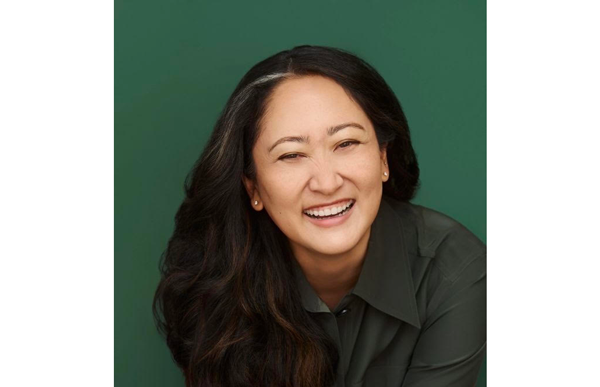
Gissele: And today, we’re talking to Judy Cage, who at 39 years old, she never expected to have a life-threatening stroke. Even after suffering TIA since the age of four and undergoing two brain surgeries to cure her rare brain disease, finally diagnosed at 29.
Gissele: She was like any other independent, ambitious compliance professional and MBA. She’d reached a career high before her body insisted to break. In 2019, Judy suffered a massive hemorrhagic stroke, [00:01:00] losing the use and recognition of her left side or the ability to walk, dress, speak and see normally, work, and drive.
Gissele: Against mind-blowing odds and later discovery of yet another rare disease, she was walking in two months and returned to work and air travel in six. After regaining full-time status five years later, she was promoted And yet most people are none the wiser. Her upcoming book, Super Survivor, shares her story and lessons on overcoming trauma and redefining success.
Gissele: Please join me in welcoming Judy. Hi, Judy
Judy: Wow, what an extraordinary story . I’m, the to suffer so many health issues at so very young Can you share a little bit aboutthe mindset and the process of you in recovery?
Judy: I probably would start with the mindset during, the illnesses, [00:02:00] which was just trying to live from my childhood through, my late 20s with TIAs or mini strokes. Not knowing what was going on be- ’cause I didn’t have the diagnosis. And then at the age of 29, to be diagnosed with this rare brain disorder and realizing that I would be undergoing a brain surgery on each side for five hours, where they remove a piece of my skull, stitch on my temporal artery and and, put the cap back on. I, I had just started my MBA program I had finished a semester,
Judy: I was diagnosed right before I started school. So I’d been accepted to the program. I go I have a semester of school. I finish [00:03:00] a final Monday and Wednesday. I go up to Boston on Thursday for pre-surgery testing, and that Monday I have my first surgery. And I had gone into that, basically had spent that semester, in a way I was so grateful for having this distraction of the MBA program, which is funny to call it a distraction
Judy: because in my high school/college, years, that was my ultimate goal to go through this program and to, gain these echelons of success or whatever have you.
Judy: Whatever a FBLA, Future Business Leaders of America nerd would think at the time. my mom said, “Don’t go to school,” “take some time off. Just, relax.” And thank goodness I didn’t, because I would’ve gone, either stir crazy or mental or, what have you. But I found [00:04:00] myself a- and I was still working full time. Up until the surgery I would sit in the car and scream my lungs out just out into the void, just out of absolute terror or helplessness or just this feeling of wow. It’s, it wasn’t worry about what was going to happen, it was just this angst that I had zero control. None. And I was thinking I don’t have anything at this point to even put in a will. I have my piano, I s- I’ve had since childhood. I’ve had my f- I have my 401. I have my CD collection and I went up there thinking, this could be it. And, I didn’t think about, saying goodbyes to my coworkers. My [00:05:00] ex’s family was in the room before they took me away to surgery, and my father-in-law at the time had said… I just looked at him and I said, “I love you.” And he to see him, burst out a bit was tough. But then, I just accepted whatever was going to happen was going to happen. And I just, I made it through that surgery, and then, 10-plus years later, the stroke happens. The surgery was done as a as the cure. That was supposed to be it. That, that was basically all they could do at that point. And I had just I went back to my life after, after those couple months of being out. I went back to school full-time, working full-time. And just went back to life and then just started accelerating again and just moving forward. And then thinking that everything was [00:06:00] okay.
Judy: There was nothing that could ever happen at this point. I’d already been through so much. I kept building my career, had gotten to the point where I really, loved my job. Was traveling 50% of the time to Columbus for a week and then back home. And and then my body said no.
Judy: My body said, “What are you doing? You need to take a break. You’re overdoing it.” And I, without any sort of warning that I was paying attention to, the rug was pulled out from under me. So that is when the stroke happened. I lost the left side of my body. I was, like you had said, I had lost the ability to walk. I wasn’t recognizing things on my left side. It– I did not realize that my left arm was mine. And I w- I was cursing the person who was in my personal space until I realized it was actually me. And I think there were a lot of [00:07:00] feelings that kind of went along with that, and over the years I’ve tried to think, “How did I get through that?” And then, “How did I get through the stroke?” And now it’s been it will be eight years in January.
Judy: Fortunately, a lot of that came back within that short period of time. A lot of it was really hard work and physical therapy, occupational therapy. The other part was, in spontaneous recovery as well.
Judy: The blood soaked back into my brain, which was the most painful experience of my life. And I just had to learn these skills back. But I had lost functionality of my body to the point where the signals from my brain to my bladder, they weren’t working. And I was wetting the bed like a child. And to feel that kind of horror and removal of yourself [00:08:00] from the picture that those were pretty tough things to go through. But now moving, A- almost eight years later I… life just returned as it did after the surgery, life r- returned back to normal in its own way. As you had read, I went back I went back to work. I ho- I- my stroke was in, in January of ’19, and that June, in the beginning of June, I hopped on a flight to Columbus, and then that November I hopped on a flight to Dallas, which, you know, and you worry with a disease that I have that if you… w- and after having a stroke, if change the pressure,
Judy: On the plane with the altitude that, that could be an issue.
Judy: There are steps that you take to prevent anything else from happening. In the meantime… Actually, though, fast-forward to last month, and I flew out to Disneyland with my [00:09:00] grandson.
Judy: So that was by far the longest flight and it was, great to face that without a ton of hesitation. It’s a combination of the passage of time, but then also a regaining of confidence and that, just from living day to day and having that experience. Just continuing to develop back and gaining yourself back. And in, and then just I when I returned to work, I did not tell a soul I told my boss, of
Judy: course that this had happened. There were not a ton of people outside the regular population of people who saw me half that time in Columbus. They they didn’t know, unless they had seen me all the time and then all of a sudden they didn’t.
Judy: I wasn’t there for, six months. And so my close team members knew. Nobody else knew. We [00:10:00] had merged with another company another large company and none of these people would know until I recently disclosed it back in June, March? March, I think. And and, it was interesting.
Judy: It was almost like a social experiment to see how people would react to that. So especially people who, had known, were closer, but didn’t know the underpinnings of everything. And
Judy: then there were, the new, younger, ambitious employees that, you know, as a compliance person, they would say to me, “I’m asking you to approve this.”
Judy: And I said if you read the email I sent you, I did.” But, they were pushing a little bit, seeing, testing their boundaries with what I was potentially impaired with. And that, that sort of thing made me laugh. But but I just, I I [00:11:00] can sit back and observe everything that is going on.
Judy: And I can see where people’s minds go, what they’re assuming is accurate, what they aren’t assuming, what they couldn’t possibly know, and therefore what, how they would, treat me or, i’m trying to… allow people or give people a window into s- understanding what chronic illness is like where I could look completely normal because, people had no idea that this happened and they’d worked with me for years. And also people see me on the street walking the dog, and they think “Absolutely nothing’s wrong with her,” “she looks fine. She looks put together.” And then for them to find out otherwise, if I become friends with them, that is. I, sometimes I’ll tell a random Uber driver, who happens to be taking me to an appointment at, the [00:12:00] University of Pennsylvania. And they know that y- they’re at a doctor’s office. I’ll, they’ll ask how things are, and if they seem open to it, if they seem, like open-minded or, like they are thoughtful, critical thinkers, then and we get into a conversation then it will, spill out.
Judy: And it becomes not to pat myself on the back, but somewhat of an enlightening situation, which is what they tell me. And, Ooh but after it was after the five-year my s- excuse me. The survival rate of hemorrhagic strokes, there weren’t a whole bunch of studies out there. And because they are so rare and because people don’t survive them nearly as well, there wasn’t a ton of da- data to share or to study. And the study I had read when I was in the hospital was that half of the people die within the first four [00:13:00] weeks. W- a lot of them die within the first few days after the hemorrhagic stroke. Only 26.7 people survive after the five-year mark or to, at the five-year mark. Which I used to think is is five years all I have. If I’ve made it two years, do I only have three years left?
Judy: And then of course, with medical studies, five years is just this kind of subjective number where, they know that they can get a certain amount of data from the patients or their caregivers or family, et cetera. So That was the mindset of learning that I had this rare disease, and then trying to go back to life with my mentality, and then having the rug pulled out. I I have learned so much, and just as I’m doing these little mini social experiments in my head, I am witnessing so [00:14:00] much. And I’ve also asked or tried to figure out, and this is where I don’t have the answers.
Judy: I do not. But I am trying to figure out What it is exactly about me that allowed me to survive, and to survive in a way that I can laugh about things, joke about them, not huddle up in fetal position and just cry. How I was, so ambitious to get back to work and I I have been trying to evaluate all of these things.
Judy: And I’ve been gathering a lot of data, but do I– not have the answer yet. And one of the things, that we had discussed and that you cover as topic, main topic in your pod is the like love and compassion and forgiveness for others. And I had and in a really great pod called Born [00:15:00] Superhuman I was a guest on, and Dan, who’s great, he, he actually opened the floodgates a little bit for me and was asking, What did you dream about when you were a child? And we talked about, my parents and how they were tiger parents and, very strict and demanding. And most recently we’ve had a switch of roles in our relationship, and I have become their caregiver as they are elderly. My dad’s about to turn eighty-seven and my mom eighty, and they are both experiencing dementia
Gissele: Oh, wow
Judy: And their personality traits which, some could call mental illness.
Judy: And that was difficult experiencing in childhood. And then as a first generation American I [00:16:00] had, two parents that didn’t really know their way around the world. Tried their best but it was all about everything that they had sacrificed to bring their children into the world, and it’s– I have two older sisters. So if we were not performing our best at school in s- sports, I joke because I say gymnastics or track, and I really am not an athletic person at all. AndIn middle school, I was having some problems with school or in particular math against the Korean stereotype of being really great at math.
Judy: I was not good at math.
Judy: So in sixth grade, I was getting Ds in my in my math class, which is not like me at all either because, usually I am the, I would cry at a B. And I’d [00:17:00] get probably mocked by my classmates who are saying tch, why is she crying at a B?” That, that was just indicative of being an achiever, but also, being under that pressure. I’d come home with a 97, and my mom would ask why I didn’t, why it wasn’t 100. all they would say is they sacrificed, they worked so hard, they did everything to, make us, give us a lifestyle or just a life.
Judy: Give us an education, et cetera. And so I felt as though I was letting them down And at that time I had done violin lessons, piano lessons. I was in gymnastics at the time. Back then my disease was not diagnosed, and all the doctors at the time thought, not all of them, but the ones I was seeing thought I had epilepsy. So they gave me this medication called Tigertol. And that was, I guess if you take too much it makes you dizzy. And of course, I [00:18:00] think I had just assumed I was better off dead than being a burden to my family.
Judy: So instead of one Tigertol, I took five. And I went to gymnastics class, and I wobbled on the beam and fell over. Not causing serious injury. Again, I was not very athletic. But I, I had confided to my sister about this. She told the school, the administration and we had done a session of family therapy. My mom spent days in bed just crying and feeling sorry for herself and saying, “I’m such a bad mom.”
Judy: She felt like she was getting so much criticism from us, and so we never went back. And
Judy: in 2006, I believe, I had my first panic attack in in Hawaii. Y- the second you get to s- your nervous [00:19:00] system settles down, that’s when the anxiety comes in and says, “Okay I’m ready. I’m going to make myself known.” And so after that, I I had started going to therapy. And so now 20 years later, I have learned so much. And I have learned and still continue to learn with every additional lesson, you know, thinking, “Are there many more for me to learn?” But then, in these difficult situations with my very stubborn parents who do not wanna go into home care, who do not want, to admit that they have anything wrong with them but then drive their way out to Pittsburgh without any– w- maybe knowing the destination in their minds when they sat
Judy: in the car, but not not remembering any of it when I go pick them up. My husband and I went to go pick them up and and it, they lash out, they yell, [00:20:00] they criticize. The other day they, went into the ER again, and my mom said that I wanted my dad to die if I did not pick them up from the hospital that afternoon. And very triggering. But I’m telling this in a roundabout way. From the stroke, I have since, you know– I’d, I wrote a book after making it past that five-year period. I look back now and I think I was, in a circular way, I became this person who, when I was a tween, I thought I wasn’t worth this body, this soul, this, whatever my understanding of that was. I didn’t value it enough to stay here on the planet. And since I survived the stroke so that I can inform [00:21:00] others, be a peer mentor to other stroke patients, their caregivers their families and let them know that it is possible to survive and it is possible to regain your function. It’s different for everyone. But it is possible. You can have a different mindset. You can advocate for yourself in so many ways. I was a people pleaser. I said I anything to make my parents happy, anything to do that, and that has reverberated into my relationships, as of this day. I still wanna make sure that the people that I love are happy at my own expense. And I’ve also, discovered then you can say no. No is a full sentence. Y- you can… Especially with stroke you lose so much of your energy. You get your cognitive fatigue, your physical fatigue. You [00:22:00] have deep conversations like ours and, I’ll probably need to rest a little bit afterwards. It’s a balancing act. It’s an act of pacing, which is really important for anyone who has a chronic illness. Anyone, period, should try to consider it. It’s just that you don’t have to. You’re not forced to until you undergo this medical event. But I have then found and advised that you can choose for yourself before you have to. You can choose, and you can preserve your energy. You can preserve your mental strength. You can preserve your sanity by protecting it, and time is all you have. Time is the biggest gift that you’re given and the the, the most valuable thing that you have, and you can choose how you wanna spend it. I… Am I am I going to go to a family event that I’m [00:23:00] dreading just to make someone happy when, the next day or even during that event, at some point within an hour, they’ll probably express some sort of disappointment or, some complaint. W- why give yourself so much or why give so much of yourself when you also, as somebody who helps others, you have to protect your own energy to be able to help others as well?
Gissele: So I just wanted to comment, like you’ve said so many amazing things, and thank you for sharing your story. It’s an extraordinary story, and we are so grateful that you’re still with us. So very grateful for that. And one of the things that I thought about when you were talking was, you’re still trying to find out why you’re still here, and I thought about…
Gissele: Have you heard of V- Viktor Frankl? He was… He lived through the Holocaust, so he was one of the few survivors that lived through the Holocaust, and he said that the people that had the vision of the future, that saw themselves beyond the current circumstances, were the ones that survived the [00:24:00] Holocaust.
Gissele: Other people just… they died. They literally died when they had a date and they said we’re gonna be rescued by this date,” and then they didn’t. And then, “We’re gonna be rescued by this,” and then they didn’t. But it was the people that saw beyond. And it seemed to me like for you, your career was something that was your vision that was pulling you, and now you, it…
Gissele: you seem to have a new vision, which is helping other people see beyond the, the limitations that the medical community tells you that says, “Okay, y- this is your box and this is how you fit.” You’re a miracle, and you are showing to other people that they can be a miracle as well.
Judy: Thank you. Thank you so much
Gissele: Yeah. I wanted to talk about the immigrant parent thing because I…
Gissele: Girl, I hear you. I came from parents that were immigrants. They immigrated. They worked very hard to get us here, and there was always this underlying guilt that children have “You owe me. You owe me to succeed because I struggled so much. You owe me to…” But when I think about it, and yes, I’m very grateful that we got [00:25:00] here, I’m very grateful for everything that my parents have done, and I was a kid when we came here.
Gissele: I didn’t actively choose. Not that I asked them to bring me here. So I’ve had to…
Judy: birth.
Gissele: Yeah. And and to be honest, this is something my kids have said. They’re like, “We didn’t choose to be born, so don’t even…” Right? And so the expectations that parents have, we’ve been taught that conditional love, transactional love.
Gissele: I love you. I did all these sacrifices for you. Now you owe me.
Gissele: And I realize, I don’t owe them anything. I really… I love them, and I want the best for them, and I want to help them, and I want to do these things. I do not owe them. I can’t owe them as a child
Gissele: They chose to immigrate, so these choices they made. But when I look at my parents’ history, they came also from that same history. They were told by their parents that they owed them, and so there’s this expectation, immigrant familiar expectation of you owe us, and I’m like, “Yeah, no.
Gissele: Sorry.” I don’t owe you anything. I [00:26:00] didn’t… I- as a little kid, I wouldn’t have consciously chosen, said, “Hey, Mom and Dad, let’s immigrate to Canada. I’ll hit you back when I get there.” No. I had no idea where… I didn’t even wanna move. I was in Peru. I was with my family, and so that really is strange.
Gissele: And the other thing I really resonated with is, our parents weren’t taught to regulate their own emotions. They were told to just manage them because their own parents couldn’t manage them, and we were taught the same things. And so when you were talking about therapy and how your mom made it about herself, right?
Gissele: Because she probably genuinely felt shame and guilt, right? But at the same time, like, because they weren’t taught to manage those difficult emotions, they can’t hold yours,
Judy: Yep.
Gissele: and that
Judy: we aren’t responsible for holding theirs. Yep
Gissele: Yeah. Yes. Yeah. Yeah. So I wanted to ask you because, you’re a resilient person, what kept you moving forward?
Gissele: There– I am still to an extent trying to figure that out. But I will tell you that in the moments where [00:27:00] I couldn’t get out of bed myself, and this… And we’re talking physically not, mentally where I couldn’t sit up in bed without falling over where I needed help being transferred from the bed to a chair and back. I was so stubborn. I just said , ” I need to get back to my life.
Judy: I need to go back to everything I built. I can’t believe that I’ve built all of this, and it’s– I I refuse to let this stroke take it away from me. I just refuse.”
Judy: and I just I tried my hardest at PT. I I would ask for additional sessions over the weekends. And I– It was either a combination of getting back to my life no matter what and it was also eventually I call it radical acceptance because there was– there was nothing I could do. There was nothing else I could do. I couldn’t [00:28:00] go back and change time. I couldn’t, take back the time that I’d put into the work, I couldn’t take back all the trips that I had made. I couldn’t take back the time or the hours or, any of the stressors that, contributed to more high blood pressure. I c- I couldn’t do any of those things. And I couldn’t go back and take better care of myself.
Judy: I couldn’t. So I accepted the fact that I might never get better. If I said, “Okay I’m never getting out of this bed again. The nurse is going to have to keep changing my wet sheets. I, I might never be able to just get to relax at home with a dog again. I may never. Anything that happens, any progress that I make is great, right?
Judy: It’s just I ha- I have this intense amount of gratitude for everything that’s come back. But I don’t expect it, nor do I [00:29:00] demand it from my body. And then I say, “If I just accept it as it comes,” say, “Thank you body for coming back as much as you can.” And you give it that like kind, warm, soft environment where it’s like, “Oh, you did a nice job.
Judy: You did a nice job. Let’s, let’s see what else comes back.” I think that’s like the best environment for that to happen. But I… it was a combination. It was stubbornness, and it was my saying… A- and then it was also a, maybe it was that I don’t wanna call it a lack of fight in the radical acceptance, but it was just letting go and saying, “Okay if it doesn’t happen, it doesn’t happen.” But thank goodness it’s all happened, thank goodness. And
Gissele: I was gonna say, you said some really important things and I don’t want the listeners to miss it. Number one is you were fully committed to getting back to your life, so you did the work. But at the same time, you let go of the [00:30:00] attachment if it happened or didn’t happen, which means you did the, your part, which is you showed up, you did the PT, you did the OT, you held the vision of “My goal is to get back into my life.”
Gissele: At the same time, you celebrated any little progress that you made, and like you mentioned, gratitude is so powerful, right? And you were e- reestablishing the relationship with your body. You said before you had all these expectations and had a negative viewpoint of your body. Now you are loving and appreciating your body, and the little progresses it was taking.
Gissele: So often we’re like why aren’t we at the end? And I’m just gonna force this,” right? The baby steps are so important.
Judy: I have to make one little tweak to that. You had said, you celebrate the progress, and it is true, you do. I will tell you in the very same vein that you just said I also quickly forgot how much progress I had made. I would say I [00:31:00] am… Because I was so determined and stubborn, I said, “Okay I was able to do this, but guess what?
Judy: Now I wanna be able to do this. Like, why can’t I run yet?”
Judy: Or but I when you get– When you’re about to leave the hospital, they have you outside and you’re learning to cross the street, and you have the traffic light there. They tell you to wait two traffic cycles in order to cross, because at that point you know that you can safely cross. And I had a, a peer mentee who was, he was also the same way. He was pushing himself, and I said, “it hadn’t even– it hasn’t even been a year yet for him, and I said, “Don’t forget, when we were in the hospital, we had to be taught to cross the street, and here you are and you’re developing an app.” you’re for pe- people to help with their speech therapy. And that amount of pride is amazing. He’s awesome. But we all have to be reminded of that. We all [00:32:00] have to be reminded that, yes, we couldn’t walk. Yes, our, we had to learn memory skills back.
Judy: We had to, be able to, watch TV or read or see things go by on a screen. And y- and you do get stubborn, and you do say, “Why can’t this be done already? Why can’t this be done already?” But it– unless you do recognize those points you can easily forget , and then you can be hard on yourself again. So
Gissele: Yeah, this is a great lesson. I wanted to go back to a comment that you made. You said that it came out of nowhere, but you seem to imply that you might have had some signs. Is that… Did I interpret that right? Like, when your hemorrhagic stroke happened, were there anything, like s- things that you missed maybe that in retrospect you’re like, “Oh, wait a minute, I should have…”
Gissele: Go ahead.
Judy: Absolutely. So with my disease
Judy: I have another disease that I was diagnosed with hypermobile Ehlers-Danlos system, [00:33:00] ec- ugh, syndrome. You can… I have hyperflexibility. You could see my fingers, like the…
Judy: Any- anyhow that’s just one symptom of it. My collagen is broken essentially everything is a little too stretchy. And so blood doesn’t get, enough blood doesn’t get up to the brain for one. But the problem with Moya itself is that because these internal carotids shrink, not enough blood gets to the brain itself. So the brain will compensate by creating these collateral vessels, and these collateral vessels have really thin walls. It springs out into it almost looks like the roots of a tree. But in the in the MRI or the MRA, you can see the, it, it looks like a puff of smoke because all of these branches are coming out. And that it was discovered in Japan where they’d call it Moya because it, that means pu- puff of smoke in Japanese. And [00:34:00] so these walls have, or these veins have very thin walls, especially if you have high blood pressure, that puts more pressure on those walls, and so they’ll break. So as a as a child, you don’t have as many that have grown yet. But they are, those are happening. But if you have a stroke as a child, you’re more likely to have an ischemic stroke, which is a blockage or you’re not getting enough blood. As an adult if you don’t, if there are people out there who don’t know they have it, and then they all of a sudden have a hemorrhagic stroke, and their vessels pop or crack, and then their brain is flooded with blood. Mine mine did just that because I had high stress, high blood pressure. I was, constantly pushing forward. And I when I said it came out of nowhere, to me it was because After the surgery, I had gone back to pushing, working [00:35:00] harder, harder, harder, thinking, “I have gone 10 plus years without any occurrence really.” There were some times where I’d get tingles, but very rarely. I’d get tingles and then they’d disappear. And I’d, I had… I did have high blood pressure. I did have, at one point when I was in my MBA program and working I think I was over… I was at like a 200 over 100 blood pressure and I was taken to the ER. And so those are the things that I probably should have paid more attention to. “Oh, Judy, if you’re… Why is this happening? And maybe you should slow down, and maybe, you should take better care of your body.” No. I was living the traveler’s life and, I was, having dinner at the hotel bar and, just, having a glass of wine with dinner and then starting this cy- cycle all over again. And and I should have paid attention to… [00:36:00] I should have taken my blood pressure way more often. I should have listened to my doctor. I should have just not knowing that work being so big a part of my identity and so much of what validated me, I think,
Judy: … That’s what I kept feeding into, because I was good at that, that’s something that also coincidentally made my parents be able to be proud of me and boast or whatever. “Oh, she has her MBA. She’s a big compliance officer,” blah, blah, blah. They could do those things. And so I leaned into it, continued to lean
Judy: in and and I- the- that is what my mind was telling me was most important, until the body told me otherwise. And it wasn’t until the body said that that I knew no other way
Judy: But so for everyone who hasn’t had this yet you can just [00:37:00] listen to yourself. Self-care is really important. They, I was like, “Psh, I don’t have to do that.
Judy: I don’t have to relax. No big deal.” Be in the moment, go outside, walk, enjoy the sunshine, because if you’re in a hospital room, they do not let you out, and you cannot go out and see it. you can’t breathe the fresh air. You can’t, go grab a cup of coffee with your girlfriends.
Judy: Go on a date. Go enjoy the things that life has for you to enjoy. And also just pay attention to your body because and the more you enjoy these things outside, the more you live in the moment, the more you will actually also be able to hear your own body. that your body becomes , The more in tune you get with it, the louder it becomes, right? So It, you can choose. You are your own person. You’re, you are you. And I more [00:38:00] quickly learn the lessons because I found that when my body gave up on me, that I was the only thing left that I had,
Judy: like my personality, my sense of humor like my, my ability to make the nurses laugh, like joking that, if I couldn’t move my arm, I’m like, “I guess I can’t dust the house anymore. I’m good.” There are two sides to this. One istake care of yourself to the point where you don’t have to learn this. If you do, you can make it to the other side. But then also for the people who have no idea, who are healthy, who get to complain about the small things, you are so lucky. I hope that you Take note of that gratitude. I hope you can see the bigger picture. and do those things, share your love with your friends [00:39:00] and family. Really recognize it. D- go do the things you love to do. Go write a song, go pick a flower, go, say hi to the butterflies as they’re flying by, it sounds so cheesy, but but I… There was a point where I didn’t think I would ever be able to do these things again, and now I have them. And so I’m going to love every minute.
Judy: And so then also for those people who haven’t had these, these big events happen to you sadly, sometimes they will to you or the people that you love. And when you face other people or you face, if you have an issue at Starbucks, and you didn’t get your right shot, then I would say be kind, have empathy, have understanding and compassion for the people around you. You never know what somebody else is going through. Treat them with kindness. You… People look at me, they see somebody who has no, no difference in their [00:40:00] gait, who’s back to work, who seems carefree and laughs about so much. But I almost died. They’re amazing lessons. You don’t have to suffer through this in order to learn them
Gissele: Oh, what a great insight. And I also love the, the point that you made about the fact that, when you start to appreciate life and be more present and really think about your life you less and less wanna people please and go to and experience the negative people in your life. And, I’m not a proponent of tossing people away and whatever, but if your energy is one where it’s being negatively impacted, like you can just make a choice not to be exposed to that.
Gissele: Because like you said, this is your life, you’re living it. This is your body that gets to hear that and the complaints and the negativity and stuff, and is it really worth it? I think it gives you a sense of who do I wanna be, what do I wanna choose, and what do I really wanna include in my life?
Gissele: And including negative people in your life, it’s such a downer. it can be so [00:41:00] challenging, but how do you love them anyways, even from afar, right?
Judy: when you go through an event like this, you quickly are shown how valuable your time is, but then also how limited it is. And if you’ve been, if you’ve surrounded yourself with people who are, just work friends or just drinking , like your happy hour buddies or, then, I had one friend, a ca- a career friend, we had met at at the same, our first job at Deloitte. And we’ve been friends for no it would’ve been 25 years now. And I told him about the stroke we got to a point where, we’d have like dinner every six months we had a group of three. And we’d get together, it was like no time passed and, we’d have a great time. And we’d experienced so much together. And then when the time came, the stroke happened, and I’d gotten out of the hospital, and I was on the phone with him, and I told him about it, and he said, “Can I tell our friend?” Like he wanted to [00:42:00] share it like gossip. And this was my life. Me almost dying, and he wanted to spread it like gossip. And I was like, “I understand how you value me now. you don’t feel the same way I do. And this is not a relationship I wanna continue. I
Judy: don’t… not even for niceties, not- nothing.
Judy: It’s not worth my time.” And that was so easy to break off once that happened, and once other people started showing exactly what the depth of the relationship was or wasn’t that became a lot easier as well.
Gissele: Yeah. It’s so funny. I have this viewpoint on gossip that is that it enables you to have closeness to other people without sharing your own life, right? It’s… it connects a connection with other people that you wanna create a connection to, but without really truly disclosing anything about yourself.
Gissele: So you bring in somebody else’s thing as [00:43:00] a way to connect, and it’s like, no, that’s not your thing to share. You can just either, if you wanna share your own life, do, and if not, then you gotta find another way to connect. But
Gissele: that’s one thing I’ve observed, yeah
Judy: and it’s so shortsighted because then they are never self-aware enough to dig into their own person
Gissele: Correct. And I think it’s an also as you mentioned now, it’s also an avoidance. It’s a, I don’t have to do that work for myself. I can bring in somebody else’s and I can focus on their life, their my own, right?
Judy: And it wasn’t even a, “How are you? Are you okay?
Judy: You made it to the other side? Oh my gosh.”
Judy: It was like, “Can I tell someone? Can I tell someone? Oh my gosh.”
Gissele: right? Like you got Jimmy Choos or something, right? It’s like, can I tell someone that you have them now? Oh, I’m sorry. That must’ve been so devastating. That must’ve been
Judy: was tough, but now I can look back at it and think it was an important lesson,
Judy: and I can apply that to, so
Judy: many other people going forward
Gissele: Yeah. So a couple more [00:44:00] questions I’m asking everyone this season. What is your definition of self-love?
Judy: I think with everything that we’ve talked about today, it is listening to yourself more or answering to yourself more first before you answer to other people. Nobody else is going to advocate for you. I think that is the biggest form of self-love. For me, it was a, lesson that I– that was difficult and long to learn but that I can say I’m going to speak up for myself.
Judy: And now when I do, I get to live the fullest, to the fullest extent that I want to
Gissele: Love it. Last question, where can people find you? Where can they work with you? Where can they get the book, Super Survivor? Please share anything you want to share with the audience.
Judy: Super Survivor is available on Amazon in both paperback, hardback and Kindle. I am [00:45:00] currently taping the audiobook which was important to me so that other stroke survivors can listen to it and of course busy individuals who are, with multiple children and on the road. And I also have a a site where I’ve posted, these podcast appearances at judikimcage.com and at on Instagram, random things and post, repost from other survivors great lessons that I’ve seen at judikimcage, the author page.
Gissele: Oh, okay. Beautiful. And your handle for social media is what?
Judy: Judy Kim page the author page? Yeah.
Gissele: Perfect. Thank you so much, Judy, for sharing your wisdom with us and your extraordinary story and, y- teaching us on how to survive sort of our most difficult moments. we’re so grateful you’re with us and for all the lessons that you continue to teach, especially about invisible disabilities, and teaching people not to make assumptions about what somebody might be going through.
Gissele: Thank you to everyone who [00:46:00] listened to another episode of Love and Compassion Podcast with Gissele. If you loved this episode, please share it far and wide. And tune in for another episode in the future. Thanks so much. Bye now.