
TRANSCRIPT
Gissele: [00:00:00] Hello, and welcome to the Love and Compassion Podcast with Gissele.
Gissele: We believe that love and compassion have the power to heal our lives and our world. Don’t forget to like and subscribe for more amazing content. And if you’d like to support our podcast, you can go to buymeacoffee.com/loveandcompassion. Today, we’re gonna be talking about the power of surrender, and we’re talking with Darryl Ditmer.
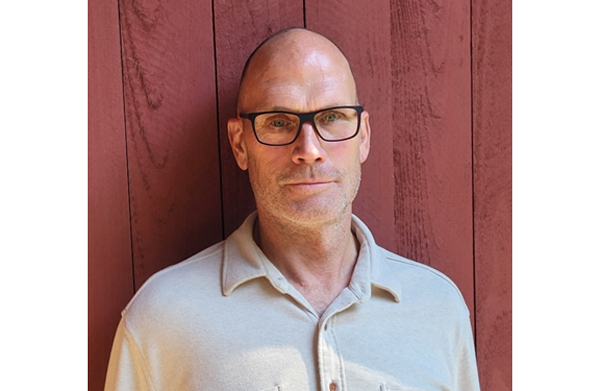
Gissele: After a humble and often tumultuous beginning to his life, Darryl Ditmer was confronted with a crossroads at the age of 19. Now having found success in many areas of life, Darryl has committed himself to helping others do the same through his coaching, his books, interactions, and how he chooses to show up in his world every day.
Gissele: Darryl lives with his wife, Christina, in the mountains of north Georgia, where a quieter life reinforces the same truths he teaches. Please join me in welcoming Darryl. Hi, Darryl.
Daryl: Hello. Thanks so much, Gissele. I appreciate you having me on.
Gissele: Yes, of [00:01:00] course. I was wondering if you could start by telling the audience a little bit about some of your beginnings and some of the struggles, and what the pivotal point was for you.
Daryl: Sure. I was born in the Midwest, and actually in Detroit, in Michigan. And my dad was a mechanic, and my mom took care of us kids and the household and it was I guess a… It was just really normal for… At that time and in that place, it was just normal. Every… I thought every kid’s dad worked at either GM, Ford, or Chrysler, because it was Detroit, and either that or they were a farmer.
Daryl: And that was kinda how it went. So in and around the cities and suburbs was one sort of way of life, and then out in the country was another way of life. But… So my dad was a pretty tough guy. He was he was a Korean War veteran Just a big, tough, strong dude.
Daryl: And not an unfair guy but very, discipline-oriented, that sort of thing and that’s how I grew up. And I must say that my [00:02:00] mom was probably in many ways- A little tougher than my dad, and the reason I say that is because she had a difficult, a very difficult upbringing, and had some really difficult things happen to her, some very traumatic things.
Daryl: So that is from whence I came and a lot was expected of me as a young person in terms of grades, in terms of sports. And I believe as I look back that my parents were trying to live through us kids, and my dad was very sports oriented. My brother and sister did not embrace sports and my mom was all about manners and grades and, how we’re looking out there in the world.
Daryl: And so that to me was a lot of pressure. I felt a lot of pressure to perform, and I felt a lot of pressure to do well in all these areas that were expected of me and however that fit into my beginning of the drinking and the drugging career is how it fit. I don’t [00:03:00] blame, I don’t have animosity looking backwards, anything like that.
Daryl: It’s just it became my life. And so I started drinking and doing drugs, and it was a fairly quick slope that I was heading down. It started at 13 and it progressed and the thing that progressed is me becoming someone other than I was raised to be. I became a completely different person.
Daryl: I was… I became a liar, a cheater and a thief and, just did things that were not cool, not good things and that started to grate on my soul. It truly did, on my heart, on my soul, on my mind because I couldn’t get out of it. I didn’t know exactly what was wrong, but I couldn’t move out of it.
Daryl: I was young. Everybody was, for the most part, not everybody but a lot of people were doing the same things that I was doing. Destructive behaviors, all that sort of stuff. And the interesting part is some more [00:04:00] normal youngsters at that time were falling out of the circle, and then it became a circle of some fairly sick humans, including me with the drugs, with the alcohol, and with the trouble.
Daryl: So that’s where I, that’s where I come from. It continued to progress. I started to just not care about many things, although I was probably fooling myself because deep down I did care. And that’s what was grating my insides so terribly. But I tried to convince myself that I didn’t.
Daryl: So I was faced with an intervention when I was 18 years old, and I was basically, “Get out of our life or go talk to this drug counselor.” And that was the choices presented to me. And I didn’t know what to do. I was scared to death. I was… i’d been found out, and I’d been being found out for a long time, but that was the culmination of oh man I’ve gotta face this. And I didn’t want to [00:05:00] face it. And so they said, “If you’re gonna go, meet us here at this place at this time.” And I said, “I will let you know.” And I ended up going, and I planned on…
Daryl: I was just placating the whole thing to a certain extent. I planned on lying. I planned on just being my normal self that would get myself out of these scrapes. And as soon as I walked into this guy’s office, he’s “You can’t lie to me. You cannot lie to me. I don’t want to hear it. I’m just…
Daryl: I’m gonna call you out on it, and I’m gonna kick you out, and then you’re gonna be in the same place you were before you came in.” And so he intimidated me at my ripe old age of 18 years old. I was scared to death. And so What happened was… And I don’t remember much of what was said, but I know that I said to him or was as honest with him as I could be at that time in my life.
Daryl: Whatever that equated to, I don’t know, but I told him. And he said we gotta get you into drug and alcohol treatment.” So that was the culmination. I w- I will say this [00:06:00] that three days before I went into drug and alcohol treatment, I was at a New Year’s Eve party, and I was…
Daryl: I just kept getting sicker and sicker, and I was at this party, and there were 100, 200 people around. I don’t know. There was a bunch of people, a bunch of people I knew. And I was the most lonely and scared and just curled up inside I’d ever been in my life, and I… the thought occurred to me and I think I was taking it probably more seriously than I wanna think about, that what would happen if I just ended it and I just stopped being on this earth and took myself out?
Daryl: And that’s… Three days later, I went into treatment, but that’s my beginnings.
Gissele: Thank you for sharing that. That must have been really difficult as a teen. Do you think that there was any aspect of you that was trying to rebel against- what your parents were bringing forth? I think sometimes when we don’t agree with the parenting or don’t feel like we align to that, that we’re gonna do the exact opposite as a way to wanna be more authentically ourselves, [00:07:00] ironically.
Daryl: I think so. A- and I think it was a, probably a combination of rebellion, but also just trying to relieve the pressure, just trying to find another way to feel. And once I discovered another way to feel, I just wanted more, and I wanted to keep going down that, that path which just led to worse and worse problems.
Daryl: What did you find was the pivotal point where you actually started to see an upward movement? So things, instead of going in a negative way, started to be more positive I would say it was during treatment. I was in a 30-day inpatient treatment program and that was horribly frightening because I had to talk.
Daryl: I had to tell people, or at least try to tell people who I was and be honest with myself and honest with them, and all these things that I was absolutely not familiar with. I don’t remember getting any memos as a kid that [00:08:00] these are the things that I’m supposed to be doing.
Gissele: Yeah.
Daryl: And so they started pulling me apart, and I had to start being vulnerable to whatever extent I could be at that time.
Daryl: But I also met some people who had been in my shoes, and one counselor in particular and he was now a counselor at this treatment program. And so that gave me some hope because he seemed like a pretty happy, peaceful, just… He seemed like he was doing fine, and I was not fine.
Daryl: So-
Gissele: Yeah …
Daryl: so I think that is where I was… I started to recognize that maybe there’s something different out there for me than how I’d been living.
Gissele: Yeah. Thank you for sharing that. I wanted to know in particular what helped you realize that surrender really was the path, ’cause you have two books, When I Stopped Fighting: The Unexpected Joy of Getting My Head Out of My Ass, and When You Stop Fighting: The Road You’re On [00:09:00] is Your Own Asphalt.
Gissele: Can you talk a little bit about you realizing how much you might have been fighting life and that the path was surrender?
Daryl: Absolutely. I grew up with, like I said, my dad was tough, my mom was tough. It was a, no pain, no gain, rub some dirt on it, you’re not hurt if you’re not, in the hospital sort of thing.
Daryl: And that was how I grew up and, but there was also a piece of it where we didn’t expend our emotional energy on any sort of vulnerabilities or anything like that. It was just, if we were angry or if we… something great happened oh, this happened, or I’m pissed. That was- Yeah
Daryl: that was the energy. So as I… I got into the 12 steps during and after treatment, and that was a very positive thing for me, but I met a mentor and he said to me, as he listened to me struggling and fighting and just resisting everything, he said, [00:10:00] “Daryl, when you stop fighting, the fighting stops.”
Daryl: And so that was a very pivotal time for me, and I probably understood it about this much at that time. But something resonated for me where it made sense. It was like, oh, wait, so I’m the one that’s putting up all the fights. I’m the one that’s quote unquote, responsible for my existence, my side of the street.
Daryl: That’s on me. And that I don’t have to fight the world, and if I allow the fight with myself to wane, then the fights with the world just naturally go away because I’m not in fight mode all the time. So from a surrender perspective, that was… the first thing I had to do was say, “You know what?
Daryl: I cannot live this way. I cannot keep doing the drinking and the drugs and the lying and cheating and stealing.” So I had to surrender that life for whatever [00:11:00] was on the other side of that life, and I wasn’t exactly sure what that was. So that was the beginning of the whole sort of the big surrender, right?
Daryl: The big surrender oh man I just can’t do life the way I’ve been doing it. And then, for the last 40 years, there’s been a whole lot of other surrenders that I’ve had to do because life continues to happen and, if anybody’s like me, they’ll continue to fight. So I had to continue to let some of these things go.
Gissele: Thank you. I wanna just take a step back to go back to when you are raised by emotionally unavailable parents. It’s really interesting because you’re not taught about how to manage any of those difficult feelings, and the emotional repertoire really gets boiled down to very few emotions.
Gissele: And I’ve noticed this in terms of… and you can correct me if you disagree that, the emotional depth for boys in particular is very shallow. It’s like anger’s okay and maybe another difficult [00:12:00] emotion, but not the desire for nurturance and vulnerability. And for women, it’s the same.
Gissele: Anger’s not okay, but all of these other emotions are fine. And so we kinda emotionally handicap them in the sense of not enabling them to feel the full range. We’re full range beings. We’re supposed to feel all of these different emotions so that we can figure out for ourselves, and so how did your relationship with vulnerability change as you were engaging with that during your treatment?
Daryl: Honestly, I can’t say if I allowed myself to be vulnerable enough to even cry in treatment. And honestly, it’s a wonderful part of my life now. I love to just let go and let things out and that happens certainly much more frequently than I used, than it used to happen.
Daryl: That’s for sure. So it was… we could cry if we were hurt physically hurt. Yeah. My brother whacked me or something, I could cry, something like that, [00:13:00] and he could cry or something like that. But, the other things, like you mentioned, just weren’t necessarily a part of the repertoire.
Daryl: And I think that goes very deep with the box of stuff that we’re handed as we’re coming up in the world and, getting used to what this whole life thing is about, and they say, “Okay, you’re allowed to believe this and this and this,” and it’s five things, “and if you don’t, you’re in trouble, and this is gonna happen, and this is gonna happen.”
Daryl: So that range of emotion just gets “Okay, I gotta protect myself ’cause this is all I’m allowed to do.”
Gissele: Yeah.
Daryl: A- and so in treatment, it started to expand i- in terms of my ability to have some vulnerability and to feel some things and- And a lot of the things… there’s a theory, which I subscribe to, that, that when we start drinking and doing drugs in a way that we’re suppressing ourselves and suppressing our emotions, we stop growing [00:14:00] emotionally.
Daryl: And it’s really a thwarted truncated okay, this is gonna shut off for a while. So when I got sober, I started feeling things, and I’m like, “What is this, and what is this?” And- … I didn’t understand what was happening. However, it felt really cool when it stopped being so scary.
Daryl: It was like oh, so that’s what this… I started to feel a little bit of peace of mind, and some contentment and some sadness, and some regret, and fears, and, all kinds of different stuff. And I’m like, wow. And and that’s just been a cracking open situation for me for a long time and I continue to do things.
Daryl: I went to a a retreat, I don’t know, a few months ago, and it was really all about cracking you open. And I’m like… And I got cracked open after… i’ve been doing this stuff for a long time, and I got… I just got cracked open. I was… But it was the most beautiful, it was the most [00:15:00] beautiful experience because I was allowed to be exactly who I am and what I am in those moments.
Daryl: And I have a, I have wonderful relationships in my life and my wife and kids and, we can be who we are, which is a cool thing. But that just took it to an- another level, and it was beautiful. So I know that was a roundabout way, Gissele, of answering your question but that whole world opens up and it’s…
Daryl: And surrendering to the old world and embracing not necessarily the new world, but embracing whatever’s next. And that’s a pretty cool place to live our lives from.
Gissele: Wonderful. I was thinking as a person who grew up with two parents that had their own experiences one of the things I was taught was that they couldn’t… And I, and this took me a while to realize. They couldn’t hold my difficult feelings- Because they couldn’t hold their own, and so they needed me to regulate [00:16:00] my emotions so that they would be okay.
Gissele: And so I stopped realizing that it was, like, either my fault or that I didn’t deserve. It was just that they couldn’t hold it, right? And that actually goes to my next question because one of the things that I found with surrender in my own journey is how challenging I found it.
Gissele: Because I didn’t trust the people in my life. I needed to control a lot of my environment to feel safe. The thought of surrendering meant then that means bad things are gonna happen. That means if I just let go, then I’m gonna be unsafe. Yeah. Did you ever have kind of those moments, and how did you manage some of those fears?
Daryl: Absolutely. A- and I think that’s a very natural part of the process, ’cause we have this sort of, I have to keep my arms around what’s going on. And to whatever degree, and the sort of give and take of that is we don’t really have control. We don’t have control anyway, although we try to exert that.
Daryl: And so I [00:17:00] absolutely tried to exert that. And when they talked about surrender, as many things they talked about when I was young in 19, 20, 21, I didn’t understand any of it. So for me to surrender it wasn’t really difficult to surrender and say, “You know what? I can’t do the drinking and drugs anymore because it’s gonna lead to a really bad place, so I am going to surrender that and try to do things differently.”
Daryl: That was okay. But what about surrendering the belief system that I was downloaded with as a kid, or surrendering- … the friends or the toxic people that I had in my life? And I think those are the ones that can get a little hairy because, ‘ cause these are the only people I know, and they just happen to be doing those things.
Daryl: And some of them are family members. Some of the, those toxic people are family members. And then, we have to figure out how to handle that as we continue to [00:18:00] get better. But yes it was definitely difficult. I didn’t understand it but I started to let go, and I think this was a really big one for me, is I started to let go of the belief system that I was handed, which included religious stuff- and that was a big one for me.
Daryl: It included how I go about my daily life. It included my, my parents weren’t like… My dad was, a nice guy. My mom was a nice person, too, but they weren’t like, “Oh, hey, how are you?” They weren’t big socialites. They weren’t anything like that. So I’m unraveling all this stuff, and I’m not a big time social guy either but you know what?
Daryl: I know what it feels like when I smile at the person who’s cashing me out at the grocery store, or I say hi to somebody at a gas station because I’m not so wrapped up in myself that I want them to feel noticed, and that’s something that, that’s light years away from [00:19:00] how I was raised.
Daryl: So there’s some big things, but there’s also some little things, and little behavioral things that I can engage in that help free me from the bondage of what I f- try to think I feel safe holding on to. And the interesting thing is, the freedom is out here somewhere. The freedom’s way out here.
Daryl: This is the cage, and that’s what I have to let go of and surrender.
Gissele: Thank you for sharing that. What was coming up for me was the whole concept of uncertainty, right? what you were considering was you’re thinking about changing identities, right?
Gissele: You’re no longer that person who does drugs. You’re no longer that person that has those beliefs. But then on the other side of that is, I don’t know what this looks like. I don’t know who will stay behind. I don’t know what that person is going to do. What helped you trust that it was going to be okay, that you were on the journey that was probably on the upward, in, in how to manage some of the losing of those relationships?
Daryl: I found a lot [00:20:00] of solace, and this is for me, it’s not for everybody. I found a lot of solace in the 12 steps, and where I was surrounded by people… and, look, there’s it’s 12 steps. There’s a lot of unhealthy people there. There’s a lot of toxic people there. But I had to find people who…
Daryl: A- and I was trying not to be toxic it’s this whole soup of stuff. And and some of it can be sick stuff. So I needed to find because we have to, and I had to have a, not a goal, but an intention and an aim for what I wanted in this life. And it was worth sacrificing security to move into the uncertainty because of what I wanted.
Daryl: I wanted peace of mind, I wanted contentedness, I wanted good relationships. I just, I wanted to have a life that was different and significantly better than where I was. So was it scary? Yes, it was absolutely [00:21:00] scary, but it was… The juice was worth the squeeze as far as what I envisioned for my life.
Daryl: And I couldn’t go… You had mentioned the negative trajectory. I couldn’t go south anymore. I had to go north. And so I had to surround myself with people who… A- and they say, a lot of people say, “Surround yourself with people who will support you.” I like to say, “Surround myself with people who are also wanting to move their lives in a direction.”
Daryl: And I think that’s crucially important because, ’cause I can get support from a lot of people, but if they’re not trying to be healthier, that may not be the right person for my life. I want people who are also moving in that direction with their lives. And so anyway, yes, horrifying and scary, but I knew because of the people that I saw and I experienced and I met and I aligned myself with that there was something out there.
Daryl: So it was worth it to [00:22:00] have that fear.
Gissele: were you able to do certain things to regulate your nervous system? ‘Cause I sometimes find that your mind you can push yourself through, and, “This is my new identity and this is who I am now,” all those things.
Gissele: But sometimes our bodies just react from a place of history, right? Were there things that helped you address the fear as you were moving towards that new identity?
Daryl: Absolutely. There were. And what I found was my mind, if left to its own devices , can be very, It’s a scary, can be a scary place to be, with all the thoughts and the conversations living up there and the resentments that I might be feeling or that I, that…
Daryl: Whatever it is. And those sort of things just keep playing and playing. And so one of the things that helped me immensely and… Was writing. And it… We didn’t necessarily call it journaling back then, but just writing. And what I did is I took out a big yellow legal pad when I could [00:23:00] afford one, and I would just write, and I would just write and write, and I would take everything that was in here and everything that was up here and just get it out.
Daryl: And that allowed me to- Instead of just being a mess that was swirling up here, I could look at it and I could make some sense of it, and I could say, “You know what? I kinda get it. I kinda understand it. It’s okay.” It just took the sting out of it. So writing was a huge one for me. And then two other things that I learned that is, are continue…
Daryl: All this stuff is just life stuff as we go, right? There’s no… I’m not gonna graduate from the school of life until, it’s all over for my body here. At least for this ride. And so I learned meditation, and I learned breathing practices. And I started learning those many years ago, and it’s been just a time of practice ever since.
Daryl: And sometimes I practice really consistently, and at other times oh wow, I haven’t meditated in a while or wow, I stopped doing [00:24:00] that breathing practice. No wonder things start to notch up a little bit. So and I’ve been pretty consistent over the last many years but that’s how it goes, and it’s okay for it to go that way.
Daryl: And I think it’s… When I’m not doing it, it teaches me how much it means to me to do it, and I think that’s really important lessons that we can garner from, doing things that maybe are taking us off the track versus doing things that are putting us back on the track. And so those are three things that have really helped me over time.
Gissele: Yeah. Thank you for that. As a ongoing meditator, I can attest to the power. I was wondering what role forgiveness had, whether it be self-forgiveness or forgiveness of the others, had in helping you shift identities.
Daryl: Forgiveness is a big one, and it hasn’t necessarily been… A- and I’ll break it up between other people and myself.
Daryl: The [00:25:00] most difficult person to, to forgive was me. A- and that is for the angst that I put people through. And just because I got sober doesn’t mean I was perfect right from the get-go. Nor am I now, it’s just, it’s a constant improvement over the course of a lifetime. And so I do everything I can now to not put myself in a position where I need to forgive myself, and I also understand how important it is for me to understand that other people make mistakes.
Daryl: And there’s… This probably goes into boundaries a little bit, but what we used to say a long time ago, I never heard the word boundaries till recently. We used to say, “You teach people how to treat you.” And that was really important for me to understand because if I have toxic people in my life and they’re constantly needing to be [00:26:00] forgiven for something that they’re doing, maybe I need to reconsider who’s in my life.
Daryl: Maybe I need to start surrendering some of those relationships. And there’s a whole gamut of things that have to do with forgiveness. But first and foremost is I need to have some grace with myself, and then that allows me to have grace… Everything I do with me allows that to expand out into the world and the universe.
Daryl: And so when I have that forgiveness and grace for myself, it allows me a lot easier time to, to understand and forgive and give grace to others.
Gissele: I agree that, it’s important for us to have boundaries, and in fact, it’s an act of self-compassion to have boundaries with people. A boundary for me is, an act of self-love.
Gissele: Although it can feel very difficult to make space with people, especially if they are family members, right? Like, how do you take [00:27:00] time without hurting their feelings? How do you do it in a way that’s loving and not resentful or rejecting? They are gonna interpret it how they’re interpreting it.
Gissele: But at the same time, like, how do you create that distance in a way that is still loving on all sides, right?
Daryl: Yeah. It’s a difficult balance because I have a family member that continued to take advantage of me so many times, I had to show her the door. I did. And if she came to me at some point and said, “You know what?
Daryl: I’m in big trouble. I need your help,” I’m sure I would help her. But there are times when y- the preservation for me of my peace and my serenity and my ability to live my life from that perspective is absolutely paramount to… A- and much more paramount in previous years, but it was the matter of, it was a matter of whether I stayed sober or whether I don’t stay [00:28:00] sober.
Daryl: And so it’s, for me, that’s a matter of whether- … I continue on this planet or I don’t. so that’s how important it is to me. And I think it’s that way with a lot of people. Whatever the, the addiction or the or the issue is, it’s the matter of a- am I living this life in this way or in this way?
Daryl: And so there are times when I’ve had to kick people out of my life and sometimes I’ll just say… And there are some things that you can just let fade away. Because if they stop calling, I stop calling, or I stop calling, they stop calling. And it’s just okay, it’s a natural- Yeah
Daryl: Eh, we probably didn’t have that great of a time anyway. But in the case of family members, I believe it is absolutely crucial to allow them to know who I am, allow them to know what is important to me, allow them to know what is acceptable and not acceptable in my life. And I think that’s the most [00:29:00] loving thing I can do.
Daryl: It doesn’t necessarily have to come with, it, it can be very matter-of-fact. It doesn’t have to be like, oh, it’s… I don’t need to apologize for it, I just need to have them understand where I’m coming from and why. And I think that’s the most loving thing I can do for both parties.
Daryl: Because I’m allowing them to have their say in their life and how they go about that as regards me, and I’m telling them, what allows me to show the most love to myself as well. And sometimes just because they’re family, honestly… And I’m not saying boot your family out of your life by any stretch of the imagination.
Daryl: Family is absolutely crucial to our lives. But you have to let people know where you’re at. And apologizing for it takes away some of the power that you’re… you can take away that power if you apologize for it. So anyway, I hope that helps, Gissele.
Gissele: [00:30:00] it does, yeah. And and the other thing you were mentioning which I think is so fundamental is truth telling, right?
Gissele: Like understanding that it’s your truth. It may not necessarily be their truth, but it’s your truth. And sometimes with family that can be really difficult. Like it can be really difficult to say this is my truth,” and then because some family members will invalidate because they can’t deal with it, right?
Gissele: It’s hard For them to accept that, that your perspective of your relationship may not be what their perspective of your relationship is. And so the ability to be able to engage in dialogue in a way that is the most authentic regardless of whether they accept it or not, I think is really key.
Gissele: Are there any things that helped you engage in that dialogue with a level of non-attachment?
Daryl: It was time for me. It was time that a- as I grew, I was more able to do it with non-attachment. Because it’s difficult for me to be rejected. It’s difficult for me to [00:31:00] say things that, that people are like whoa .”
Daryl: I want everybody to be happy. I want… A- and not quite so much as I used to be but that was very important to me, to not cause rifts, not cause problems, not, have issues between me and someone else. So I think a lot of it is time. And the most important person, and this is also practice, the most important person for me to tell the truth to is me.
Daryl: And as I tell myself the truth and I adjust myself in life and I adjust my behaviors and my actions and I expand my belief system and all of those sorts of things, as I do that with me, it becomes much easier to do with others because I used to have this big hole in the middle of my chest and it was called unfulfilled.
Daryl: And as I start to become fulfilled it’s really [00:32:00] apparent when somebody or something or whatever it is enters my life and puts that in some sort of jeopardy. It’s just a, it’s a resonating like, oh, man. A- and so I know what that is. And i- it gets more and more sensitive over the course of time, and I don’t mean sensitive oh, I can’t take it sensitive.
Daryl: I just mean I can feel it from miles away if there’s something that’s not good for me. But also, if it’s not good for me and it’s between me and another person, it’s probably not good for them either.
Gissele: Yeah. Yeah, you’re talking about being in and out of alignment, right? Something that- … that is not resonating.
Gissele: And I love what you’ve said because there’s been times in my life where I didn’t know I wasn’t being honest with myself. until of life circumstances would show me that I wasn’t, and sometimes that was difficult. It was difficult for me to understand that some of the stuff that I [00:33:00] wanted or thought I wanted that I found fulfilling was what other people thought I should have or I should want until there was, like, a stripping of I have to strip everything that I am to really remember who I really am .
Gissele: Like little Gissele, like the things she loved, the things she wanted to be, the kind of person she was. And it was difficult for me to understand how far away I’d become from that original being.
Daryl: Yeah. Definitely. I- it’s interesting because when I first started on this journey, I had no idea what honesty with me meant.
Daryl: A- and it’s a continual process of discovery and that’s what I think what I love so much about life these days- … is because it’s a continual process of discovery. I am not shackled with, the religion I used to be, had to subscribe to or the beliefs of others which I’ve, been [00:34:00] asked to subscribe to over time.
Daryl: And I’m not saying groups are great and groups are good, and you can… and get, a lot of help from people and that sort of thing, which I 100% agree with but as we go in our lives, I think that life is asking me to continue to expand. And the less definition I give to things, the more things can become expansive.
Daryl: And I believe that’s- … absolutely true for me, and I’ve watched it happen in my life that the less definition I give… A- and I believe in God. I… I just call it God ’cause I don’t wanna call him Bob or Jane or whatever. I just say God ‘ cause it’s the easiest. But God becomes less defined for me over time and it becomes something that i- if I pull the definitions off…
Daryl: And this is all part of being honest with myself because I know I’m being led down a path. Yeah. And so as definitions come off, [00:35:00] everything expands because it’s not in those walls that I’ve defined it as and- And so it’s a continual uncovering process, and that’s what I love so much about it because I don’t know what’s next for me to discover.
Daryl: And that’s a really cool place to be. I’ll say one thing, Gissele, that I think is kinda humorous but kinda not. In my life long ago, I used to… difficult things would happen. I’d be like, “Oh, man, what’s gonna happen next?” And-
Gissele: Yeah …
Daryl: and I haven’t been that way in a long time but my life has turned into, “Oh, man, I can’t wait to see what happens next.”
Daryl: And so if that’s the way life is presenting, I believe, then I also believe that we’re being honest with ourselves and letting it unfold in a way that is, is beautiful for us inside and out.
Gissele: I appreciate you sharing that because as a person who used to be a very negative thinker, that was it.
Gissele: I was basically programmed that you’re always waiting for the [00:36:00] other shoe to fall off, and it’s that negative downward spiral, right? And then you don’t trust life, and it’s really difficult to surrender, and you don’t even trust God, to be honest.
Gissele: And so to then change that identity, to everything is working out for me, everything always supports me, the universe supports me, and, you mentioned God. I was talking to someone that calls it GUS, God Universe Source. There you go. It’s GUS.
Daryl: That’s
Gissele: cool. Yeah. And and so when you kinda shift that identity and that perspective, you can then open yourself up to all the beautiful things, and even the challenging the quote, unquote, “challenging things” can then be seen from the lens of what’s the gift in this moment?
Gissele: What can I learn? Where can I grow? What if this was the greatest… And these are the questions I ask myself now. What if this is the greatest thing that’s ever happened to me?
Gissele: And it’s weird how it works. Even seemingly things that I’m like, oh, it was annoying that I, that didn’t hap- okay, what if this was [00:37:00] the best thing that’s ever happened to me?
Gissele: And things come up and show you… oh, yeah, It was a great thing that didn’t work out because then there’s this and this, right? And so yeah it’s kinda cool how that shift in perspective is so key.
Gissele: I think that’s absolutely crucial. And in terms of allowing life to be what it is, because I can say it’s negative, but it really is a step, that I have to take that step to get to this step. And sometimes it doesn’t feel great, but it doesn’t mean it’s not right for me.
Gissele: Yeah. Fair enough. Thank you very much. So two more questions I’m asking all of my guests what their definition of self-love is.
Daryl: That is a great one, and that is one of I have put a lot of thought into, And a lot of resonance into for what resonates with me. And so self-love to me is not something that I have to continually convince [00:38:00] myself of.
Daryl: For me, it’s how I treat myself and how I treat my life. And so I can’t, at least for an extended period of time, I can’t say it doesn’t happen every once in a while, but I can’t eat a pizza right before I go to bed for a year. I just can’t because I know I’ll wake up and I will not be happy, and I will not like myself, and I’ll feel like crap.
Daryl: And I also can’t do that with negative thinking, and negative emotion, and throwing all that stuff out into the world and say, “Oh I love myself.” So self-love to me has to do with what I do in my life that has to do with all the things we’ve just discussed. Continuing to move, continuing to grow, continuing to pay attention to my body, my mind, my heart, and my soul in terms of being as healthy in those areas as I can.
Daryl: And Then I don’t need to convince myself of my self-love. I’m giving it to myself, [00:39:00] and it’s just there.
Gissele: I really like that. So last question. Where can people find you? Where can they work with you? Where can they find your books?
Gissele: Thank you. The best place to find me is my website, which is daryldittmer.com, D-A-R-Y-L-D-I-T-T-M-E-R.com. That’s actually doing… They’re doing a little bit of a makeover on the site right now. I have no idea where it’s at I guess I’ll find out soon enough. But I’m starting to engage in mentoring and coaching and that sort of thing.
Daryl: My books are both available on Amazon. So you could type in either When I Stopped Fighting or When You Stop Fighting or my name, Daryl Dittmer, and my books will come up. So those are the best places to find me and I say this in all sincerity if anybody’s listening and they have a question or want me to clarify something or whatever it is, you can feel free to email me, and that’s Daryl, D-A-R-Y-L, @daryldittmer.com.
Gissele: Thank you, Daryl, for being [00:40:00] part of the show and for sharing your wisdom, and thank you to anyone who tuned in to another episode of the Love and Compassion Podcast with Gissele. See you soon.
Daryl: Thanks so much, Gissele. Bye.