
TRANSCRIPT
Gissele: [00:00:00] Hello, and welcome to the Love and Compassion Podcast with Gissele. We believe that love and compassion have the power to heal our lives and our world. Don’t forget to like and subscribe for more amazing content. And if you’d like to support the podcast, you can go to buymeacoffee.com/loveandcompassion. Today, we’re talking about authenticity, and
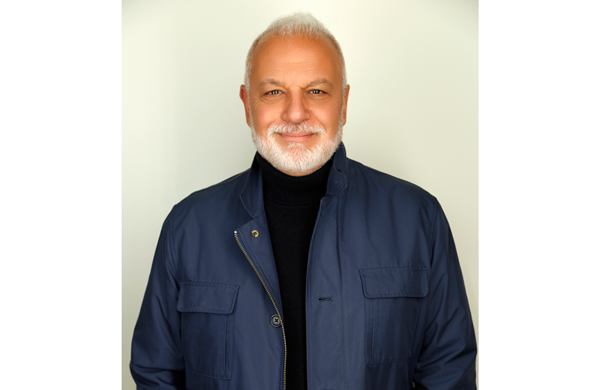
Gissele: We’re talking to Alexander Kopelman, who’s a writer, social entrepreneur, advocate, and coach who has been devoted 40 years to advancing social justice and personal empowerment. As the founding president and CEO of Children’s Arts Guild, Kopelman helped create and grow a nonprofit organization that supports children in exploring and developing their authentic selves. Kopelman has authored and co-authored 10 books, including For Real!, helping children remain their authentic selves in a limiting world. He lives in New York City with his wife, daughter, and very small dog. Please join me in welcoming Alex. Hi, Alex.
Alex: Hi, thanks very much for having me on.[00:01:00]
Gissele: Oh, thank you so much for being on the show because this is such an important topic in terms of authenticity and how we can cultivate that in children. I was wondering if you could get started by telling the audience a little bit about how you got into this work.
Alex: sure. It’s really, very much a life’s work and, very personal to me. I, grew up in the Soviet Union when there was still such a thing until I was 13 years old, and came to the United States as a refugee, not knowing any English. Um, and the process of, creating an identity as a teenager in a new language really gave me, I guess a glimpse into, how choiceful identity is and, the kinds of decisions we make as we, think about who we are, share who we are with other people, and, find our way in the world, and in the story that we tell ourselves about our own life [00:02:00] and, the people around us.
Gissele: Yeah. Uh, you know, your story resonated so deeply with me because I had a very similar immigration experience. So my sister and I and our family came to Canada from Peru, and I came when I was 10. And I saw the journeys that my sister and I both took. So for me, I completely erased everything that was different ’cause it wasn’t popular to be Hispanic when I immigrated to Canada.
Gissele: You know, now it’s, like, cool and… But when I immigrated, it was like, it was weird, or it was different. And I wanted so desperately to belong, I completely erased my culture. And my sister sort of took the other path, which was she actually held onto it so tightly, and I found that she had experienced bullying because it was different.
Gissele: and so I so resonated with your story because it reminded me of my experience. And we do so much to wanna belong, right? It’s so ingrained in us to wanna belong, but to our own detriment. And it took me a long time for me to come back to that culture to [00:03:00] embrace those aspects of myself. were you able to keep aspects of your culture, or did you find that you completely, you know, 180 like I
Alex: I had a similar,experience to yours. You know, people ask me, “Oh, do you still speak Russian?” And I do, but, you know, I have to, uh, preface it with that I speak Russian the way a 13-year-old speaks Russian. And, I made a choice.to me it was very much about either I could become fluent in English, which also equated in my mind to being, indistinguishable, that I would, I would not be standing out, which was very important.
Alex: or I could hold onto some Russian and some Russian culture, and I went full on to being, uh, as fluent as I could be, as not Russian as I could be. there’s a backstory there because growing up Jewish in the Soviet Union, was, very much about being an [00:04:00] outsider. we were considered an ethnic minority.
Alex: Um, we had, our ethnicity stamped in our passports. we stood out because we are dark, dark hair and dark skinned, and we were called names on the street by people who didn’t know us, for being Jewish. So there was a real sense of, the danger that goes with being an outsider. and then I arrived in the United States and I was suddenly a white guy.
Alex: Um, and you know, I also didn’t speak English. my definition of being Jewish was very different from the definition of being Jewish here.
Alex: so it continued this process of all the ways in which being, an outsider Was undesirable. So I went about trying to be as American as I could possibly be.
Alex: and as I said, as indistinguishable as possible.
Gissele: Yeah. Let’s talk about your path back to authenticity. [00:05:00] one of the things I noticed in general, when we try so hard to belong, we can sometimes violate our own values, our own humanity in the desperation just not to be different. What helped you come back to being more authentically yourself and actually wanna do work on authenticity?
Alex: You know, it was coming to the realization sometime in my probably mid-20s that I was completely lost in my life. I had no idea who I was, what I wanted, how to want things, how to go about getting the things I wanted. Um, and part of what I identified at that point was that the– my relationship with being a man was a big aspect of that sense of being lost.
Alex: I did not understand what it [00:06:00] meant to be a man. I, in many ways, felt ashamed of being a man, rejected, what I believed it meant. so I went about searching for that part of myself, where I could feel comfortable, in this fundamental way that I, I did not have a choice. I could not…
Alex: so I, found, a men’s group through The Mankind Project, which is, now an international organization that sponsors
Alex: men’s
Alex: weekends around the world.
Alex: Uh, there are now, I think, 20,000 men who’ve done one of those weekends, and what I found particularly useful was, the group that I was connected with after, the weekend.
Alex: I’ve been a member of that group for 25 years, and that’s been transformative because it allowed me the safe space to think about, what my story was and how I felt about it, and to [00:07:00] see other men struggling with similar issues. And for us, really, the similar issues was just the fundamentals of feelings of, how difficult it is for us as men to experience and express basic feelings.
Gissele: Mm, mm. I love that you said that, and it’s so fundamentally true. I think as a society, we’ve done such a huge disservice to our boys. I have one of each. I have a boy and a girl, and what I saw was a world that basically did not allow boys to engage in closeness without sexuality and,engage in dealing with difficult emotions that were beyond anger. And so if you limit the scope of which people can feel, I think you get what we see in the world, which is why I think your work is so important. And in particular, I think it’s important because the messaging that [00:08:00] I feel that children get in general is about belonging and conforming than it is about authenticity.
Gissele: Can you talk a little bit about, how systems are impacting our children right now, especially our boys?
Alex: Yeah. You know, I think We’re all trapped in this way of thinking about childhood and children that we’ve kind of evolved, and I think a lot of us recognize that it’s not working very well, and yet we don’t quite know what to do about it. I think that
Alex: that conflict between belonging and authenticity is somehow baked into this conception of childhood, and it doesn’t have [00:09:00] to be. Belonging is a fundamental need. We are social creatures. We depend on others, not just in our childhood, but throughout our lives. Interdependence is just part of being human.
Gissele: Mm-hmm.
Alex: children and children’s development, it’s particularly important because in early childhood particularly, that developmental partner who serves as a mirror is critical to the way that we understand ourselves and ourselves in the world. And so if that mirror is distorted, if what we get from the mirror is the need to satisfy the adult’s needs rather than to listen to our own needs and satisfy those and ask for and have our needs met, that becomes a very difficult bind [00:10:00] for children to navigate.
Alex: There was this lovely book that- helped me think about this, that I found probably 25 years ago, called “The Betrayal of the Self.” So the idea of, cutting off from parts of ourselves in order to get our needs met by others, can start very early, and it is very, very damaging to the way that we are in the world.
Alex: And if you put the messaging of, gender socialization, of, expectations from society in general into the mix, what we learn to do is to listen to everything from outside of ourselves rather than our own inner voices. And if that continues, the inner voice gets pushed further and further down, and it is much more difficult to find.
Alex: And it creates, conflict that is, um, [00:11:00] outside our field of vision, and, we begin to act on things that w-we don’t even understand where they’re coming from. so I think that’s fundamental, and a lot of that is, is also built into our systems. You know, our education system is a good example.
Alex: And I’m referring to the one here in the States, but I think that education systems around the world have a common trait that we see children as raw material that is used to create the widgets that our economies need, right? we’re thinking more about what the labor force requirements are than about who are the human beings in our classrooms.
Alex: And, you know, this is a vast generalization. There are wonderful schools that approach this stuff very differently, but for the most part, in general, we tend to treat children as incomplete human beings who are just on their way to [00:12:00] becoming human. And that’s a very strange message if you think about it, right?
Alex: and we do it all the time, in the most innocuous ways possible. You know, that question of “What are you going to be when you grow up?” can be really challenging because what we really want to be finding out is, “Who are you now?”
Gissele: Ja.
Gissele: Ja. Ja. Ja. Ja. Ja. Ja.
Alex: So-
Gissele: Absolutely. Yeah, absolutely. Oh, I resonated with everything you said. I think I’ll start with when you are taught to minimize your own voice, your own perspective, especially if it doesn’t align with what your parents believe.
Gissele: Or I think, you know, when you’re expected to regulate yourself and your emotions so that your parents can be okay instead of having them regulate themselves and help you co-regulate, it starts the journey of what I’m supposed to not feel. And then you go to systems such as the school system, which, focuses on, conformity, right?
Gissele: It focuses on [00:13:00] there’s one way, a primary way of doing things, and any sort of diversity, including children who can’t sit for eight hours a day, is bad. And so from my perspective, that is really the beginning of isms, right? Like the othering, that if you’re not conforming to how this structure, then you don’t fit. I wanted to ask, ’cause you talked about the need for belonging. How do you balance belonging with authenticity?
Alex: Well, in part it’s finding the communities where you belong as your authentic self.
Alex: And a lot of our work, because we really are focusing on adults, is to help people think about how to create environments and ecosystems that are welcoming to children as they are authentically,
Alex: um, and where they feel that they belong as fully themselves.
Alex: And, the one [00:14:00] caveat I want to make sure I touch on is that sometimes people misunderstand what we mean by authenticity. I don’t mean being unfiltered at all times and just, spewing everything that’s going on in my head
Gissele: Yeah,
Gissele: yeah.
Alex: 24 hours a day. You know, authenticity for us is the awareness that I have a story and that everybody else has a story, and that we need to find ways
Alex: to have those stories coexist and ideally amplify each other and create an even better communal story.
Alex: so empathy and awareness of other people is an critical part of what I consider authenticity. and that means having a [00:15:00] filter. That means having situational awareness and that- It’s not that I cut away from parts of myself, but that only certain parts of myself are necessary in any particular situation.
Gissele: Hmm. Agreed. I was curious as to what you would say to someone that doesn’t really know who they are. Like, what would be the starting point? because I know that in my own journey, I’ve been through phases where I didn’t really know, who am I really? I noticed all the conditioning. Some of the things I wanted was based on what I thought I should want rather than what I really wanted, and so that’s a little bit dizzying. So what would you say to someone who’s like, “I don’t really know who I am. How can I begin that exploration?”
Alex: Well, I think that what you just said is, a great place to start. It’s noticing the expectations that we might have internalized and to, interrogate them a little bit. You know, i-i-is this what I actually want? and if [00:16:00] not, when did I start believing that I wanted this? And, tracing it back to, there’s usually a story to that as well.
Alex: it’s not necessarily I don’t know who I am. it might be I don’t know who I am right now. The things that fit me a year ago may not fit today because we evolve. And part of the reason that we talk about supporting children and exploring and developing their authentic selves is really about developing a relationship and the tools for that lifelong exploration.
Alex: ‘Cause the self is not a static thing. It’s not like I, you know, at 13 discover who I am and then I’m going to be that person throughout. Um, so I think that’s also key is finding out who am I right now? what are the parts of me that are, stepping forward? What are the parts of me [00:17:00] that I wish would be a little bit more prominent?
Alex: One of the, one of the activities that I love in the book is, creating the celestial map of your inner universe. And the questions it asks are, you know, what parts of you shine brightly all the time? What parts of you can only be seen when, there are certain conditions?
Alex: what are the black holes where, you know, you can feel the power, but you don’t really understand them that well? so, doing that kind of exploration, a lot of it is about, pausing and asking questions With the belief that we have the power to change. We always have the power to choose.
Gissele: Mm-hmm.
Alex: I think that the hardest, I think, for us are moments where we feel stuck, where, we feel that we are at the mercy of external factors that we really have no control over.
Gissele: Yeah. Have you ever had an experience where somebody who, [00:18:00] as they’re discovering their authentic selves, really faces a lot of fear? And what I mean is, like, for example, if you are from the LGBTQ community and realize that your gender identity is one that is non-normative, as they call that, use that word, right? you might not want to be your authentic self. It might be difficult for you because you might feel persecuted. What can help individuals who may be facing identities that maybe there’s an internal, judgment upon, right? like for example, there might be some internalized homophobia.
Alex: Well, I think that it’s important to make the distinction between the internalized, judgments, which we do have the power to change, right? Because again, by interrogation and being with people who support us, we can learn to, shift the perspective that, I don’t have to dislike my– I’ll use my own example.
Alex: I genuinely was ashamed of being male because I believed that there were all of [00:19:00] these really negative things about manhood. And the– probably the–
Alex: best thing that ever happened, and it was a conscious effort, but the best thing that happened for me in men’s group is that I stopped feeling ashamed of being a man.
Alex: And, after I stopped being ashamed of being a man, I also then could work on other places where I felt ashamed of myself, and ask whether I needed to or not, and wanted to. so that’s the internal work, and that’s, that we do have control over. There are real dangers out there. Iwe are, living in a time again when, being other is dangerous in a lot of places.
Alex: so I think being realistic about, those dangers and being, protective o-oneself is important. that’s not being authentic. that’s taking care of your authentic self.
Gissele: [00:20:00] Beautiful.
Gissele: I was wondering if you could share your favorite story of the feedback you received from children around your program. ’cause there was a few stories there that were really good, like feedback from young people about, their ability to be their authentic self.
Alex: You know, the one that still stands out for me was a story from very early on, when we started the, uh, programs for boys and girls, in after school. And we had a boy, in the program
Alex: who
Alex: literally hid behind boxes for the first, I don’t know, couple of weeks that he was in the program. And slowly, he saw, through experience that he was accepted for who he was.
Alex: And, this was a boy who, he liked gymnastics, he liked dance. He, brought with him, I think some, internalized judgments, but also beliefs about how people saw him. And after two years in [00:21:00] our program, he was able to stand in front of a room full of, adults at one of our events and tell them about that experience of being afraid and talk about how…
Alex: the way he put it is that, he likes girl things. so he was struggling with his gender identity and what that meant. and that being in the program made him feel first safe that he would be accepted, and through that safety, to learn to accept himself and feel more comfortable, and comfortable enough to the point where he could stand and talk to people about who he was and what he was comfortable, being and doing.
Alex: And, and so that’s still one of the really meaningful moments for me, of
Alex: seeing the transformation and hearing a child talk about what that meant to him.
Gissele: Hmm. And I think that goes to demonstrate the value of your [00:22:00] program. Um, I remember when my daughter was little and we had a little birthday party and we invited both girls and boys, and I remember there was a little boy. And we had lots of different things. We had tiaras and balloons and I remember there was a little boy who, he was, her friend.
Gissele: He was like very rough and tumble, and at the same time he wanted to take a tiara home. And, I remember the dad was really adamant… And this is not a judgment to this. this is just goes to the identities that we have forced on children. And the the dad was adamant that he was not gonna take anything that was girl related.
Gissele: and the look of devastation on that kid, it really impacted me. And I, tried to talk to the dad and ultimately it was his decision. but it gets me thinking about all kind of those norms that we put on when really it’s just all fun and exploration. I wanted to go back to,you talked about being able to address your shame of being a man. What sort of things helped you address shame? Because To me, that really is the key to opening up, our [00:23:00] willingness to be more compassionate towards one another.
Alex: You know, it, it was a long process and it was, creating the space to ask the questions of what was it I was really ashamed of
Gissele: Hmm.
Alex: did these beliefs come from? And what began to emerge was that there was a gap between the life I was leading and the experiences I’d had personally
Gissele: Mm-hmm.
Alex: from the beliefs that I carried with me from childhood.
Gissele: Mm-hmm.
Alex: And so once I could see that space between the two, I could say, “Well, which one would I choose?” So in a way, it goes back to this idea of
Alex: having the
Alex: power to live from our own experience and emotions rather [00:24:00] than, the beliefs and the ideas that we were taught as children. and that’s not a necessarily an easy thing to do.
Gissele: No, it’s not. It takes
Gissele: courage
Alex: it does because
Alex: There’s a form of separation in that, you have to choose yourself at the risk of, the connections of belonging, right? Because if, your, community still has those beliefs and judgments and I choose to believe something else, I am choosing to step out of community.
Gissele: it can feel very lonely, right?
Alex: it can. And I think it’s very important, to go back to your question about, um, you know, identities that, carry real danger in the world. it’s very important to have supportive communities in place as we do that work and we make those transitions so we’re not [00:25:00] doing this by ourselves.
Alex: I just came back from, a summit on wellbeing of the, American Association of School Superintendents, and the motif for the summit was the real crisis in mental health, for children in this country. in some part at least, and in, in my opinion, to a large part, of young people feeling
Alex: in their identities and not being able to find a community that supports them.
Gissele: Yeah, definitely. And with social media too, you only see, curated versions of people’s experiences. I think people are starting to question
Gissele: really who are really authentic people, and you see it. You see it, like the death of the guru, celebrity, now sort of, crumbling.
Gissele: People don’t believe and don’t trust. but I think it’s part of the evolution of us going inward, [00:26:00] is why I think your work is so important. and the reason why I also in particular think your work is so pivotal is that I think some of the basis for racism and discrimination and so on is that fear, is the fear of nonconformity And I’ve mentioned this before in the podcast, but I love this quote by a comedian, Alok. they’re trans, and they talk about, the fact that they have found that people that are anti-trans one of the reasons is that they’re so inauthentic. so somebody who is just being authentically themselves because it doesn’t conform to them, because they’re needing to belong, they’re needing to fit in, it’s a threat. And so this is why your work on authenticity is so important, because to go back to who we really are, it does take a lot of unlearning.
Alex: Well, to that point, I– with my very, very limited knowledge of neuroscience, The fear [00:27:00] is in part driven by our brains. our brains are wonderful tools for categorizing things and,
Alex: they excel at the, at that job. They get very, uncomfortable when they can’t find a category,
Gissele: Yeah.
Alex: right?
Alex: we sort of start to short circuit, and I think that experience of not being able to place, the pattern easily makes us so uncomfortable that it actually raises flight emotions or fright emotions, and we then respond with these very kind of fundamental, feelings of, doesn’t, doesn’t compute, doesn’t compute.
Alex: So part of what I talk about when I talk about authenticity is also a return to finding our whole beings. I think that our, again, our systems have led us to believe that we live from the [00:28:00] shoulders up, and it’s all about the brain, and it’s all about the mind, and we’ve lost touch with the rest of the way that we experience the world.
Gissele: Mm-hmm.
Alex: children are really good at that, except that we kind of socialize it out
Alex: of them. and we need to return to that. we need to return to being able to feel where feelings happen in our bodies. You know, that was one of the first things I had to learn in a men’s group is like, where do I…
Alex: so somebody will ask you that question. “Well, where do you feel that in your body?” And I would stare at them blankly as like, “I don’t know.”
Alex: But then if I listen for a little while, I do know. and the more we practice, the more attuned we get to how we experience everything in so many parts of ourselves.
Alex: And, the brain then creates a story, and it puts all these, language symbols around it, which is wonderful because then we can talk about it, but that’s not the only story. and I think that’s really key to [00:29:00] reclaiming all of this.
Gissele: Mm. Mm, mm, mm-mm. I wish I could put, a little bell that’s like, da-da-ding, like wisdom. Because, what you said about the nervous system andof us needing to categorize things, I think that’s fundamentally it. It’s the fact that, if I don’t know where this person belongs, then I may not know where I belong, and what does that say about me? and so the brain sort of goes into, “No, you have to fit into this box so that I can be comfortable, so that I know how you’re gonna behave.” And we live in a world where We’ve made a world so predictable, we think, right? we even wanna know what the weather is going to be. we need to know everything. But the truth of it is it’s not real, and as you see from the weather network, it’s not super 100% accurate. But, it’s sort of given us that false belief that things can feel safe because they’re predictable. And so if I know which box this person fits, then I can feel safe. And going to the concept of emotions, the need for us to learn how to emotionally regulate ourselves, [00:30:00] to be able to sit with those difficult feelings in being more heart-based, I think is really key. but it feels so uncomfortable. it can feel so dangerous. what helps individuals as they’re exploring those emotions and becoming more heart-based in staying with it instead of choosing to just eject and go back?
Alex: Well, I think the weather metaphor is helpful. You know, our feelings are just like the weather, they pass. There’s always gonna the next feeling, right?
Alex: I think what happens to us when we experience particularly uncomfortable feelings is that we think that they’re gonna be there forever, and they’re not.
Alex: I make it sound simple, and it’s not. Again, it took me years and years and years in, in men’s group and, therapy to learn to… we talk about sitting with uncomfortable feelings. I think that there’s a part [00:31:00] of the brain kicking in and saying, “I’m gonna solve this.”
Alex: And often there’s nothing to solve. We just have to be with what’s uncomfortable. the other point I wanted to touch on when you were talking about prediction, it’s an illusion. we think we can predict based on where we put a person in our categories, but people are inherently unpredictable.
Alex: So even someone we might think we understand is likely to surprise us sooner or later.and I think that if we develop the superpower of being self-regulated, the surprises are not so scary. they can be exciting. we can approach everything with curiosity, and we don’t get rocked every time something unexpected happens.
Gissele: yeah.
Alex: and that’s another part of [00:32:00] authenticity. When we’re grounded in our own selves and we feel secure in ourselves, what happens around us becomes much more tolerable.
Gissele: Yeah, very true. A-and I also agree that it takes work. It takes
Gissele: courage. It takes you showing up every single day. it takes, making different decisions, at least it has for me. I can’t make decisions out of fear anymore. I choose to make decisions out of love, out of openness. Even though it feels uncomfortable at times, I know I won’t be there forever. It’ll pass. J-just a couple more questions. My…
Gissele: The first one is, what’s your definition of self-love?
Alex: I guess for me it’s having a kind voice in speaking to myself.
Alex: having a sense of humor and a sense of curiosity, and, empathy. Um, it’s not easy being us.
Alex: Yeah.
Alex: And, um, you know, I think [00:33:00] that when we start with empathy for ourselves, it’s a whole lot easier to be empathetic towards other people.
Gissele: Very, very true. last question: Where can people work with you? Where can they find you? Where can they find your book? When’s it coming out?
Alex: the book is coming out on, June 9th. It’s called “For Real: Helping Children Remain Their Authentic Selves in a Limiting World.” the easiest place to find information about the book is, um, on the book website, which is forrealbook.org. and then if people are interested in working with us more broadly with programming, partnerships and so on, we are launching, the Authenticity Works Initiative, which is designed to bring these ideas to communities, all over the world ideally, eventually.
Alex: and the website for that is authenticityworks.org.
Gissele: Ah, thank you so much, Alex. Please go out and get the book when it comes out, and thank you so much for all the incredible work that you’re doing. I truly believe in [00:34:00] the power of authenticity in helping us actually create a more loving and inclusive world. So thank you to everyone who tuned into another episode of Love and Compassion Podcast with Gissele.
Gissele: See you soon.
Alex: Thank you very much