
TRANSCRIPT
Gissele: [00:00:00] Hello, and welcome to the Love and Compassion podcast with Gissele. We believe that love and compassion have the power to heal our lives and our world. Don’t forget to like and subscribe for more amazing content. And if you’d like to support the podcast, you can go to buymeacoffee.com/loveandcompassion.
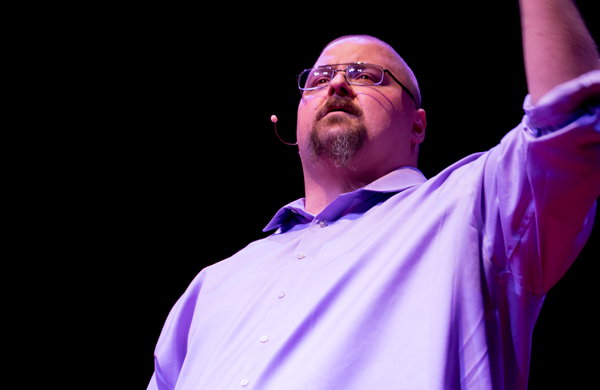
Gissele: Today, we’re talking about compassion and mental health, and our guest today is Aaron Stark, who once came dangerously close to committing an act of violence as a teenager, but his life took a traumatic turn. in his viral open letter, I Was Almost a School Shooter, and the subsequent
Gissele: TED Talk that brought national attention to his message of compassion and mental wellness. He’s been featured across media outlets and now speaking nationwide, including to schools, law enforcement, survivor groups, the FBI. Aaron works to help people reach those in deep crisis to remind them that they matter.
Gissele: His mission, prevent future tragedies by sharing the power of connection and [00:01:00] hope. Please join me in welcoming Aaron. Hi, Aaron.
Aaron: Hey, thank you for having me
Gissele: Oh, thank you so much for being on the show. I would really love to hear a little bit about how you got to the point where you were so close to committing an act of violence.
Gissele: I was wondering if you could share that with the audience.
Aaron: Yeah. Yeah. I first off, thanks for having me on. And anybody listening, I know this gets pretty intense really fast, but I promise it ends in a very happy spot. I was raised in a very violent, aggressive, and criminal household. My first five years of life was kinda like a Stephen King movie.
Aaron: My, My, birth father was the most vicious and violent person ever. Chased us across the country, and he was we basically were hunted for the first five years by one of the most abusive people you can imagine. And then after my mom left him, got with my stepdad, and it went from a Stephen King movie to more like Scarface. So it was crack cocaine and crime and stealing and robberies. We lived a very nomadic life, so I moved usually between Oregon and Colorado, bouncing between the states. And I went [00:02:00] between, to between 30 and 40 different schools. I was at a different school every couple of months, and I never attended a school from beginning to end of a school year, ever in my whole life. And along the way, my criminal family was extremely unstable. I have an older brother who’s two years older than I am, and he became the de facto man of the house. So he had to be… Like, when we’re seven and nine years old, and my parents are– we’re getting evicted because they’re drugged out and doing all their crime. And they’re at a bar, they’re not even there while we’re getting evicted. The, the sheriff’s are at our house throwing everything into the yard. My brother’s the one that has to, at nine years old, scramble to find us some place to be, and I am one of the things that he has to find some place to put. I am, I’m not useful .
Aaron: He was a very gearhead kinda kid put stuff together, fix stuff. I had a lot of intellectual loves, so I loved books and music and studying science and history. I loved all that, but that wasn’t useful to the [00:03:00] crackheads when we’re getting evicted and things are breaking. My brother was more utilitarian. And so growing up, we adopted that identity. I became the burden. I became the thing that needed to be solved. I became the problem. And I was fat. I was dirty ’cause I didn’t have any clothes. I was smelly. And I really, early on, I’m talking three, 10, I wa- I Really internalized that something is wrong with me, that I’m the broken one, that I’m the thing that’s wrong. And I started, because I was always going to a new school, I would always have a different group of bullies at the different schools. And I developed this tactic that you’ve seen movies where the guy in j- goes to prison in the movie, and he goes up to the big tough guy, and you fight the big tough guy in prison so you can establish your
Aaron: pecking order. I would do the reverse of that, only I would go to the most popular kid in school and insult myself to him to put, I kn- I know I’m at the bottom. You don’t have to beat me down to get me there. I know I belong at the bottom. And it… I just really internalized that [00:04:00] something was wrong with me, and this is all before even the age of 10. And by the time I’m 12, 13 years old, my parents, they are heavily in the grips of a crack binge, and I’ve started self-harming. I’ve started cutting myself really bad, and it started as a way to regulate the emotions. My life at that time, I describe like it’s like living in a mosh pit. If you’ve seen a big heavy metal concert, you see the big swirling mass of people slamming into each other. That’s what my life was like at the time. I didn’t really have any control over the damage and what I was doing. I just went along with the violence. And I knew that I was the broken one, so I started to insult myself more than anybody else could, which made me then also start being a bully to everybody else.
Aaron: I w- I became really toxic, like ins- inward and outward. I just I was… My– Everything I was saying was reflecting the inward hatred that I had. I was becoming just a toxic little mean, angry, vicious kind of kid. And the [00:05:00] self-harm kind of would calm and regulate that at the beginning but it quickly spiraled into more serious self-harm.
Aaron: I’m cutting myself deeper, more and more blood. And I became homeless around th- thirteen, fourteen years old. I couldn’t take living at home with the crackheads anymore. So I would bounce from friend’s house to friend’s house and kinda burn out relationships. And at first I’d be able to stay at a house for a week, and then I’d be able to stay there for a couple days.
Aaron: But by the time I’m fourteen, fifteen years old, I can’t stay at my friend’s house for more than an hour or so ’cause if I stand up off the couch, his mom has to clean the residue of the stain that I’m leaving ’cause I’m so filthy and I’m so dirty. And I gathered a group along the way, around fifteen years old, of a group of kids that I called Disaster Groupies. They were a group of about fifteen or so kids that kinda lived vicariously through my darkness. My friend at the time, I was at, partying with this one buddy who his dad paid the rent at the house, and his dad bought all the food at the house, [00:06:00] but Dad didn’t live at the house. Dad was living with Dad’s girlfriend. So the house became like a teenage flophouse. And so this house became a bunch of depressed kids navigating depression without adult supervision, and it was like how far can they push us off the edge to see how far they would go. And I was kinda like a, a evil unicorn in a way. Like a piñata of pain.
Aaron: Smack me and see what kind of stories can come out. Because I was, at this time, from about fourteen to sixteen, I’m living basically three lives at once, where for a– I’m 90% homeless because I’m living at this house, but m- all my stuff is still back at my mom’s house, but I can’t be there for any length of time because it turns into violence and anger and beatings and… So I’m only at that house like maybe an hour a day. So I go there, get my stuff, grab some stuff and recharge. And I had to get out because of the– I– Immediately there’d be violence. But in that hour, I’m reminded of how absolutely worthless I am and how nothing I am and how at the bottom of everything [00:07:00] I am and how I don’t belong anywhere. And then I go to this Disaster Groupie house, and I would kinda use that pain as a party favor. The more outlandish that my stories of abuse were, the more I could entertain these kids and where I could get some weird kind of social status that way And then for just a couple hours a day at the end, I’d go to what is the only good kid in this story this kid that I met when I was 12 and he was 10.
Aaron: His name’s Mike. Remember, I’m gonna tell you a little bit about him now ’cause it’s a good point to bring him in. Mike, he lived at the opposite end of one of the blocks that we moved to one day. My parents had a habit of moving to the same neighborhoods multiple times. So we would go live on like a 10-block radius in Colorado, and then like another, like two town radius in Oregon, but like 30 places in each place, and so we, I was living like a block away from, or a couple blocks away from him, and we met at a comic book shop playing the original Mortal Kombat 1 video game in the arcade. See exactly when this is happening. And so we met, we bonded over deep [00:08:00] conversation and comic books. I had a love for superheroes, and I loved science, and so did he, and we just immediately bonded.
Aaron: I went to his house, pretty much never left for a week. And so like I, whenever I was in Denver, his house was like my home base. I knew I had some place to be. I memorized his phone number. He lived the total polar opposite life that I had. He had a very well-off family, very well-to-do, very peaceful, lived in this big four-story house. They he would write a Christmas list and get the things on his Christmas list, which blew my mind. I didn’t even know you could do that. I, that was an amazing thing. And so he became like the good spot. So by the time I’m 14, 15 years old, I’m filling up my reservoir of hatred at my parents’ house, then using that, that pain to entertain everybody at this, this groupie house. Then for a little bit of time, I get to be a normal kid over at Mike’s house. But his mom was the one that had to clean the stain when I stood up off the couch, ’cause I was starting to leave residue. Couldn’t stay there anymore. And that’s kind of the stasis for about a year. Okay? That kind of stays my life for about a year. [00:09:00] And then that ends in a big explosion where the, the party house, we’re having this big, it’s one of the kids there having a birthday, so of course someone in this group has a band. And so there’s a band, a few high school kids playing on one side. I had a day job working at a pizza place, and my manager of the pizza place was an LSD dealer. So I got a whole bunch of LSD, had a whole bunch of kids tripping acid in the house. So there’s like 15 kids tripping acid on one side. Another other side, all these kids partying. Knock on the door, parents are there, party’s over, everybody has to go home. They all have homes to go to. Everybody else gets to go home. I don’t have a home to go to. My parents at this time are in the midst of the worst kind of grips of the crack epidemic. And so they are digging through the carpet looking for crack rock at this stage. And so I didn’t have anywhere to go to. And so my last resorts, when I didn’t have anywhere else to be at 15, 16 years old, I could either stay i- if the weather was good, I would go to this [00:10:00] field behind this restaurant named Casa Bonita.
Aaron: Which if you ever seen the TV show South Park, they actually did a whole episode on Casa Bonita. The guys from South Park bought the restaurant. It’s this big pink Mexican restaurant with cliff divers and the guy in the gorilla suit. It’s a crazy thing. It’s really what the restaurant’s like. But behind that, there was a field. And in this field, there was a little dip in the field. And if I laid in it, you couldn’t see me when you were driving down the street, so it didn’t look like there was a body there. So if the weather was good, I could like urban camp and go sleep in the field. But if the weather was bad, I would go to Mike’s tool shed, because his I couldn’t stay in his house.
Aaron: His parents were storing a big recliner chair, like a La-Z-Boy style chair in his tool shed, and I would go there and stay. And so At, after this party ex- ends and everybody has to go home, I end up in Mike’s tool shed ’cause it’s raining. And it’s late at night, it’s 1:00 o’clock in the morning, and I’m cutting myself so bad that there’s a big pool of blood on the ground underneath me. And I think to myself, “I gotta get some help or I’m gonna die. If I don’t do something, I’m gonna die.” [00:11:00] And so I thought over the years, one of the reasons why we had to move many times was Social Services. They tried to investigate a couple times, so I figure I’ll call Social Services on myself. May- that they, I’ll call the state, that maybe they can help me.” And so when Dawn came, I knocked on Mike’s back door and borrowed a phone book and some bus fare from her, from Mike’s mom, and I called Social Services on myself. I set the appointment for that afternoon. And it was Dawn when I called. It was like 3:00 or 4:00 in the afternoon when the meeting happened. And by the time I got to the meeting, they had contacted my mom, and she was there too. And so we sit at this table, this big round table. On one side there’s counselors, on the other side there’s me and my mom. And they say, “What are we here for? What’s the reason for this?” And I pull out a bloody ra- a razor blade, a box cutter style razor blade with fresh blood on it.
Aaron: I throw it on the table. I lift up my arm with fresh cuts on it. I say, “That’s what I’m here for. I feel like I’m nothing. I feel like I’m worthless. I feel like there’s nothing left of me at all.” My mom, who [00:12:00] was the most practiced liar I ever knew in my life she tells them, “Oh, it’s nothing. He does this all the time.
Aaron: He just does it to get a rise out of people. He just does it to get attention. It’s no real problem. We can take care of it.” Which these days I find really ironic because, yes, I was doing it to get attention. Somebody please see me screaming out in pain. But that wasn’t what she meant, and so they sent me home with her And we get a couple blocks away from the place, and she turns to me with this really evil look on her face and says, “Next you, next time you should’ve done a better job, and next time I’ll buy you the razor blades.”
Aaron: I’m like, “O- okay. You think I should’ve done a better job killing myself, and you’ll help me next time? All right.” So up until that point, I was I was a shy, sweet kid, and I used this darkness as like a costume. If I wrap the darkness around me like a blanket, it was sharp and spiky and it’d keep everybody away, but it would keep a couple people that agree with me close, but it was a costume I was putting on. I was into musicals and comic books and s- and history, and I would read. Like when that party group, we were partying with that, those kids, we would trip [00:13:00] acid and I’d break out the complete works of Shakespeare. We’d all pick a character from a Shakespeare play and we’d act out Shakespeare all night long tripping acid.
Aaron: I was that kind of kid. And, but sitting in that car with my mom telling me I should’ve done a better job killing myself, I just go straight into that dark. You think I’m a monster? Okay, I’ll show you what a monster is now. And that set me off on a nine-month process of what I call scorched earth, where I went on a conscious effort to destroy any positive outlook of myself.
Aaron: Anybody that had a positive opinion of me, I was going to break it. And I was saying the most disgusting, sexist, racist, vile things, not because I was racist or sexist, just because it offended the person I was talking to. If it offended you, I was going to go there, and I didn’t have a limit. I was going to cross yours. So I didn’t, it didn’t really matter what I was saying, I just wanted to offend. And in that process, I would steal and lie and break every friendship I possibly could. I [00:14:00] went into every family member I could and gathered all the pictures of me that I possibly could from their photo albums, put them in a big pile and burned them. I was trying to annihilate my past. And I even t- went to Mike’s house and took two of his long boxes of comic books and went and sold them at a comic shop, stole them from him.
Aaron: I was trying to break that relationship too. And so at the end of that After nine months of solid social destruction, I am alone, and I’m in that field behind Casa Bonita, and I’d been staying in that field for about a month. I had been avoiding the police during school hours because if they– I didn’t want them to arrest me for truancy, and I was surviving by stealing free samples from the grocery store and dumpster diving from the store at the top of the hill. And I woke up one morning in the snow, and I hadn’t– I was wearing wet clothes. I hadn’t changed my clothes in weeks. I hadn’t taken my shoes off in weeks. My feet were just rotting off my body. I was in horrible shape and woke up in about two inches of snow. And it was so cold [00:15:00] that the walk, the two, three block walk to get up to the store at the top of the hill, I could barely even sh– I couldn’t even move.
Aaron: I could barely breathe. My arms wouldn’t work. My legs wouldn’t work. I get up there, and I’m washing my face off in the bathroom trying to get, start my day, and I couldn’t even recognize myself, and I think, “I gotta do something or I’m gonna die.” And last time when I warned them I was coming, they brought my mom in, so I’m not doing that again. But across the street from the school that I’m nominally at, quote-unquote at, was a building that said mental health. And I didn’t know what it was for, but I knew the sign said mental health. And I, I– Last time I warned them I was coming, they brought my mom in. I’m not doing that. I’m just gonna go in there cold. So I went in there, and they had me meet with this young woman. She was in her twenties, I think. And I don’t really remember much about that conversation. It was a counseling office, but I don’t remember what, much of what she said because all I remember is the very end where she said, “I’m sorry, there’s nothing I can do.
Aaron: I can’t help you And as I stood on that porch, that’s right there is where my brain snapped like a [00:16:00] mirror. I really felt like shards of glass snapped in my head. And a couple things happened right in quick succession immediately it was like, like crash bang. Couple things fell in my head. And the first thing was I found out what happens when you go to the very bottom of that mosh pit. All the violence goes away, and it gets really quiet, and it gets really still, and all the emotions fade because there’s nothing left to lose. What are you gonna do? You gonna shoot me? Okay, I’m gonna die.
Aaron: Or are you gonna put me in jail? Okay, they’re gonna feed me. I don’t have any more down to fall to. And right then the, my plans crystallized in my head. When I was hanging out with that disaster groupie house, when we would sit and hang out and talk about things, we didn’t talk about normal subjects.
Aaron: We wouldn’t talk about girls or sports or movies. We talked about mass murder. We talked about, “So if you’re gonna kill 10 people, how would you do it? If you’re gonna shoot up a school, how would you do it?” And at the time, it was just again, it was a bunch of depressed kids navigating depression without adult supervision, and there we didn’t have any [00:17:00] guardrails. But functionally, it was workshopping mass murder. And so I had already worked through all the plans. I had already worked through all the details. We’d already discussed every detail of the plan that I wanted to do. So I was either going to attack the school food court and kill as many people as I possibly could, or go down to the mall and sh- and attack the mall food court, kill as many people as I possibly could. And I knew where to get a gun ’cause this was mid-’90s. This was gang banger era where y- people still brought guns to school on the regular. There was a group of gang bangers that hung out next to the ROTC building that bought and sold drugs for my family on the regular. And so they knew I had access to drugs. I knew they had access to guns. And so I went up to them like, “Hey, can you get me a gun? Hopefully one that shoots a lot of bullets.” The guy’s like, “Yeah, sure. Get me an ounce of weed.” Now, that’s not like it is today where you go to a store, show your ID, whatever. This is in the mid-’90s. It’s 300 bucks of illicit narcotics. But my family were drug dealers, and when I was out on the streets partying and all of this and doing all this crazy criminal violence that I’m doing, my brother joined into my [00:18:00] family’s flock . So he’d turned that into his flock house with all of his druggie friends and started doing drugs and partying with my parents. And so I just went to my mom’s house, and my brother’s buddy’s sleeping on her floor with multiple ounces bagged up in his pocket. I just stole an ounce out of his pocket and took it to the guy. And I’m like, “Here you go. Here’s an ounce of weed.” He’s like, “Okay. Give me three days. I’ll have that for you.” And so I was set. In three days’ time, I was gonna get the gun. And I had no reason to believe I wasn’t gonna get the gun. The guy had followed through with everything else before. It was just a deal. And so In that three-day time, something changed. I didn’t realize it then. I didn’t know what I was going through then, but looking back, I think I was saying goodbye. I was in a much more calm way going to people that I had relationships with and closing off friendships. I went to my ex-girlfriend’s house and said, “Thank you for letting me sleep in the gravel outside your window.” I was giving away all my comic books to everybody. If I saw– At the time, I was stealing a lot from the stores.
Aaron: So I would go to a Safeway, and I would steal a whole stack of [00:19:00] comic books. I would walk down the street, and the first kid I saw, I would just hand it to him. “Here you go. Take all these.” And I didn’t– I was giving away everything that was mine. And in that, I went to Mike’s house. And when I knocked on Mike’s door, I was in tears. I didn’t tell him what I was there for, and he never asked. He just brought me inside. And sorry for the language, but I’m gonna use one
Aaron: curse word
Gissele: go ahead,
Aaron: But he brought me inside, and he, he– only thing he would tell me was, he would tell me, “You’re a good kid in a shit world.” It’s all he would tell me over and over again, “You’re a good kid in a shit world.” And Mike didn’t ask me what I was there for, but Mike knew intimately the hell that I was living in, okay? ‘Cause Mike was my friend. Mike was my best friend. And this was between the age of sixteen and seventeen. A couple months previous to this, on the night of my sixteenth birthday… At the time, I’m– Now I’m living like three blocks away from Mike in another house. And on the night of my sixteenth birthday, my mom beat me bloody and kicked me out of the house, ripped my shirt off my chest and ri-ri-scar-scratched my [00:20:00] face. I had blood going down my cheek. I didn’t have shoes on. It was just– I was just wearing pants. I end up w- going down to Mike’s house, and he br- brings me inside, and I’m sitting at his kitchen table, bloody, beaten, and his mom comes in and is “What’s Aaron doing here?” Mike’s like, “Yeah, his mom just kicked the shit out of him, kicked him out on his birthday.” So my sixteenth birthday party was Mike’s mom with a brownie on a big plate with a big red table candle stuck in the middle of it singing Happy Birthday. So Mike knew intimately the hell that w- what I was living with, but he didn’t ask me what I was there for.
Aaron: He never asked. He just kept on telling me, “You’re a good kid in a shit world.” And I stayed with him. He gave me some food. He gave me a shower. It’s not hanging out with a friend that saved my life. That’s not what did it. It’s that when I knocked on Mike’s door, I wasn’t a person. I wasn’t there to hang out with a buddy. I was a walking ball of nothing ready to explode. I was a void. I wasn’t even ignored. I was erased. I wasn’t there. I was there to say goodbye and write the [00:21:00] last line on my book and close the chapter and be done. And he brought me inside and showed me I was a person. And when you’re treated like a person, when you feel absolutely inhuman, it can change your entire world. You’ve heard of Maslow’s hierarchy of needs, where you need to have the base needs, then you can want, then you can aspire. I had fallen so far off that cliff that he put the base needs back on the bottom shelf of my existence. It wasn’t hanging out with a buddy. It was like, “Oh, I can enjoy food.” I can like something. It was that granular. And it, he gave me enough of a frame shift. Up to that point, I couldn’t even stay at his house for an hour or two ’cause his mom had to change the thing. I think he just went to his mom and said, “Aaron’s not leaving.” ‘Cause I stayed with him for about a week.
Aaron: I didn’t go home. And he gave me enough of a frame shift that even though the violence at home was still the same, the chaos at home was still the same, all of that didn’t change. I was able to basically take a breath and experience what I believe alcoholics call a moment of clarity, [00:22:00] where you were able to just reassess my humanity for the first time in years, where I’m lost in this tsunami and this chaos and all this violence.
Aaron: I’m able to put my feet on the ground for the first time and take a breath. And it was like rolling the clock back on my humanity, and it was really powerful. But again, it’s not like a light switch flipped. It’s not like,
Aaron: ding, oh, everything’s better. I stayed with a friend and everything’s great, the, the violence was still the same. The chaos was still the same. My internal emotions shifted enough to where it changed. But over the next couple of years, my depression spun back up again. I, almost immediately after that incident, my, my emotions turned inward. I became remorseful and ashamed of what I had planned, and it became much more inward depression.
Aaron: But again, at a normalized level, normal human level, okay? But this was between 16 and 17. I’m gonna fast-forward slightly for this next bit to the night of my 19th birthday, okay. On the night of my 19th birthday, I’m planning on committing suicide because I had, the depression had spun up again. I got tired of being the burden everybody was trying to solve. [00:23:00] I got tired of being the problem everybody was fixing. But I didn’t tell anybody my plan, nobody at all. I didn’t tell anybody. I had stolen a big bottle of pills from my mom, big bottle of pills. I got a big bag of cocaine from my mom, and I had a copious amount of LSD that I bought off the streets. I had a large amount of narcotics, way more than were gonna be needed to do the job. And my goal was to have as normal a day as I possibly did, and then at the end of the night, take all those drugs and die by suicide in that field behind Casa Bonita. But in the daytime, I wanted to be as normal as I possibly could, so I went to Mike’s house, ’cause he was my best friend. So wh- when I went to Mike’s house, Mike is a social person of himself.
Aaron: He has a social circle all of his own, and one of this group, people in the circle was this girl named Amber, okay? Amber was always super nice to me. He, Mike went to art school, so a lot of his friends didn’t like me so much, ’cause they were a bunch of yup- yuppie art snob kids, okay? But Amber was always super cool to me.
Aaron: We would go over to Amber’s house. We’d watch a movie. We’d listen to music, whatever. She was always really cool to me. So when I went to Mike’s house that day, he’s like, “Hey, we’re gonna kick it at Amber’s today.” And I [00:24:00] think, hey, that’s a great last day. I’m gonna go have, spend time with my two favorite people, and then I’m gonna go back to this field and end my life, and that’s a great way to end my existence. And I get there, and that’s not what I walked into at all. I walked into a surprise birthday party for me with Amber, with about 15 people singing Happy Birthday. Amber had baked a blueberry peach pie, put up a bunch of decorations. I walked past them, dropped all my drugs in the toilet. That’s the last time I ever tried to kill myself But you know why I love to tell that story? Because when we left Mike’s house, there was no party waiting for me. Mike called ahead and said, “Hey, I got Aaron in the car. It’s his birthday today.” Amber already baked the pie. She had already had friends over. But they knew, they were artists. They had about 10 minutes. They made a bunch of decorations.
Aaron: They threw it up on the wall. I walked into a surprise birthday party for me that my buddy literally made in 10 minutes, because her friend, she knew her buddy was having a birthday. That changed me fundamentally to the core of my being and altered every facet of my life, just because my buddies knew I was having a birthday. And so you never know what little bits of kindness that you could do that can completely change someone’s existence. [00:25:00] And Amber and Mike are still my best friends to this day. Amber is, Amber Mike is my kids’ uncle. He is the uncle to all my kids. And Amber, I I’m proud to say that at my second TED Talk, I was able to tell that story, and then be able to bring Amber up in
Aaron: public and thank her on stage.
Aaron: So if you watch my second TED Talk, you’re able to see Amber. She comes up on stage and hugs me.
Gissele: Oh
Aaron: she brought me a blueberry peach pie to the event.
Gissele: Nice. That’s amazing. I just wanna start off by saying I’m sorry that you had to hold so much when you were so little.
Aaron: Thank you for
Aaron: that. I, looking back at my life, I don’t regret any of it bec- even the worst parts of it, because it made me who I am today. And the proudest thing of my life is that today I’m a father of four with two beautiful grand babies and four wonderful kids and a beautiful wife, and
Aaron: I’m not starting a family business. You’re not gonna have this story from my kids. This is… They’ve all went to the same school. We’ve never been evicted. They’ve never been beaten. They’ve never… I’ve- no drug problems, none of that stuff. This is w- And [00:26:00] my kids, I’d, I use what happened to me as exact examples of how to raise my children. I just do the opposite of what happened to me. And it works every time. I say, “I’m, I love you so much it’s annoying.” I’m at every game, I’m at every event. My house is the w- my, I’ll come home from work and my house is full of teenagers, and I might know two or three of them, and if they’re sleeping over, that’s totally fine.
Aaron: Go ahead, have a night. I won, and my family didn’t. My stepdad died in a pool of his own filth a couple years before I started talking, and I, he literally went to the bathroom and had an aneurysm, collapsed, and my mom yelled at him from the living room how messed how worthless he was while they were having a drunk and drugged out fight. He laid in a pool of his own filth and died in the bathroom. Really can’t think of a more fitting way for the guy to end. And then my mom died alone in a crack hotel. And right now downstairs as we talk, I got my one-year-old grand baby downstairs playing with my son right down there, and his name is Hercules, and he is the best little buddy. So yeah I won every, every bit, [00:27:00] so I don’t regret any of my life. Even the hardest parts. The… I don’t want anybody to ever have to go through the life that I had, but if I can use anything that I went through to help anybody else not go down that path, it doesn’t cost me anything to talk about it
Gissele: Yeah. I think you won because you were willing to because you stayed on board. So I just wanna commend yeah. There was so much to hold for such a little person. It was just, yeah, this world.
Aaron: it was really hard on my brother. It was hard on my brother too. We both adapted in in, in different ways. He spent a long time in his life with substance abuse problems and with anger issues, and
Aaron: But I– from what I hear, he’s in a better place now. We don’t have, we don’t have any contact these days.
Aaron: But yeah, it’s,
Gissele: Yeah.
Aaron: is
Gissele: I just wanna start by saying that I feel like the adults in your life failed you and every single one of them. other than,
Aaron: Mi- Mike Amber, Mike’s…
Aaron: mom.
Gissele: Yeah, Mike’s
Aaron: mom.
Aaron: Her n- name is Paula.
Gissele: Oh, Paula.
Gissele: I feel like e- even especially social services it’s their [00:28:00] responsibility if you’re a mental health provider.
Gissele: I’ve worked for Children’s Aid, and I also am a, a trained therapist, so I know that as the system, we failed. We absolutely failed you at every turn, and the only saving grace was another child who saw your humanity
Aaron: They failed me from the beginning. When I was in grade school, I took crack to school for show and tell one day. Not because I was trying to get help from a counselor. I literally took it to show and tell because it was the fun
Aaron: stuff my family was,
Aaron: doing.
Gissele: yeah. And
Aaron: and that got… That literally didn’t even get any response.
Aaron: Not only did it not get a response, but when I got home, I got beaten for it. So it was like, like, anti-response. And to top it off, one of the places where my parents were getting their drugs was from the cops. My stepdad had a connection with the Jefferson County Sheriff’s Office, and they had a cop that was stealing evidence from the evidence locker and coming and re-rocking it up at my house.
Aaron: So I have memories of a fully kitted up armed officer smoking [00:29:00] crack rock on my couch
Gissele: Wow.
Aaron: Yeah.
Aaron: Yeah.
Gissele: Yeah, as I said, every single adult… and the reason why this conversation is so important, because there’s so many kids that fall through the cracks. You said there was a group of you who were depressed, who were alone and isolated. And then we wonder, and then we blame, we scapegoat the kids and say, “Oh, this kid had a mental health problem.”
Gissele: Where were the people? There were so many different opportunities where you could’ve been supported.
Aaron: And
Gissele: yeah,
Aaron: I think we’re hitting that, I think we’re hitting that in large right now. The amount of kids that these days are f- are searching for that support and finding it in the most toxic places possible. The… what I think that we’re facing as a whole, the biggest problem we’re facing right now is the dismissal of the internet world as a viable communication mechanism. The, the phenomenon of you have, let’s take you have a kid in the bedroom who’s playing on their computer and you have the helicopter parent who’s sitting in the living room playing on their phone playing Candy Crush. [00:30:00] The helicopter parent yells back at the p- at the kid, “You need to get off that computer and go out and meet a friend. Go out and touch grass.” And the kid’s saying, “What do you mean go out and meet a friend? I got 1,000 of them watching me on stream right now, and they just all heard you tell me they’re not my friend.” That kid’s not gonna pay any attention to what their parent said. They’re gonna find their support from all the online people that are giving them the acknowledgement and the reception that they’ve been craving. ‘Cause at the heart of it, I believe, and I know from my own experience, what I was really craving was someone to tell me that I belonged, someone to tell me that I matter and I deserved to be there. That I’m not… I used to ask people when I left a room when I was in middle school or high school, I would leave a room and I would say, “Hey, do you remember me when I’m gone? When I leave the room, do you remember that I was here? Because I feel when I leave, it’s I’m all the way gone. Nobody even pays attention when I’m out. Do you, did I leave any kind of impression?” And to have that, we have a whole society of kids right now that feel that way, that have, that are, feel dismissed and ignored and pushed to the side and it’s, I call it the negative social economy. Because [00:31:00] they’re craving that, that validation and that acceptance, and they’re finding it by being the worst for people, you can see it in, on, in real term time on X. People literally get paid for negativity.
Gissele: Yeah.
Aaron: And-
Gissele: Yeah. And that’s and like kids that are vulnerable specifically are preyed on by people ’cause they use the rhetoric of belonging. Like KKK groups hate groups human trafficking, all of those groups use belonging as a way to get to, to enroll kids in doing negative things.
Gissele: So really the point of this conversation is to say, especially as adults, we are responsible for our children, and not just our own individual children, for all children. All of society’s children are our children.
Aaron: Precisely.
Aaron: take you have the kid who feels like he’s a monster like I was. Let’s take me from then, transplant him to today, okay? 16-year-old me. You feel like you’re a monster, you feel like you’re worthless, you feel like everybody pushed you aside.
Aaron: Then you find this group that says, “Oh, no, I see you. I see the best, you’re the best [00:32:00] monster you can be. Those guys over there that say you’re terrible, they don’t see the real you at all. I see the you, and you can be an even better monster. If you do this, you can be even better at it. They don’t see you whatsoever.
Aaron: You can come over here, be the best monster you can be.” And that’s how we have incel subgroups and X, and we have all of these negative subcultures. And the, problem that we face from on the adult side is it looks like it’s unconnected islands of negativity,
Aaron: where it looks like there’s Reddit and there’s X and if you try to squash one, then…
Aaron: or even ideology. Let’s say that it’s Christian nationalism or it’s racism or it’s whatever. They’ll go to the ideology and say, “Okay you shouldn’t be racist and these are the reasons why you shouldn’t be racist,” and they squash the ideology. The kids in that group, the ideology’s not the point. The ideology is the membership card to get the group.
Aaron: The group is the point, the belonging is the point, the acceptance is the point. And so you could squash the ideology, you could squash the website, they’re gonna shift and go to the next one that b- they agree with too, because the ideology isn’t important. You [00:33:00] can’t stop extremism by fighting against racism, because the racism isn’t the thing, it’s the membership card to get the extremist group that likes you. And the if we don’t try to start fighting it at the base of giving these kids another way that they can belong.
Aaron: Stop telling every kid they don’t live up to the standards. Let’s play devil’s advocate, okay? Let’s say that you are 17-year-old guy, ’cause 90% of the time this is mostly a male problem. It does happen with women but I’ve seen… I deal with a lot of these on a one-to-one level, and almost everybody I deal with is a man dealing with extremeism
Gissele: Ya.
Aaron: And let’s say you’re this guy, and you are trying to do what the normal, regular society tells you is what’s good, okay? So you’re getting a job, you’re going to school, you’re living your life, you’re trying to be nice to everybody, and you cannot get to where you’re good enough. Everywhere you s- try to be good, you’re fighting against centuries of old history, repressed past. You’re fighting against the stereotypes from before. You’re fighting against the fact that [00:34:00] in the ’50s people were racist to other people. You’re fighting against the fact that now that you’re, because you’re a white kid, you grew up with the privilege of being a white kid, which white privilege is legitimate.
Aaron: That’s a real, it’s a
Aaron: real phenomenon. But let’s take the, the social dynamic of that kid who’s in that spot right now, okay? You, even if you’re trying to get really good, you cannot get good enough to overcome the centuries of baggage that you have and the centuries of overhang. That are, are hanging over you like the sword of Damocles that might just slide down and kill you. But if you mess up, if you be toxic, you get full acceptance. Y- all you have to do is tell these guys to go fuck off, and you can completely join the group. Just be mean to them,
Aaron: and you can come join the group and we’ll be, we’ll like you just fine. And then that does, you don’t have the baggage, you don’t have the stereotypes, you don’t have any of that because you don’t…
Aaron: You can create an identity and become that identity in the group. And that’s really all anybody wants to be. And the good side, you’re craving to do that too. You want to create an identity. I want to be a writer, I want to be a speaker, I want to be a father, I want to be… I want to work [00:35:00] at a, a auto shop.
Aaron: I want… Whatever anything you want to do. You want to be you. You want to be the funny nerd guy, you want to be the mechanic guy, you want to be the jock. You want to be, do what you want to do.
Aaron: But you want to be able to be content in that, and not be continually attacked because it’s not sufficient. And I can say this as a, I am a dyed in the wool liberal, I am very much a progressive all the way, and we have shot ourself in the ass
Aaron: by making it so difficult for anybody to achieve comfortability. Just to not have to keep getting better. Let
Aaron: us just be now.
Aaron: Because the other side, that’s what they’ll, that’s the whole thing they rely on. The, the t- the two sides the left and right, I don’t see them as political sides. I see right now we have a intellectualism and self-absorption versus anger and self-victimization.
Gissele: Okay. Yeah. I see that. Yeah.
Aaron: Those two sides can’t conflict. The, the one side gets super intellectual and [00:36:00] hyper-focused on intellectualism, thereby gets self-absorbed into their own ideas and their own thoughts and dismissive of anything that doesn’t rise up to that intellectual standard.
Aaron: Okay? And they think that intellectual standard is open because all you have to do is read enough and you can be part of the group. But If you don’t read enough, then you’re not part of the group, and that’s an error in the sentence. And so then you
Aaron: have this other group that entirely relies on, “These are people who are doing it to you. These– They’re going after you. They’re gonna damage you. They’re coming after your business.
Aaron: They’re assaulting you.” It’s all about self-victimization, and the people that are victimizing are the people who are dismissing you out of hand.
Aaron: And so neither side are talking to each other at all. They’re falling farther and farther into their silos and farther into either we have to acknowledge the centuries of oppression, and we have to fix all these, these things, and we have white– we have baggage of white privilege, we have baggage of women, we have baggage of Black, we have all the immigrants, all these things that we have to overcome the baggage of. While the other side is saying, “Look, they’re putting all this baggage on us. They’re making us carry all this baggage. Why do we have to carry all this baggage?” And at the heart of it, we [00:37:00] don’t really have to carry all the baggage, and if we didn’t focus so much on all the baggage and we focused on now, today, being happy right here and making a better world for tomorrow off of today, then neither side would have that to fight against.
Aaron: We wouldn’t have to have the baggage that we’re fighting against that are crushing this side or the baggage that are making us ignore everybody on this other side.
Gissele: Yeah. And I think your story really emphasizes that what we really need is to see each other and to be present for each other. And that y- you didn’t need years of therapy. I’m not saying that you didn’t use it, I’m just saying what made the connection for s- when you were so in such a bad state, the willingness of one person to see you and to acknowledge that you are worthy.
Gissele: And that’s what every kid needs and deserves. So why aren’t we doing that? Yeah.
Aaron: Yeah. Yeah. Why aren’t we doing it, and
Aaron: why are we outsourcing it to everybody else?
Gissele: Yeah. Yes. Yeah.
Aaron: And then here’s the other [00:38:00] phenomenon, and this is an adult phenomenon that is happening almost exclusively with the adults. We lost perspective of the internet, and oh my God, is it horrible. Because when the internet first happened, we told everybody, “Be careful, because that cute 16-year-old girl you’re talking to might be a 40-year-old man.
Aaron: Be really careful, because that guy, that cute girl you’re talking to might be a guy in another country.” And we forgot that. And now somehow everybody we’re talking to on the internet is somehow right next to us and is a viable source that is completely knowledgeable right next to us, and maybe not some group in another country who’s just trying to pump us full of anger and hate and disinformation, and just trying to use the fact that our social media is completely open to everybody around the world to get people to disagree with each other. We’ve lost, we… Now everybody’s an adult, and everybody should be listened to, as opposed to, “Be careful, ’cause that person who’s there, that might really be a grownup.”
Aaron: Now we just assume everybody’s a variable expert. No.
Gissele: True
Aaron: W- we just on every social media, every comment stream, there’s always the person and then ev- everybody’s commenting about the stuff underneath, and everybody acts like they’re the, the subject matter [00:39:00] expert. And I watch in real time things like, let’s take something that’s semi-political but mostly non-political, ’cause rational people just don’t think this way. The weird push to remove the 19th Amendment, the weird push right now to remove women’s right to vote, okay? It’s a very fringe political opinion,
Aaron: not really adapted to by ma- mainstream people, not on the large scale at least.
Aaron: But the push to do that, on social media it really appears to me that the ground level push for that seems to be coming from places where women don’t have the right to vote. It just,
Aaron: It really, feels like that conversation is coming from areas where that’s the reality. And, we don’t have the perspective of it, so we think it’s the guy that’s sitting on the house right next to us,
Aaron: And the, and that’s entirely an adult thing. ‘Cause the kids who are on social media, they know this. The k- the teenagers who are involved in this, they know. They can tell who’s a bot farm, they can tell who’s a troll, they can tell who’s, w- who’s faking it. They can tell who’s Googling all their answers who’s just AI.
Aaron: They’re [00:40:00] fluent in this. But the adults, anybody over the age of 30, we got phones as a to- as a toy. When we got phones, it was a toy. Every, every couple of week we had a new phone. We had the flip phone, we had the Razor phone. We had, we blinged it all out. We bought the ringtones. we paid money for songs to play on our phone when it rang.
Aaron: Like, all of this stuff.
Aaron: Kids these days, it’s not the case. My daughter, my 15-year-old daughter, her phone is not a toy, her phone is a tool. Everybody in her class has the same glass brick. It might be a slightly different colored glass brick, but it’s the same glass brick, and they all do exactly the same thing. They all, none of that is a toy, it’s a tool. And their friends are on it, but so are their enemies, and so are their school assignments, and so is their paycheck, and so is their route to work, and so is all their daily life is on that phone
Aaron: And if the parents only look at it like it’s a toy, we play Candy Crush, we send our, we do our Facebook, we send our pictures, it’s a toy, then we’re missing the iceberg of it being a tool that is being completely [00:41:00] utilized by that negative social economy I was talking about. Because that phenomenon of social media where everything’s gelled together and everybody’s having the same talk, is utilized in extensively by the social, by the negative social economy to gather people in, into that belonging, ’cause there’s always a subgroup that agrees with you. No matter how fringe your opinion is, there’s always a subgroup that’s gonna agree with you. And they, the they use that to attract them. There’s a guy that I’ve worked parallel with, we’ve only come in contact a couple times, but his name’s Christian Picciolini. If you haven’t reached out to him, you should, he’d be a great guest on your show.
Aaron: He was a former head of the white hate movement in the ’80s, and he actually has a TED Talk as well, and a couple books. He, it was his music that Dylann Roof was listening to when they shot up the church in Charlottesville. ‘Cause he was the lead singer of a white hate band, so his music was in the earphones of Dylann Roof while he’s shooting up this church. And Christian talks about potholes, talks about what got him into white nationalism, is that he was standing there smoking a joint one day, and I might be paraphrasing so if I get the story wrong, sorry
Gissele: yeah, [00:42:00] that’s
Aaron: but he was standing at at a, smoking a joint one day and some guy walked up to him and pulled the joint out of his mouth and said, the people who give you this are the Jews and they’re trying to keep you down.” And it was like he’s found the pothole. He found, the guy found the spot that Christian was lacking and got him into white hate.
Aaron: And they try to fill in that belonging. They fill
Aaron: in the holes of belonging.
Aaron: And which it all boils back down to-
Gissele: Yeah. And again, going back to your story another one of the dangers of social media in particular, and even the phones, is that there’s no face-to-face contact, no community, right? The more you get to know them, the more you get to see how wonderful people are.
Gissele: But when you’re behind a screen, there’s like a barrier between us, right? And so
Aaron: Oh yeah
Gissele: I don’t know if Mike would’ve been able to make that connection if you were connecting online, right? He needed to see you. Yeah. Go ahead.
Aaron: That is such a, that is such a real thing because what is it? Parasocial relationships is the term for it where the idea who the social media person is or the i- the person is on the internet, and you get [00:43:00] like a YouTuber that you’re c- that you’re watching all the time, and you can message with them occasionally, and you get that weird parasocial relationship. And I agree, I think people need to have more of a concrete relationship. But I think that there’s a midpoint between that where we could have that connection on the internet and just be able to utilize it more. But yeah, I think that today if I were to be transported to today I would be horrified at to what would possibly be out there.
Aaron: Because not only would I have a harder time reaching the, getting for help, but how many of my schools would have thought that I was a threat and turned me into a cop before I ever did anything wrong? And let’s take it on a level of the kid in the school. If I’m going to a school and I got 10 bullies, okay?
Aaron: There’s, at any given school, let’s say there’s 10 bullies at the school. There’s probably three or four other kids on the other side that kind of counterbalance. “Oh, no, you’re all right. Come be with us.” They’re not ex- There’s more bullies always, but there’s a little bit of a counterbalance. If in that school a teacher or an administrator says that kid’s a threat, there is no support. You are done. You [00:44:00] are wiped out socially, entirely. There, you are, you might as well just go out. You are finished. And that’s what happens writ large these days. Now the whole administration will peg out that kid’s a threat.” If you only see that kid as a threat, that’s all he’s gonna be. Like, you’ve, you’re, it’s a self-fulfilling prophecy. Learn the kid, tell the kid what, figure out what they like, because they will find support. When, I’ve seen firsthand of schools and school districts that are offering what they think are menus of assistance. They’re offering lists of checklists and journals and counseling sessions, and all these different systems that the school district thinks that they’re offering to help the kid. And to the kid in the dark, that is not a list of help. That is a group of landmines to navigate around to see who actually is going to help me and who’s gonna blow my world up.
Aaron: Because that guy said he’s gonna help, and he turned me into the cops. That guy said he’s gonna help, but he molested me. Does your help or does your help hurt? You say you’re gonna help me. I don’t have any way to tell if you’re gonna help me right away. How, does your help or does your help hurt? And I I don’t have a way to say that right away. I don’t have a way to determine that, so I have to test [00:45:00] you. You say you’re gonna help me, okay, cool. I come up to a two. You stay there. Cool. How about out of five? You can take me at a five? All right, cool. How about out of seven? I wake up at a 10 every day. That’s where I start my day is at a 10. If you left at 7:00, leave now. I don’t even need to talk to You You took me at a 10. Cool. Good for you. How about out of 12? How about out of 15 next week? ‘Cause stuff gets hard and stays that way, and people say they’re gonna help, and then they disappear. Can you really help? Are you gonna be there, or are you gonna disappear? ‘Cause everybody else does. But if you can be that person that can stay there, be like my… protected, be the island of normal in my, in the ice ocean of chaos that never broke, that never crashed down. He, no matter how many times my waves slammed against him, he never broke down. And if you can do that, eventually not only will I lower the levels back down and go back down to a five, back down to a two, then I’m bringing my friends to you, ’cause you’re the trusted one. Now I can trust you to navigate, ’cause that guy, can I trust that other person over there? Because it’s all it’s these kids are carrying the sum [00:46:00] total of human knowledge in their pocket. They have every book ever written, every encyclopedia ever made, every video ever archived in the glass brick sitting in their pocket all day long. And they’re gonna fact check every adult every minute of the day. And if we don’t give them the b- the credence and the credibility that they can do that, they’re gonna find their support and they’re gonna find their credibility somewhere, and they’re gonna tap us on the head and say, “Oh, that’s okay grandpa.
Aaron: Go watch your sports ball. It’s all right. We’re go over here,” completely ignore us and walk right past us and live their lives
Gissele: Yeah. Yeah, absolutely. And I really appreciate you talking about how a young person thinks, because I- I’ve seen it when I used to work in the field of child welfare. Behavior is language. These kids would have this extreme behavior because they were suffering. They can’t be like, “Oh, I’m suffering.”
Gissele: Sometimes it wasn’t even safe to do that. And what I wanna also point out was that what I heard from the young people when I worked within the field is the peace, the love, the attention didn’t feel safe. You don’t go from zero… you don’t go from an environment where it’s extremely [00:47:00] abusive and you’re like, “Here’s a foster home that’s gonna love you.
Gissele: Oh, okay. Woof, I can rest now.”
Aaron: No, it
Aaron: feels completely alien. And n- and not only that, but on the, on that communication level you were just talking about, let’s… If you are raised in violence and aggression and anger and hatred, and your internal monologue is anger and violence and aggression and hatred, and all your friends speak the same language because they’re dealing with their own a- anger and hatred, and you’re the outcast from everybody, so you’re getting pushed further into the edge, then you’re expected to walk into the counseling office and sit down and say, “Oh, I’m feeling emotionally dysregulated today.”
Aaron: No. You’re gonna say you feel like shit ’cause you feel like shit. You’re gonna s- use the words and vocabulary of your depression, and we dismiss them out of hand as soon as they do, as soon as they try to be honest with us. Which is the other, which is the f- the other question they have to ask: How honest with you can I be before you recoil in horror about my daily life?
Gissele: Oh
Aaron: C- can I be honest with you about my daily existence before you recoil in fear and judge me for it? not a plan, not an attack, but can I tell you about my [00:48:00] morning? Can I tell you about what happened to me today before you judge me and walk away scared and act like I’m some fragile doll that you can never touch again?
Aaron: Or that I’m broken and need to be fixed immediately because it’s equally depersonalizing to be broken as it is to be a monster. If you’re trying to fix me, it’s the same as you’re afraid of me. Neither one of those are a person.
Aaron: Neither one of those connected with me,
Aaron: I do have suggestions, though.
Aaron: If you’re trying to connect, let’s say you have that kid in your office, and you’re trying to reach across to him and you’re trying to connect with him, but you’re trying to reach through that shell. I have two methods. One of them is quick and not as effective. The other one is a little more involved, but way more effective, okay? The first N not quite as effective way is, in the room, do something that makes you a fallible human. Something that ma- make some kind of stupid mistake. Nothing that’s gonna violate procedure or process. Nothing that’s gonna break your rules. But play a silly song, spill your coffee. Do, do something that makes you a person that has a job that can make a mistake. Because if I walk in and you’re just counselor and I’m just student, [00:49:00] we didn’t ever have a conversation. But if I walk in and I know you have a job and you work as a job as a counselor, and you know I have a job as a student, and I work my job as a student, then we can meet as people. We both work– woke up today, put our pants on, took a poop.
Aaron: We both do this. I say that all the time to cops, all the time. Everybody in this room pooped.
Aaron: If you didn’t poop yet, you will later today.
Aaron: It’s the great it is the great attractor. Ev- it’s the great equalizer. Everybody pooped. No matter who you are, you either have yet or you will later.
Aaron: Somebody you will poop today. And so if you s- you, if we can see that, then we can normalize our interaction. Then at the very least, I see you as a human, you see me as a human. You’re not just your status, I’m not just my status. We can talk. Okay, that’s the quick and dirty way. The more effective way is take something to them that they like that they didn’t bring to you first and show them that. So for me, it was comic books. For me, I loved comic books. I was a huge superhero nerd. I would read X-Men. I would have my nose buried in comic books the entire time. [00:50:00] If I ever had went to a school and someone sat down next to me and said, “Oh, Nightcrawler? You like Nightcrawler?” Hold on, you like comic books?
Aaron: X-Men? You know who Nightcrawler is? Oh, dude, you’re my buddy. You’re– I can talk to you. Which is very different than sitting next to me and say, “You like comic books? You like X-Men? Do you like Nightcrawler?” That’s breadcrumbing. Then you’ve got a questionnaire. You’re just pulling stuff out of me. But if you went two steps in, now I have to ask you, “You like comic books? You like Nightcrawler?” Okay, you’re my friend. That short-circuits all of that test, all of that testing level. Now you’re immediately the, my trusted person because I speak your language and you speak mine. And we can both communicate. And with that, now I’m talking to you to see if that other guy’s okay. Now, instead of testing you, you’re my judgment to call to see if that other person needs to be tested at all. Like that, you can see it short-circuit immediately. Like these days, do it with anime, do it with a comic book, do it with a cartoon, do it with a sci-fi movie, do it with whatever.
Aaron: D- if you really need to, do it with an obscure German philosopher. If the kid’s really into Herbert Marcuse and [00:51:00] getting really deep into that philosophy, find something out about it and ask him a question about it. They, it’s important that they didn’t bring it to you first. Because then it shows that you care, shows that you engage.
Aaron: It’s, but again, shows that they belong. And if they belong with you, they can open up with you, and then it can go forward, then they’re bringing their friends to you
Gissele: Yeah. I think one of the, the challenges I don’t even wanna use the word challenge, is that people don’t do the work of getting to know, like especially in the school system, like a lot of kids are just like numbers. Like we- we’ve we’ve created systems that are so dehumanized, and part of that I think has to do with we really
Gissele: Like you were talking about the intellectualism, and so one of my jobs is I’m a prof at a university, and what I teach students is, like they had that viewpoint of like the research has to be the unbiased and independent? That sort of spilled into everything. It spilled into our therapy.
Gissele: It spilled into our workplaces. But one of the things I learned as a director of HR is if you can’t feel your feelings, [00:52:00] you can’t hold someone else’s. So if I’m not un- if I can’t sit with my uncomfortable feelings and hold space and have compassion for myself, I’m gonna need you to get ahold of yourself so that s- because I won’t be able to hold it.
Gissele: It just doesn’t work, and s- Yeah, go ahead.
Aaron: I– someone asked me a question one time a- that was really related to that after one of the conferences. They asked me, “So you talk about how I need to be there and not be the, not shift when they’re testing me. What if they’re saying stuff that scares the hell out of me? What if I’m sitting there legitimately scared?”
Aaron: I said then be a human. Be scared. Tell them that you’re scared. Tell them what just happened.” The, it’s not about being pr- a real friend isn’t glad-handing. A real friend isn’t blowing smoke up my ass telling me everything’s gonna be great. A real friend calls me on my stuff and says, “No, all right, dude, that, yeah, you’re doing great, but knock off that stuff.
Aaron: Whatever that was, you need to stop that, ’cause that was being a dick. You need to knock that off.” A real friend calls you on your stuff every time. And so if in the session, if the person scares you, be like, “Dude, what just happened there? I just want you to know that kind of freaked me out. I’m a human.
Aaron: You’re a person, too. I’m giving you respect. [00:53:00] I’m not gonna just smile and act like that was okay. Whatever just went down there, we need to address this, ’cause it scared me
Aaron: there.” And the engagement you’ll get from the person across from you, the immediate respect that, “Oh, they’re not just smiling at me.
Aaron: They’re not… I’m not just vomiting. I’m not using my pain as a party favor to vomit all my abuse onto you so that I can get you out of my hair, so I can check off this checklist that I needed to see a counselor.”
Gissele: Yeah. Yeah. It’s it’s connecting human to human, and what you’re saying is so fundamental, so I don’t want my listeners to miss it, which is you have to show that you’re a flawed human, too, and that you see whoever is across the table as another human being, right?
Gissele: And we often get so scared, and we run to “Oh, there is a potential danger,” whatever.
Gissele: We miss that some of these, these are children. These are young people. These are human beings. These are
Gissele: individuals. And so we don’t connect heart to heart anymore, and the only thing that’s gonna save us, from my perspective, is if we go back there, is start to see each other’s humanity and see each other’s [00:54:00] being-ness, and to see the worthy of other people, regardless of what the outside looks like.
Gissele: Yeah, on the outside, it, your behavior looked terrible, but if people weren’t able to see beyond that and to see the kid that loved comics that, that geeked out, that you really just wanted to be loved and seen,
Gissele: y- this would be a very different story
Aaron: Oh, entirely. Yeah. And it’s that everybody wants to be held and told that we’re okay.
Aaron: I really believe that. I believe at the heart of it… It’s, so it’s a line from that movie, The Wedding Singer, from Adam Sandler. They’re standing at the bar and he’s “I,” at the art of it, “I just want someone to hold me and tell me that I’m okay.” And I really do think that’s the truth for everybody.
Aaron: And if we’re finding it from the worst places, then you’re gonna be the worst person. If the only way that someone’s gonna tell you that you’re okay is by being bad, then you’re gonna be the worst person. And we as grownups, we’ve dismissed our emotions. We’ve turned that, like you just said with the the study and the res- research and everything has to be codified, we’ve made that writ large among society. We can’t even do a video game [00:55:00] re- review these days without that. There’s a video game that just came out, this is completely tangential, but it
Gissele: Yeah, yeah,
Aaron: a microscopic level. There’s a video game just came out, they call Wolverine, okay? It’s a comic book video game. I love it. I just bought it. The, the discourse about it online is so granularly nitpicky that it’s like in this one section, if you’re driving the motorcycle, you does- you can hit the rail and it doesn’t actually make him die.
Aaron: Who cares? It’s a video game of a guy with claws. Who cares? We don’t need to have reference studies and have everything exactly detailed and have it precisely. It’s a fricking video game, dude.
Gissele: they’ve never seen Pong. Have you seen, I had the first Atari and it was literally a line and a circle. Like line and
Aaron: Exactly. Exactly. And w- I not only had a P- Atari, but growing up on the farm up in my grandparents’ house, we had stick and ball.
Aaron: So it’s like come on, dude, it’s… Yeah, exactly. Like it’s a video game, dude. Like you don’t need… But the, but because we’ve gotten so hyper intellectualized and hyper focused, we w- we nitpick everything.
Aaron: Which is honestly, that hyper-focused intellectualism [00:56:00] is a tool that the negative social economy uses writ large. It’s one of the things that I warn the national law enforcements about as much as I possibly can, because it’s one of the biggest tools they use to section off people away from normalized society into that, that extremist exclusionary group, is they take, they’ll they, again, they seek the people who are looking for intellectual validation, who somehow, most of the time have social affectations that cause them to have struggles dealing with people, talking, dealing with dating, that kind of stuff.
Aaron: A lot of social problems affect-wise. And then they’ll get these kids, and online they’ll give them the opportunity to become an expert on something that nobody else cares at, at all. But if they can become an expert on it, then it gives them an hyp- a hyper-focused intellectual superiority. So the example I use all the time is that if you ever… For the people in the s- in the threat assessment world, there’s this [00:57:00] guy named Herbert Marcuse, who’s an obscure German philosopher from the 16th century. Now, he really was a German philosopher. He really did write a bunch of books in the 16th century about socialism yada.
Aaron: Nobody cares about him these days. He has no impact on the regular world. However, because he’s real, because his books are real, because they’re tied to socialism, if you get someone who’s hyper-focused on that, you can tie, you can go read his writings and tie directly things that might potentially be happening with today.
Aaron: Like it’s like this Illuminati-style conspiracy thing, okay? And it has that l- just enough of a granular bit of truth to it, because he really did write these books, and it really was there, to have that through line.
Aaron: So you’ll find kids that are hyper-focused on Herbert Marcuse, and if you ever hear that name, if you even hear that name, that kid is so deeply connected to that negative social economy, that the only intellectual validation he’s getting are people that tell him that he has to be really smart about this because A, people don’t want him, women are gonna hate him, normal society’s gonna hate him. That is a kid who’s right on the pivot point of darkness right there. [00:58:00] Because it is, they use the more obscure it can get and the more it can tie into anything that, to go back to that intense victimization, to tie into that, to make you feel like you’re the one that’s slighted, but now you have something that the other people don’t have. And that’s how that, that’s literally the origin story for the incel subgroup
Gissele: Yeah. And, I like to think about, like, when I see these kinds of groups, the first thing that I get really curious as to what led you to this point? What didn’t you receive? Like, where did we fail? Because as a society, we’re all responsible for one another, and we think these things happen in a vacuum, but we’re constantly co-creating things.
Gissele: And this is how I realized I was looking at the systems ’cause I was a big, “Oh I’m gonna change these systems. Look at me, the hero of, of child welfare.” But when I started really looking at all of the systems we’ve created, and then I looked at myself, and I’m like, “Oh, that’s how I behave.”
Gissele: When I see someone who is hurtful, I want them punished. I want them the hell [00:59:00] away from me. I wanna separate, isolate. I wouldn’t want them anywhere near. And I said of course these systems are gonna reflect me. That’s how I behave, so in order to change that, I have to change myself. I have to care about other people.
Gissele: I have to get curious about other people.” And-
Aaron: I think that maybe at the heart of it, it boils down to that the internet and social media and modern society as a whole gave everybody main character syndrome. It made everybody think that we are the center of the story,
Aaron: and we are with the pivot that it revolves around, and life is not full of main characters.
Aaron: This is an ensemble.
Gissele: Yes
Aaron: We are all part of the troupe, and sometimes you’re gonna play a bit part, and sometimes you’re gonna be the main character, and sometimes you’re gonna be scrubbing the floors after the show. And Main character syndrome writ large is what’s happening with this.
Aaron: Everybody thinks that because we have social media and we can get our likes, we can get our validation, we can get our attention, that somehow that’s causing all of our world to spin around. And now we can get– We, because we have every book, we think we’re the expert in everything, and now we can fact-check everybody.
Aaron: We can– [01:00:00] We’ve removed the ability for objective intelligence, and now everybody’s the expert on a granular level, and it’s because of main character syndrome. Everybody thinks that we’re the star of the story, but we’re not. We’re not the star of the story. We are part of a group. We are i-i-in an ensemble, and if you think you’re the part, you’re the star of the story, all it’s gonna do is make you shoot yourself right in the foot as you grow up, as you get older. Because growing up the reason why we have things like the Hoover Dam and the highway system and why slavery ended, let’s get all the way back, is because people thought collectively, ’cause people thought that we were all part of this group together, and we’re all gonna be doing this experiment together.
Aaron: We’re all part of this big American experiment. We can move forward with progress, and yes, it wasn’t perfect to begin with. We can get there eventually.
Gissele: Yeah.
Aaron: And main character syndrome is splitting us apart to a point where everybody thinks that we, everybody aggressed next to them is the villain
Gissele: Yeah. Oh, that’s what… It’s a great point. It’s a very important point in terms of the importance of community and [01:01:00] how, we’re all in this together,
Gissele: Not only do we have that character syndrome,
Gissele: We believe that we have to be this, these extraordinary people if I’m not the fame m- musician or whatever. What you showed us with your story is that everything and everyone matters. A small act could mean a pivotal change in your history and the history of the people you would’ve impacted.
Gissele: And so how we show up every single day matters, and how we show up for people matters. Yeah.
Aaron: And we need to– W- my main message is always we need to give love to the ones that we think deserve it the
Aaron: least because they need it the most. Not the ones that deserve it the least, because nobody deserves it the least,
Aaron: but the ones that we think deserve it the least. If I look at you and I think that you don’t deserve the love, you’re the one I should be giving more love to.
Gissele: Yes
Aaron: something is deficient in me that I’m not able to give that love enough o-off the bat, because I– we all deserve it. We– There’s, there is nothing… When I came out with my story, I wrote my Facebook post the, in twenty [01:02:00] eighteen that kind of went viral, and it went everywhere. And then my local news channel did a story on me.
Aaron: That got seventeen million views in a week. Okay? And within the first couple of months of my story, I got hit with messages from all over the planet, and it was literally every country that I can name them. India, New Zealand, Pakistan, Sweden, Australia, North America, South America, everywhere. And I got diaries from thirty thousand people that were– It wasn’t just, “Hey, that’s cool.”
Aaron: It was, “Hey, that’s cool, and here’s all my story. Here’s all the pain I ever went through. Here’s all the abuse I ever suffered.” And I got that from people from every walk of life, and it was really profound to me that I saw that there wasn’t any difference in– don’t, I really don’t think there’s any difference in the pain that, let’s say, a model feels when she’s throwing up in her cup before her photo shoot and what I was feeling when I was about to shoot up at school. That I don’t think that’s different. It’s self-destruction. It’s I’m not good enough inside, I need to break myself to fit my own world. And I saw the similarities in the stories between the kid in Detroit who told me that he couldn’t talk [01:03:00] about his bullying because the kid in his town would kill him, and then the kid in Pakistan told me he couldn’t talk about his bullying because the kid in, kids in his town would kill him. Exact same message from the to-totally opposite ends of the world. Wholly opposite lifestyles, very different social upbringing. Same message that I’m not good enough inside. People hate me because of who I am, and I need to get– I have no way to express my depression. That maybe we need to talk about it more. If there’s one thing I can give to this, it’s the, the space to be able to for men and boys and women and anybody that feels like they don’t have the ability to talk about these emotions, to get up and talk about it and be open with their feelings. I’m a big, hairy dude crying on stage talking about feelings. W- when I was growing up, that used to get you abused and ridiculed.
Aaron: Now, you’re old enough to remember. Do you remember the TV show The Honeymooners?
Gissele: Yes
Aaron: Do you remember what the main joke was on The Honeymooners? Remember what the main laugh line was for the Honeymooners?
Gissele: Alice. Is that the one? Yeah,
Aaron: To the Moon. Alice. One of these days, Alice.”
Aaron: Bang, zoom, to the moon. The first joke of the first [01:04:00] sitcom that we had was that he’s gonna punch his wife in the face because she won’t stop talking. And it wasn’t that she was gonna be in danger of getting punched. It’s that she was always in danger of getting hit if– and he was always about to hit her, and we thought that was uproariously hilarious. We thought that was, that was– That won awards. It was the best sitcom of its age. And growing up, I watched it on TV every day when I was growing up as a kid. I bounced around from battered women’s shelter to battered women’s shelter. Why do battered women’s shelters even exist? Why are they even a thing? In my opinion, having lived in them, battered women shelters are there so the woman has someplace to run so the guy can keep the house. ‘Cause the whole time I’m running from shelter to shelter, my dad got to stay home So we went from a time when domestic violence wasn’t just ignored, it was ridiculed. Where I sat and watched my mom in counseling offices, and the counselor’s telling her what’d you do to make him hit you?”
Aaron: We went from that time when abuse and neglect and domestic violence was just the norm, to [01:05:00] now that’s not the case. And now I can talk about it on stage, and I can cry, and people get so- you can accept it socially.
Aaron: And now we can have discussions with people about the, their deep feelings, and that kid in the dark can actually come in and open up about whether or not he wants to hurt himself or someone else because there’s someone might actually listen. And so we’ve come a long way. We have a long way to go,
Aaron: but it does give me hope that we’ve come so far in just the 47 years of my life that maybe me talking about it can help the next person talk. ‘Cause the, the most powerful moments to me come from… People tell me that what I do is brave, and I bristle at that all the time, ’cause bravery is acting in the face of fear, and I’m not afraid of my life at all. It’s my life. I lived it. I won. I beat it to death with a shovel. I buried it in my backyard.
Aaron: I beat it. The ones who are brave are the guys like… After this event that I gave in Wisconsin, we were having this, this poker area, okay? It was like this charity poker thing. Bunch of cops. It was police officers, law enforcement social workers, FBI, big law enforcement conference. So [01:06:00] these guys are all around doing this poker stuff, and I had just given my talk and made everybody cry in the talk.
Aaron: I make everybody cry all the time. And so as I’m walking through this poker area, this dude comes walking up to me, and he looks like a old grizzled cowboy, like almost like Sam Elliott. Just like he’s seen the shit. He’s the guy that’s been through… He’s had guns pointed at him many times, that kind of guy, okay?
Aaron: And he comes walking up to me with tears in his eyes, and he’s stuttering. He’s like, “Sir, I can’t…” And I can tell he doesn’t want a hug. He’s not a hugger. So I put my hand on his shoulder. I said, “Sir, it’s all right. W- you’re okay. We can talk about it.” And he looks up at me and he starts to cry, and he’s like, “Sir, my, my son, he tried to commit suicide last year. My partner, he committed suicide.” And he looks up, and I see this guy who has seen more hell than I’ve ever seen in my life. I see him look around a room of his peers, and I see fear in his eyes, real fear, because he’s about to cry in front of his coworkers. And I see him he probably had never accessed fear in his life ever, and this guy’s walk, looking around, he’s in a perfectly safe [01:07:00] space around a bunch of his coworkers, a bunch of his friends, and he’s, he has death fear in his eyes ’cause he’s about to cry, and he does.
Aaron: We end up hugging. He ends up giving me a q- big cry right there. We end up hanging out for the next couple hours talking. To me, that is bravery. That, if I can make that happen, it’s worth everything. Because if that, if I can let that guy access his emotions or help that parent who lost their s- kid in a school shooting figure out some way to understand the, the idea of what was going through that head- If I can give them even one second of hope, then I’ll keep on talking till they don’t have a voice
Gissele: Yeah. In- incredible. I just wanted to say that, going back to… I think we need to acknowledge how we have socialized boys and understand how that has impacted.
Gissele: When I think about, like, how boys were socialized around my time before my son’s time, we have socialized boys in a way that anger’s the only acceptable emotion and sex is the only acceptable way to get closeness.
Aaron: Yeah,
Aaron: [01:08:00] Not only is anger the accepted emotion, anger is a currency. Violence is currency to young boys.
Aaron: Vio- it’s, it literally when you’re growing up, if you are pre-10, violence is money. Because you can be ugly, you can be dirty, you can be smelly, but you can break something, then you can exist. If you can beat somebody up, then you’re fine.
Gissele: Yeah. Then you have power.
Aaron: Then you have power. Then you have power, you have status.
Aaron: Yeah
Aaron: And we’ve– and then we dismiss and say that any feeling of emotion is weakness, and I defy and challenge any of those macho guys to do what I do one time. You think what I do is weak?
Aaron: You think crying on stage is weak? Get up and do it once. Show me how strong you are. Get up on stage in front of… I get up in front– I’ve spoke to the FBI Behavioral Analysis Unit with no slides, no script, no f- no backing, and then took live questions for two hours. Go do that. Tell me you’re strong. Go
Aaron: let the, the premier investigators in the country interrogate you and then find a scab and peel that back and poke and prod there some more till they find more blood, and then tell me you’re strong[01:09:00]
Gissele: A- and it takes extraordinary courage to love. It takes extraordinary courage to have compassion in the face of people that are hurtful, the seeming enemies. And definitely, we really need to think about how we have nurtured boys to not accept nurturance except through sexual contact, and then wonder why kind of our world looks this way.
Aaron: Yeah. And that sexual contact, that’s an, a very that’s a very important point you brought up, and I just wanna touch on that just a bit
Aaron: more because the fact that we’ve monetized sexuality for men, like that’s become a commodity, and that fact not only makes me terrified for my daughters, but it, I see it in the vilification of male therapy and the dismissal of w- female autonomy, and all of that, it’s… I have my own theory on this. I personally believe that a lot of that is based on what I mentioned earlier of an outsource group trying to push negativity into the culture, and I personally believe, after [01:10:00] watching this in real time, that there is a group online that just wants to break stuff, and they don’t really care what sides you’re on.
Aaron: They’re not ideological. They s- flip sides willy-nilly. They just want to break whoever’s in charge. And right now, their focus is on men’s emotions. There’s literally podcasts that have been going out for the last couple of months about men don’t need therapy. Men, no man needs therapy. All you need to do is just you go out and work some more.
Aaron: Just get out in the field and do some more work. No, dude, that’s literally how my grandparents ended up killing themselves afterwards. That’s why shell shock and stuff happened after World War I and World War II, because we didn’t address any of those
Aaron: emotions. That’s why my father, that’s why my father was a vicious, violent monster.
Aaron: He was a Vietnam veteran, and when, before he went to Vietnam, he would seem to be okay. When he was in ‘Nam, he watched his buddy get his head ripped off of his shoulders right next to him when he was shooting he was a gunner that was shooting rockets into Cambodia off the s- off the boat, on a secret boat.
Aaron: Wasn’t even supposed to be there, shooting rockets into Cambodia. Then he comes back from that and is the most vicious and violent human you can imagine. And yeah, because w- we would, nobody would accept his emotions. And [01:11:00] that’s not to dismiss any of the depravity
Aaron: the man did. But I understand, i, it’s not an excuse, but I do understand where the origin came from
Gissele: Yeah. Thank you for sharing that. Just w- thank you for everything that you have talked about today and demonstrating us the transformative power of love and presence and being seen. Just one more question. Where can people find you? Where can they work with you? Where can they find your, all your information?
Aaron: I’m on LinkedIn, I’m on Facebook, I’m on Instagram. I, I will go and talk to anybody. My email is aaronstarkauthor@gmail.com, so if you wanna email me, go ahead. I speak all over the place. I have– My next one actually is in two weeks. I’m speaking for the Colorado Co-Responders Conference, where I’m gonna be talking to all of the law enforcement, social workers, school administrators from Colorado. And yeah I will talk to any audience any time because in my opinion, like I said, if me doing this can help someone not go down my path and not become me, then it’s absolutely worth it. So thank you for giving me the chance to talk today. I
Aaron: really appreciate it. It was such a great conversation.
Gissele: yeah. Yeah. [01:12:00] Thank you so much
Aaron: just give love to the ones we think deserve it the least, ’cause they need it the most
Gissele: Yeah definitely. Such an important message. And thank you to those who listened to another episode of Love and Compassion with Gissele and if you love this episode, please share it far and wide and see you soon
Aaron: Thank you, Gissele.