
TRANSCRIPT
Gissele: [00:00:00]
Gissele: Have you lost trust in yourself? Hello and welcome to the Love and Compassion Podcast with Gissele. We believe that love and compassion have the power to heal our lives and our world. don’t forget to like and subscribe for more amazing content. And if you’d like to support our podcast, please buy me a coffee at buymeacoffee.com/loveandcompassion.
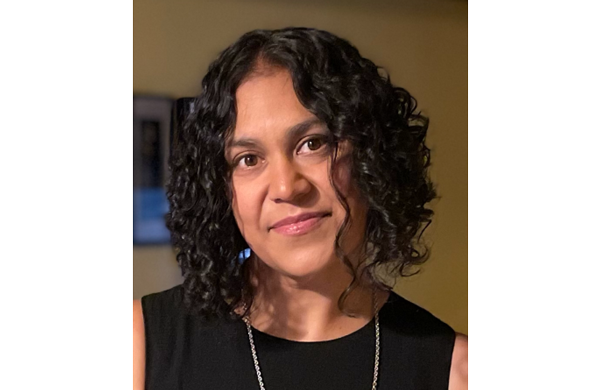
Gissele: Today, we’re talking about trusting ourselves, and our guest today is Natasha Ramlall, who works with high-functioning capable women who feel the ground crackling beneath them after a difficult life transition. As an embodied integration coach, she reflects the somatic mapping required to heal, expand, and evolve from an identity rupture, and navigate the space between who you were and who you are becoming.
Gissele: Please join me in welcoming Natasha. Hi, Natasha.
Tasha: Hi, Gissele. How are you? Good.
Gissele: Great, thank you very much. Thank you for being on the show.
Gissele: Just thank you, and I’ve really been looking forward to this [00:01:00] conversation, so yeah.
Gissele: I was wondering if you could tell the audience a little bit about how you got started in this work.
Tasha: It’s such an interesting question because tracing that path, it’s, I always feel like I’m getting it a bit wrong, because it’s certainly not linear, that’s for sure. But I do identify with that- that nudge telling you that something in your life is off. And it started off, a little bit quieter, quiet enough that I could shove it aside in favor of familiarity and convenience and ease and comfort.
Tasha: But it just kept getting louder. And eventually, I reached a point where I really felt like I needed to take a big step and change something. And, I’d already been very deeply [00:02:00] exploring the self-improvement world and, a lot of self-study, a lot of readings and seminars and workshops and podcasts and all the different things.
Tasha: And I was fascinated and really drawn into everything that I was learning about the body-mind system. And eventually, I was led to coaching and I, started that, that certification, a dual certification in life and health coaching. And that really opened something up inside of me.
Tasha: But as most people who go into coach training come to realize, it’s really just a foundation for a much greater and more specific way for each of us to understand our own experience and what we’re here to contribute to the collective. And so from there, I was [00:03:00] led into various other disciplines.
Tasha: One of my favorite offerings is Around Embodied Dance, which is something that I offer in my local community and it’s become a really special and sacred practice for me both as a participant and as a facilitator. And also various forms of breathwork. And then I really came face to face with the limitations of doing healing work from that cognitive sort of behavioral coaching lens.
Tasha: And not to invalidate cognitive behavioral coaching because I think it’s incredibly powerful and that there’s a lot to be gained from reframing and, attending to our mindset and understanding the world through a new lens. But for people who are really in the thick of [00:04:00] making a significant change in their life they usually reach a point where that’s just not enough.
Tasha: And so the additional training I have thrown myself into is embodiment, and I took some intensive training in embodied processing. And so from all of those different things I’ve crafted what I feel I’m here to contribute and the ways that I’m here to be of service which is bringing all of those different parts of the human experience into our own evolution and our own allowing the unfolding of what it is that we’re here to be doing with this beautiful, miraculous experience that we’ve been gifted.
Tasha: So that was a very long answer. I hope it actually answered what you were asking initially.
Gissele: Yeah.
Gissele: Absolutely. Yeah, I felt the same situation. I don’t… i’m sure we’ve talked about this before, and I’ve talked about this on this podcast before, that, [00:05:00] like my childhood dream was to work in child welfare, and when I started working there, I thought I was gonna live and die in child welfare.
Gissele: And then I got a nudging to do something else, which is the things that I’m doing here. Like working on this podcast and then, working on a documentary. And I definitely had what you were talking about in terms of an identity crisis because in my previous world when I had a quote, unquote, “secure job,” I was very good at what I did.
Gissele: Very good. And I was very capable. I knew how to do it. I have two masters. I’m very educated. And so I was already trained. To me, I can do that stuff with my eyes closed. But stepping into this new environment of being a business woman and trying to drum up business and then trying to figure out, what exactly am I supposed to be doing?
Gissele: ‘Cause it felt like the guidance was just one step, but there’s just take this step or take this step and there was no clear direction in terms of, like, where am I going? And so I definitely felt that. And it’s still lingering on in terms of feeling [00:06:00] that I don’t know what I’m doing.
Gissele: And it feels so uncomfortable to not really fully be in that space where you feel autonomy or you feel control. So what are the things that you find in terms of when people go through thattransition that helps them get through to the other side?
Tasha: That’s such a great question, and I think a lot of what you just shared really hits the nail on the head in terms of coming from a place where you are very hyper-capable at what you do. And, the women that end up coming into my realm tend to be very high-functioning, very self-aware. So it’s really a huge thing to do to leave that secure, familiar identity in favor of something that, as you so perfectly named, total uncertainty, and really diving [00:07:00] into this sort of lack of clarity and guessing, and in some ways it feels like we’re starting from scratch.
Tasha: And yet I think that the reason that we take that leap is because there’s a deeper knowing that there’s more in this experience. There’s more that we’re meant to be feeling. There’s more that we’re meant to be doing. And so what I find is that, we’re taught that changes and transitions are an external thing, right?
Tasha: The circumstances change, and so we simply need to get on top of managing those external circumstances and then things fall into place, and we step into this new stage or this new phase or this change that has been initiated. But what I’m here to scream [00:08:00] from the top of the mountain is that the external stuff is only a tiny fraction, and what’s really the juicy and important and essential part is the internal transition.
Tasha: What’s happening within us when we are stepping away from something that feels like a profile of who we are at our deepest level, and recognizing that all along that’s only been a mix of story and relationships and emotion and things that are not really the essence of who we are, but one expression of who we are, and that it’s okay to move into a new expression, And unfortunately, that internal [00:09:00] transition is not an easy thing to do, which you alluded to as well in your own journey, and I can relate in my own journey as well.
Tasha: We have to really go through the labor pains of birthing this new expression of ourselves into the world. And if there are any humans on here who have gone through the process of giving birth, labor pains are no joke. And so sometimes that will look like, more of a fight/flight level of response and reactivity where we’re busily trying to be over-productive and get things happening and get things in place, and it’s really masculine energy fueled.
Tasha: And this idea that I can force my certainty into place so I can get out of this uncomfortable feeling of not knowing what this is supposed to look like. And [00:10:00] because that’s just not a healthy, balanced way to be in alignment with a new expression of us, eventually that’s not gonna, that’s not gonna hold.
Tasha: And then what will often happen is a period of sort of immobilization where we fall into this sort of dorsal vagal shutdown of the nervous system where we are exhausted, and disorganized, and not productive. And it feels like you can’t even recognize the woman in the mirror because the person that you used to be, that very high functioning, hyper capable woman just, she seems to have left the building.
Tasha: And that is incredibly disorienting, especially for women who in the past have identified with being so capable and so high functioning.
Tasha: And so I think the most [00:11:00] important place to begin is to name that’s not a personal failure. It’s not a character flaw. It’s a biological imperative when we are going through a massive transition, like the ones that often accompany, a midlife awakening or a relationship ending like a divorce, or a job collapse, or a health scare, or a chronic diagnosis.
Tasha: These are really big life changing things. Grief, loss, losing a person that has been central to our life. Giving ourselves permission to be in that sort of uncertain, mucky place where we don’t recognize ourselves, as you’ve named, is deeply uncomfortable. Deeply uncomfortable. But part of that is the judgment and that inner critic that’s telling us, that we’re broken, that we are [00:12:00] failing, that we are weak, And if we can replace that inner critic with a more loving, graceful, patient voice that recognizes this is all part of the process, and that it’s okay to be in this messy place. There’s William Bridges, I believe his name is, refers to it as the the neutral zone or the void , which is that, that middle ground between something ending and a new beginning being able to take root.
Tasha: So you have stepped away from what you were, but the new thing that you’re becoming is not in clear focus yet. And that requires a really deep self-trust and soul trust. So trusting in yourself, but also trusting in something greater than yourself, holding you through that experience, and making [00:13:00] space for guidance to come in a way that is not forced, but is more received and more from that feminine energy.
Tasha: Which again, it’s something that we’re not taught to embrace, because it doesn’t look like it’s a productive thing. But sometimes, slowing down to speed up is the best thing that we can do. … So I think that, the major pieces, and I … And that’s why it’s so lovely to speak with you, because this is so directly connected to the work that you’re doing, that self-compassion and acceptance of our, not showing up in the ways that we have previously defined as good enough, successful functioning or whatever labels it is.
Tasha: Whatever labels we use to, to justify our existence and justify our worth. And just allowing ourself the time and space, giving ourselves [00:14:00] permission to just be in that messy neutral zone for a little bit
Gissele: yeah, I appreciate everything that you said. It takes an en- enormous amount of courage too.
Gissele: I wanna acknowledge that, because in my experience, I faced so much fear, right? As a person who had that security, and having that security meant that my family was taken care of and, all of those things. And then to go to an environment where you have no idea what you’re doing you have no idea when things are gonna change.
Gissele: And that was probably the most challenging part for me in my journey, is the patience and the trust that things are gonna be okay at the perfect time. And I think that’s when I realized that I didn’t trust, because I kept looking for the change. I’m like, “Okay, I’ve done all this inner work,” and I’ve worked so diligently .
Gissele: I’m meditating nonstop and doing all of these different things and taking all these different courses and doing all of the things that I thought meant that I was changing. And I have to acknowledge, they did [00:15:00] help me. Absolutely, they did help me, but I had an idea about how things should look like and when things should change, and that caused me so much suffering.
Gissele: Because there is that feeling that things happen to us, like a victim mode, but at the same time, some of us who have that, are already on that spiritual journey know that we create everything, and so then there’s the flip, which is like, “Okay, why am I creating this? And do I trust myself and trust the universe that it’s gonna pull through for me?”
Gissele: What do you believe are the fundamental things that lead to us losing trust in ourselves when we have a difficult life transition?
Tasha: the self-trust piece is so big. And I think for many women, it begins far further back than the moment where they step into a transition. I was actually speaking about this with a client last night and, if you grew up in a home [00:16:00] where…
Tasha: And most of us did, where as you were beginning to feel some nudges of something that felt more aligned, whatever your caregivers were carrying in them that they believed was necessary to keep you safe would overshadow that alignment. And- And oftentimes there would be, ruptures between what you were feeling and understanding about your experience and the messaging that you’re receiving from your caregivers.
Tasha: And as young children, we have a vested interest in trusting our caregivers above all else, because they really are a lifeline, right? If we, if there’s anything about my caregiver, the one who’s responsible for keeping me alive, if there’s anything about them that is flawed, then that’s actually a threat [00:17:00] to my own existence.
Tasha: So as a child, rather than understanding that, my caregivers, my parents are flawed humans with their own patterns and survival mechanisms that they’re carrying and reacting from, we see them as perfect, and we turn it on ourselves. And we say if there’s a disconnect, the flaw must be within me.
Tasha: There must be something wrong with how I’m understanding my own experience.” And, this is particularly painful in families where those ruptures are never acknowledged, but they’re swept under the rug, in favor of keeping up appearances and worrying about the opinions of other people.
Tasha: Oftentimes these ruptures just, they get tucked away, and they’re never brought to light. They’re never really acknowledged. And so for a child, we turn that, [00:18:00] that cognitive dissonance on ourself and we say, “Oh, maybe I’m too sensitive. Maybe I’m making too much of this thing. Maybe that interpretation of my experience is deeply flawed.”
Tasha: And so that breaking of self-trust begins at that very young, tender age, where we start to doubt our own inner voice and that intuitive knowing that led us, when we entered the world. And it starts to get overshadowed by this primal need for love, safety, and belonging, which is also important.
Tasha: And then we start to reference the external world, the messaging of other people, the expectations that others deem make life worthy and allow you to deserve your existence. And we really start to focus on- Relying [00:19:00] on those external reference points. And so when we get to that place where the nudge to make a change is so strong that we can’t deny it, part of that identity rupture is really having to reckon with that self-trust that has been breaking down over a lifetime really.
Tasha: Yeah. And so along with rebuilding sort of a new evolved identity, along with that is rebuilding this, the self-trust that’s required to fully step into it.
Gissele: I love that. I’m so glad you said this- … because I, it really resonated with me. As a child, I was really empathic.
Gissele: Really empathic. I could feel the emotions, but to me it didn’t make any sense because what I could feel and what was being expressed didn’t match.
Gissele: and I acknowledge that my parents did the best they [00:20:00] could but I was gaslighted all the time.
Gissele: Until much, much later in life when my mom would say, “Oh, when you were little, you were like my voice. You said all the things I didn’t wanna admit or acknowledge.” so I can see how I surrounded myself later in life with people that gaslighted What I was picking up, it was always shut down. And so I can understand how I lost that trust in myself, but I didn’t realize. I was not aware until going through this journey. It’s oh, my gosh, I really… I don’t trust my inner knowing. What helps us rebuild that trust- when we’ve lost that trust in ourselves?
Tasha: Oh,
Tasha: that’s such a great question, too. And, earlier in our conversation, I mentioned self-trust alongside with soul trust.
Tasha: And
Tasha: I think that is a really important piece, that in those moments where we feel like we don’t know what’s coming we don’t know what step to take, it can feel incredibly lonely, [00:21:00] and we feel as though I don’t know where to turn or where to look for guidance because I feel so alone in this experience.
Tasha: Even our closest the closest people to us, our spouses, our best friends, our siblings, our children they can’t understand it at that fundamental level of identity rupture because it really is- so deeply rooted in something that is very difficult for any other person, any other human to understand at the level that you require in those moments.
Tasha: And I think that a spiritual anchor, and I don’t want to, classify that in any particular way, because I really do feel as though there are so many different spiritual anchors that are impactful and effective, and it’s so nuanced and it’s so individual. But to loosely define what I mean, a soul trust that there [00:22:00] is more to us than this human experience of our identity that we are trying to navigate.
Tasha: And if we are able to rely on a force or something that is holding us through the, that really challenging, messy middle, I think that we can find a place of deeper trust and surrender and patience. And I do think that the more that we let ourselves open up to that, the more the more comes into our life to confirm that’s the right orientation.
Tasha: And then when you don’t feel as alone, I think that’s a really big piece in holding us through all of the toughest moments of our journey, is not feeling as [00:23:00] though we’re abandoned in it, but that there is something at play, an orchestration that’s, greater than we can understand.
Tasha: So I think that, that, that connection to a spiritual anchor is a really important piece. And I, you’ll hear that a lot of people, when they’re going through the most difficult and challenging moments of their life, that is the thing that they eventually turn to, whether they have their whole life or whether it’s the first time ever.
Tasha: We get to that place where we recognize we can’t navigate this journey completely on our own, and
Tasha: we need faith in something And often that, that is the missing piece
Gissele: I was reflecting on like my own journey in terms of, my relationship with, God, source, universe. People call it GUS. God, universe, source. And when I was younger, [00:24:00] I used to have so much faith in the universe. And I experienced so many magical things that happened to me, if I asked for money, it would just show up.
Gissele: If I got lost, I would ask for the guidance and, like it would tell me which way to go. I don’t know where along the way I totally lost that. I think I experienced heartache, And the thing that I reflected on is, if you didn’t trust the people that were supposed to take care of you to take care of you, why would you trust some random universe, God, source that you can’t see or feel?
Gissele: It makes it difficult. And what I noticed in my relationship with God, source, universe was that it was never enough. So for example, I would ask for a sign, it would give me something, and I’m like, “Not enough. Give me more.” Not enough money, not enough of a sign, not enough of a whatever.
Gissele: And what that ended up happening was is that’s what I was creating. I was creating a situation of not enough, right? And so I really had to reflect on, where did my relationship break apart, and how can I [00:25:00] start to rebuild that relationship? And part of my… the thing that I’ve realized is just how much credence and weight I give to the physical world, right?
Gissele: Because it has its real demands, right? Like here’s some bills, here’s some things, here’s some timelines and all of those things. So How do I embody my soul self, my higher self, my divine self, and still be able to meet the requirements that I need to meet without fear?
Gissele: and my relationship with fear in particular, is really changing. I’m learning to love fear. I’m learning- … to appreciate fear, learning to acknowledge fear.
Tasha: Everything you said is so important. And I think that part of the work and I often refer to it as a grounded expansion because- … I think there’s the two parts where we’re grounded in the human experience, while at the same time [00:26:00] expanding into something beyond the human experience.
Tasha: And we have to- … find that delicate balance between the two things, because we’re here for both. We’re not here to just escape up into a connection with Gus. But also if we get stuck in the muck of, being in the human experience without that connection to Gus, and I love that, so I’m gonna keep using it ’cause that’s wonderful.
Tasha: We can really lose our sense of purpose. What does it all mean? Why, what is all of this pain and suffering and challenge about? And so I think that is also a really big piece, is that understanding in our acceptance of something greater that is driving our particular, human journey, pain and suffering is part of it, as much [00:27:00] as, getting all of our needs met and expanding and having these beautiful awe-filled moments and all of that, and all of that.
Tasha: And it’s the whole package. It’s the contrast between the two experiences of something that feels incredible and something that feels almost intolerable. And so a big part, like a really fundamental pillar in the work that I do is radical acceptance. And radical acceptance does not mean that I’m okay with everything that happens and that everything that has happened but it does remove me from focusing on it happening to me and keeping me in that victim mentality.
Tasha: it gives me a step toward empowered agency and understanding that if I can learn to be with [00:28:00] my pain, and that’s, current pain, but also- The pain from our past and our traumas and our patterns that resurfaces over and over again, if I can learn to be with that and understand that it is part of me and part of what makes me and part of what I’m here to grow from
Tasha: And it’s here to help me learn more about myself, and it’s here to inform that next expression of my identity. If I can learn to be with the pain it becomes, there’s a deeper sense of purpose that arises out of the suffering. And, it’s a really difficult thing to talk about because if somebody is in the throes of suffering and challenge, the last thing they wanna hear is that there’s a purpose for this. Yeah. And at the same time, you’ll often hear when people have, [00:29:00] moved beyond that really excessively painful period, they look back and they say, “I’m glad it happened,” or “It ended up being so important to getting me to where I am now, and I wouldn’t trade that for anything.”
Tasha: And yeah. And I think that experience of going through something incredibly painful and finding purpose that is born of it can be a very, it can be a very important piece in awakening to something bigger than just, the circumstances of our pain.
Gissele: there’s a part of me that likes to believe that we don’t have to suffer. I like Michael Beckwith’s perspective “Pain pushes until vision pulls.” clearly am at the stage of my evolution where there’s still elements that, of suffering that happen, right?
Gissele: That’s okay, right? My higher self, Gus, says “Choose it. Love [00:30:00] it,” Even though I’m like… I give a side-eye. I’m like okay, thanks.” I do like to believe that there’s an element where we don’t have to… That doesn’t mean we don’t experience pain. But the suffering part of it- can be something we don’t necessarily have to choose- once we get to that point of our evolution, that we understand our bigger purpose, our bigger vision, and so on. I have to admit that and I’m admitting it to help my listeners I was angry with Gus for a very long time. Because things did not happen the way that I expected them to.
Gissele: And I had to admit that to myself, If I was being guided to do one thing, I did it, and then I was guided to do something else, and I did it, and I kept doing it and doing it.
Gissele: And I didn’t feel like from a financial perspective, that things were flowing, that things were moving, right? And I’m like I’m doing all of the things,” right? And so I was so frustrated and the perspective was always patience. [00:31:00] Patience, right? And I will say that the guidance now it’s done,
Gissele: And so let’s talk about our relationship with patience.
Gissele: This is something that I really have gotten to have to embrace, so my relationship with patience is really changing. When I feel impatient, I now acknowledge impatience and say, it’s hard to wait.
Gissele: It’s hard to do that. It’s scary to wait. It’s scary to do that.” But it took a while for me to get here and to acknowledge the fact that it was my own impatience that was holding things up.
Gissele: And, realizing that my time and Gus’s time isn’t the same time. And so can you talk a little bit about that?
Tasha: Oh, patience, yeah.
Tasha: And we’re at a time in humanity where that is… it’s, what’s happening in our world is completely at odds with what’s required of us to embody more patience in our [00:32:00] journey, right?
Tasha: Like we’re living in a more immediate gratification, immediate answers, immediate turnover. We don’t need to wait for anything, and that’s considered progress. And at the same time, it has us speeding up and just everything is getting so much faster. And I really think that in order to align with that self-trust, soul trust, radical acceptance, unconditional love, and self-compassion, all of these different things that we’ve, touched on, we have to slow down.
Tasha: We have to slow down the pace with which we’re trying to move through this journey. and I recognize as I say that, I’m speaking from a very privileged place because there are a lot of humans who do not have that option. And so I definitely [00:33:00] want to name that there are different stages and phases of our human experience.
Tasha: And I am speaking only at the one that I am fortunate enough to be living, which I think hopefully many of your listeners can resonate with my privilege as well. So I just want to say that I’m not – I don’t want to make a blanket statement for all humans because I recognize that we are all at different points of this experience and this journey.
Tasha: But slowing down and allowing time and space to expand by the very act of slowing down, I think it allows your patience to grow and expand within you because life looks different when we’re not rushing, when we’re not in an [00:34:00] overly productive mode, checking things off our to-do list and then getting to the next thing and always focused on the next thing that has yet to be accomplished.
Tasha: When we reorient to understanding that this is our life and our best way of approaching it is to be present within it as much and as often as possible, life looks different. It starts to look less about
Tasha: the boxes that we’re checking or the expectations that we’re meeting outside of ourselves and more about the experience of being in our life. And It’s so counterculture in the West in particular, right? We value, and, just referencing that masculine/feminine energy again, and that’s not, we’re not talking about men and women.
Tasha: We’re talking about the masculine and feminine that exists within all humans. But we’ve really [00:35:00] overvalued that masculine driving energy, and, the messaging is always biohack your way into whatever existence you wanna create for yourself. But I think part of really coming into relationship with Gus is to understand what is within our control and what isn’t, and releasing the need to control our lives into a particular expression, and that’s a hard thing to do.
Tasha: That’s a really hard thing to do, and it requires patience, and it requires trust, and again, all of the different things that we’ve spoken about. But I think that it is the requirement to understand
Tasha: if I am, if I am achieving… what is it behind the desire that’s driving me to do this thing? What is it that my deeper longing is? And if I get really honest and clear about, the [00:36:00] emotional driver of everything that I’m doing in my life, I can maybe release that need for controlling how I arrive at that that emotion that I’m seeking, and I can, be in action.
Tasha: I can do the things that make sense for me, that feel good to me, that feel guided, but then I also have to acknowledge that and part of it is out of my hands. I can do what I can do, and then I need to allow what is not known to me to unfold and be ready to respond to that with acceptance, with grace, with compassion and with patience.
Gissele: So thank you for acknowledging the fact that you have privilege. Because I think there are many people that feel like the pressure to make an income or the pressure to make different choices that may not always support the slowing down. There are many [00:37:00] workplaces that still work in the same way of that- constant.
Gissele: you have to grind it out. You have to kinda keep moving. And definitely even social media, people only post their successes. They don’t post the struggles that happen along the way the timing the fear every time they had to keep believing in the vision when nothing was showing up and how scary that can be
Gissele: People don’t talk about the suffering that happens invisibly. There’s a lot of invisible suffering- … that people don’t acknowledge. And so it makes it difficult for us to say, “Hey, this is normal. This is a normal part of the process. I’m not doing anything wrong,” right?
Gissele: And I kinda felt that when you were talking about the pendulum swing. So you go from a hyper high-functioning woman to the point where you’re like, a lot of the time you spend meditating And so you do kinda have that pendulum swing. And so it’s really interesting to see how our society isn’t created to, have that slowing down, that, go slow to go fast. What advice would you have for [00:38:00] women that are doing the work, working towards embodiment but aren’t seeing the results just yet- and how they can stay in that courage and that self-trust?
Tasha: Yeah. That’s a tough one. But I … something that I come back to in my own experience is I’m often redefining what those markers of success are for me. Because, part of the impetus to make a change in the first place in my life, and for me it was more of a choice than something that was forced on me, so I’d like to name that’s also a different experience for various women and different identity ruptures and transitions that they’re going through.
Tasha: But for me, part of the impetus was that- I don’t want my life to be like this anymore. And so if I’m comparing my success in the new iteration of my life with what I deemed successful when I wasn’t [00:39:00] happy with it anymore-
…
Tasha: Then there’s a misalignment there. And I need to really think about what are the things driving me to be different, and have I met those markers?
Tasha: One really big driver for me was that I wanted to be the owner of my own time. That was something that felt really core to my values because I wanted to have the time and space to make the choices for how I spend my time. And so in many ways I have successfully achieved that.
Tasha: Now, the trade-off is that, oh boy, I’m the owner of my own time, which means I have to use it, and I have to use it well, and I have to get all of my needs met- and it’s all on me. And so there is definitely a trade-off, and as you said the invisible suffering of that is [00:40:00] absolutely real and felt, and, but is it worth it to me? It is, and so I keep going. And if it wasn’t, if at some point being the owner of my own time was not worth what I was needing to sacrifice in order to have that trade-off, then maybe I would reorient and choose something different, and maybe I would say, “Maybe my path doesn’t feel aligned anymore.
Tasha: I thought that this was what I was supposed to be doing, but something is not aligned with those values that led me to make the change in the first place. Let me renegotiate and see if maybe I’m meant to be moving pivoting slightly, changing the trajectory a little bit.” But for me so far, when I, check in on those markers and I get really honest with myself, I can say so many of the things that caused me to make a change in the first place, I feel [00:41:00] successful by those markers.
Tasha: And that keeps me going, and that helps me to to have whatever it is that I need to stay on the path and to keep, doing the invisible suffering that comes along with it.
Gissele: Yeah. So when I think about my own journey I also really resonated with what you said because I did the exact same thing. I used to use the old ruler from my previous job to apply to this one and say, “This is what it should look like,” and that caused a lot of suffering.
Gissele: I had these old markers from a previous life where I was very successful. And so to go from being someone who’s very successful, high achieving, to somewhere where it’s like crickets, right? It’s a lot of work to getsporadic things, right? And so for me, it was like I don’t know what I’m doing.
Gissele: I know that the path isn’t to grind it out more, I’ve had to change how I measure success.
Instead I’ve become super grateful. Super grateful for [00:42:00] every little, tiny thing. Every little thing that I have, I’m grateful for. So grateful, and constantly saying that to myself. And that has been a really positive experience.
Gissele: and acknowledging the positive that my work has on people and on society has also been really important.
Gissele: And when I started to acknowledge that, I started to get external acknowledgement. Isn’t that interesting? talking about invisible suffering, and I think this is a really important thing that I wanna touch on. There were so many times in my life where I didn’t share with people that I was suffering. I don’t know if maybe it’s ’cause I was conditioned to not unburden my suffering on other people, or because maybe I thought they couldn’t hold it.
Gissele: And so sometimes I had observed that some people in my life- There’s a lot of superficiality. There’s a lot of protection, right? And so with people that I really trust in my life, like my sister and, my mom we talk about everything, right?
Gissele: Like I have no [00:43:00] problem being completely transparent and I’m like, “Ah,” like allowing myself to just flood and kinda dump my bucket and, they reassure me But there’s other people in my life where I’ve noticed just how much invisible suffering happens, but there’s the need to protect yourself from being vulnerable. And so I see that so much in our society that the need to protect ourselves from vulnerability prevents us from addressing and talking about our invisible suffering.
Gissele: And in this culture right now on social media of everybody has to be happy and look at all the positive things that I’m doing- … there doesn’t seem to be any room for people that are being genuinely vulnerable and saying, “I don’t have my shit figured out. I don’t.” I’m just winging it out here and I’m trusting, and every day I’m taking a step towards trust, I’m taking a step toward courage and so I think that we need more places that are authentic in order for us to address our invisible suffering .
Gissele: I’m just curious as to your thoughts.
Tasha: Yeah. I agree with you 150% [00:44:00] that we need more spaces to practice authenticity, and I’m very deliberately choosing the word practice because I think that, one of the reasons why it’s difficult to be vulnerable about our invisible suffering is because in a lot of contexts we’ve framed our invisible suffering as a weakness.
Tasha: And so it’s a threat to that mask identity that we are using. And, as we’re talking about identity and that is the armor that keeps us safe in the way that we move through the world. So any threat to that armor feels very dangerous. It feels like a threat to our love, our safety, our belonging.
Tasha: And so yeah, it’s not gonna be easy for us to [00:45:00] be transparent and say, “Hey, I’m really having a tough time with this thing.” And it seems like nobody else is, and it’s just me, and so I’m thinking there’s something really wrong with me that I’m not able to figure this thing out. But I think that if we are able, and I, one of the things that I do is I I facilitate groups of women in this work of practicing our authenticity.
Tasha: Because when we gather and we are able to establish a level of trust and safety within a particular group of women and I work with women but I think that this work is absolutely just as important for men as well. But when we’re able to gather in those spaces and practice being authentically vulnerable and being accepted rather than rejected in that vulnerability, [00:46:00] it helps us to rewire the parts of us that have never felt safe to do it in the past or in, in the other, external circumstances of our life.
Tasha: And over time, as we practice that and we are accepted in it, and we rewire those parts of us, we are able to start taking that authentic self into new spaces where previously it would have been, it would have felt far too scary, far too dangerous.
Tasha: And I struggled with that for a long time, and eventually I came to a place where I realized I don’t need to be seen in every space that I inhabit.
Tasha: Oof.
Tasha: Yeah. but I do need to be seen in some of the spaces that I inhabit.
Tasha: And so that was a really important distinction for me
Tasha: And when I free myself from needing that in all of the different spaces, it allows me to actually [00:47:00] be present with what I do gain.
Tasha: And there’s always a gain. Like you were talking about gratitude.
Tasha: Yeah.
Tasha: When we reorient to noticing all of the different things that we’re grateful for, it works in the same way when we reorient to being present with what is true in any particular moment, in any particular group of people.
Tasha: There’s always something, and if there’s nothing, then that’s definitely a situation that we don’t need to be putting ourselves in at all anymore. And, if there’s a situation that is so toxic that there’s absolutely no glimmer of something beneficial for your soul, there’s no need for you to be in it.
Tasha: But I think in a lot of spaces we don’t let ourselves see the beauty and the benefit and the goodness that’s there because we’re looking for something that it’s just not the right place to find it.
Gissele: So powerful. I totally resonated with wearing the mask of failure,
Gissele: there were times when I was too afraid to be vulnerable [00:48:00] because I didn’t wanna be seen as a failure, right? Because I was so high-functioning for me to fail at something.
Gissele: Because I derive my personal value from my high functioning. That’s how I was valued and acknowledged in my family circle. Oh, yeah. The fact that I was high functioning made me lovable. It made me acceptable in a place where I never felt like I belong And I also love that you mentioned the fact that there’s going to be spaces where you do not, maybe not even get that. ‘Cause, ’cause there are spaces- Where I do not feel like I fit. That I do not feel like I resonate with the people.
Gissele: So it’s difficult the interplay of saying, “Okay, how do I show up here in a way that acknowledges your presence while I’m still trying to be there for myself and not put you first instead of me?” Yeah. You know what I mean? I do, yeah. Yeah.
Tasha: And I think that, what you’re sharing is it’s so [00:49:00] real.
Tasha: And I also think it’s not like a one and done. And so- Yeah … the way that I phrased it before, it may have sounded like, “Oh, I fixed this thing, and now I’m all good. I’m just seeing the good stuff.” And that is so not true. But it’s an ongoing practice, and some days it’s in my best interest to choose not to go, not to attend it, not to be there, because I’m in a place where Ii’m feeling too tender orI need to be surrounded by the people who really do see me. And so I’ll step back in those cases. And then there’s other days where I feel really bolstered, and I’m able to enter those spaces, and I’m really able to gain value from being with people who don’t necessarily, resonate at the same vibration as me or see me as deeply as I would love to be seen.
Tasha: And so it’s a day-to-day negotiation and an understanding of myself and what I need in any particular moment, and recognizing that my human [00:50:00] experience is never static. I’m always up and down. My cycles, my hormones, my moods, the circumstances of my life and my relationships and the world around me.
Tasha: And I’m like a different version of myself from second to second. And so letting myself be flexible also in, in all of those different in all of those different spaces. And I think that was part of the thing of recognizing that, okay, authenticity doesn’t necessarily mean that you have to show up and be 100% authentic in every way with every single person you know.
Tasha: It’s just not a realistic or even a desirable way for me to live my… It would be exhausting, actually. I think about it, I was like, “I don’t think I have the energy or the capacity- To do that. But understanding myself enough and feeling the embodied experience of when that’s [00:51:00] aligned and when it isn’t, that work helps me to discern, how to show up in a way that makes the most sense for me, from moment to moment and person to person and experience to experience
Gissele: and, yeah.
Gissele: And I would say that’s a truly compassionate approach. to be constantly checking in with yourself It’s so funny. I’ve talked to people, across the world people have had so many different experiences, and there’s so many of us who want a world full of love and compassion and we’re trying to fix the world.
Gissele: let’s eradicate war, when we can’t even do that within our homes or with ourselves. And so it’s always important to start with ourselves, and here’s what I can offer and I can give so that then I can show up better for you. And if I don’t have it that day, it’s better that I not come so that I don’t hurt you or I don’t cause strife or, or bring more conflict.
Gissele: And so I think it is a very kind and loving thing to do to check in with yourself and say, ” Can I show up today?” And just [00:52:00] truly be grateful for whatever they can offer and love it. Or maybe today I don’t have it. And that is okay. That is okay for me to do. Yeah. And I think that’s truly loving.
Gissele: Which goes to my next question- … which is what is your definition of self-love? Self-love.
Tasha: It’s such a good question. My definition of unconditional love is acceptance without judgment. And so self-love would be self-acceptance without judgment, and that, I think, is a really big ask. It’s a really big ask, but I do think that orienting toward that acceptance of all the parts that make us, and all the experiences and all the shameful things and all the disgusting things and all the aggravating things [00:53:00] brings us into a level of wholeness that’s very healing.
Gissele: I love it. Last question. Where can people find you? Where can they work with you? What do you wanna share with the audience?
Tasha: I’m not a big user of social media. I’m not exploiting that as well as I probably could be. So the best way to find me is just to visit my website, and that is humanistcoaching.ca.
Tasha: And there’s some different free resources. There’s one right now that is really wonderful for women who are ex- navigating an identity rupture, and it’s a guided audio, and it helps us to resource into a felt sense of safety within the body, which for me is ground zero, like step one, foundational to doing any kind of embodiment work or any embodied exploration.
Tasha: So it’s a really great resource and I hope your listeners will go check it out.
MEDITATION found here: https://humanistcoaching.eo.page/safety-pulse
Gissele: [00:54:00] Thank you so much, Natasha, for this incredible conversation and for coming and sharing your wisdom. And thank you to everyone who tuned into another episode of Love and Compassion Podcast with Gissele.
Gissele: See you soon. Thank you.