
TRANSCRIPT
Gissele : [00:00:00] welcome to the Love and Compassion Podcast with Gissele. We believe that love and compassion have the power to heal our lives and our world. Don’t forget to like and subscribe for more amazing content, and if you’d like to support the podcast, you can buymeacoffee.com/loveandcompassion. Today, we’re gonna be talking about finding happiness even in the most difficult moments.
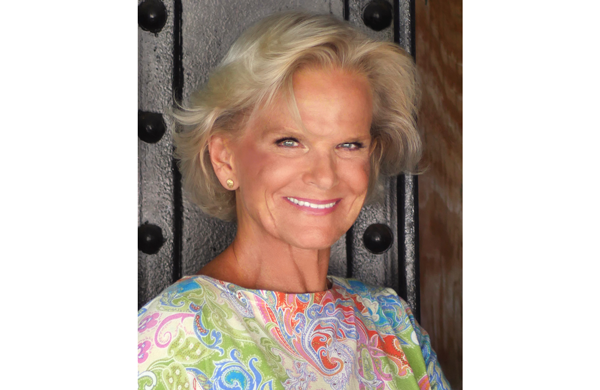
Gissele : Our guest today is Karen Olson, who is the founder of Family Promise, a national non-profit organization that helps homeless and low-income families. Today, the organization boasts more than 200 affiliates across the US, with more than 180,000 men, women, and children served each year. In her book Meant for More, Karen tells her story from tragedy in childhood to an adulthood full of compassion and service, which has made her stronger, healthier, and more fulfilled than ever before.
Gissele : Many people seek happiness through acquiring material goods or achieving status, only to find a lack of fulfillment. With first-hand [00:01:00] testimonials from Karen and other volunteers, Meant for More is a call to action. When you reach out beyond yourself and seek to make a difference in the lives of others , happiness will catch up with you.
Gissele : Please join me in welcoming Karen Olson. Hi, Karen.
Karen: Gissele, thank you s- so much. I’m happy to be here. I’ve got a little cough today, so I have to clear my throat.
Gissele : Thank you so much for being on the show. I was wondering if you could start by telling the audience a little bit about your childhood and how that led you to to choose a life of service.
Karen: My childhood before I was 12 was very happy. Playing outside, going to the beach in the summer, swimming in Long Island Sound, and in the winter, skating on the pond on our street. And I just was happy-go-lucky, giggling and laughing all the time, having so much fun. I didn’t recognize that it was so happy until one day it [00:02:00] wasn’t.
Karen: When I was 12, I experienced a very tragic and sudden loss. My mother committed suicide when I was just 12. She had been depressed, and she was seeing a doctor, and her marriage to my father wasn’t good, and but we had no idea she would commit suicide, but she did. And since I was so close to her and my dad was an alcoholic I just, it left a hole in my heart when she died.
Karen: But that hole drove me to help others, ’cause I knew what hurt was, and I didn’t want anyone else to hurt. So I did various things. I volunteered at the ho- local hospital as a candy striper. I delivered flowers to people. And I played tennis with a man, young man across the street whose girlfriend left him, and he had cancer, [00:03:00] and he didn’t have long to live.
Karen: But it just seemed natural to me to wanna reach out to others, something I was not aware of before I had lost my mother. But the loss of my mother encouraged me to reach out to others, and I think it’s that drive, that passion that drove me on to create Family Promise and help so many people
Gissele : Now how did you specifically choose to help that population, the homelessness population, instead of like maybe some other organization?
Gissele : Like why homelessness in particular?
Karen: I started out giving sandwiches to people in New York City at Port Authority Bus Terminal. And actually, what led me there was I was on my way to a meeting in New York City. I was a consumer promotions manager. And I was about to pass [00:04:00] this woman who I had seen before. She was elderly. She sat on a crate outside of Grand Central Station, and she always looked down, like she was very depressed.
Karen: And on this particular day, I decided I just couldn’t walk by her without offering something. So I ran across the street and got her a ham and cheese sandwich and an orange juice. And when I came back, she said, “Thank you. God bless you. Haven’t eaten anything since yesterday.” And with that, she took my hand in hers, and a connection was made.
Karen: And from there, I began going into Port Authority Bus Terminal every other Sunday with my sons to give sandwiches, and we got to know people, like Lucille and Ar-
Karen: Just as a way of lifting, lifting their spirits, and it certainly did. [00:05:00] But then I became curious about homeless people. In New Jersey, I had heard there were homeless people, but I didn’t see any. The thing about that is you don’t see homeless families. They try to stay out of sight. But I began volunteering in the city of Elizabeth at the Salvation Army in the soup kitchen, and there I met families who were working but homeless, and I thought, “How can that be?
Karen: Does the religious community know?”
Karen: After I met Millie, I told my two sons, were then 10 and 12, about Millie. And they said to me, “Mom, let’s go into the New York City and bring more sandwiches to people like Millie.” They had the open hearts of children. Yeah. They just wanted to do it. So we made 25 sandwiches and brought them in to Port Authority Bus Terminal, and [00:06:00] gave them to people who were sitting on the benches.
Karen: And this was on a Sunday night. Essentially anybody sitting on a bench in the upper floor of Port Authority Bus Terminal was not waiting for their bus. They were simply homeless. And we got to meet people like Abe and Arthur. Arthur w- was a World War II veteran.
Karen: When he opened his jacket, he had medals with- pinned inside his jacket, and he would tell war stories to my two sons, and he was like a grandfather figure, and then we met people like Lucille. On the good days, she would say, she was a first-grade teacher, and she’d say to my son, “Doug,” d- study hard.
Karen: You don’t wanna end up like me in Port Authority Bus Terminal.” And on other days, when maybe she [00:07:00] was off her medication, I don’t know, but we were the CIA or the FBI, and she screamed at the top of her lungs, so the nicest thing we could do was just, just, leave her alone. That started my outreach to homeless people, and and I also invited them to my house for Thanksgiving dinner.
Karen: Now the only thing about that is I, I– Three weeks before, I would go in and give them bus tickets in a little envelope with the invitation to come for Thanksgiving dinner. I didn’t think anything about it at the time, but my friend reminded me, Karen, you admit that you’re not a very good cook, and you’ve never cooked a Thanksgiving dinner.”
Karen: But I don’t think about those things. I just kinda g- lead with my heart. And so we had eight people who were homeless [00:08:00] come to my house for Thanksgiving dinner: Arthur, Abe, Lucille, and John, and others. And it was just one of the nicest Thanksgiving dinner e- ever, because everybody talked about Thanksgivings past, and
Karen: they were very appreciative of the dinner, and
Gissele : I was just gonna comment on the fact that, most people would ignore people that are suffering. Most people would just pass by, not even notice. And one of the things that I think is beautiful about your story is that you’re willing you had been willing to notice the suffering of the woman who was there and was hungry.
Gissele : You notice the suffering of the veteran, who we obviously have forgotten about because as a society, why aren’t we taking care of our veterans who’d fought for us? And also more importantly, you said something that is happening right now, which is many people are working, and they’re still not able to make ends meet, and they’re [00:09:00] experiencing an invisible suffering.
Karen: Yes, an invisible suffering. That’s so true.
Gissele : And to notice someone suffering. Sorry.
Gissele : To notice someone suffering and to be willing to extend a hand because most people would not have invited them to, to their house. I probably would be one of those people that would be, like, afraid, who would be like, what if they steal something or what if something happens? What helped you get over that fear?
Gissele : Or did you even not think about it? Did you just do it because you thought it was the right thing to do? I know that I have been very fear-based in the past, and that really has closed my heart and prevented me from being as truly compassionate as I want to be.
Karen: It’s interesting.
Karen: I, I saw you tear up at the thought of people suffering and no one reaching out. I reached that point of tearing up, but it drives me to just do something and not really think about it much. I have to say that I have very good instincts because-
…
Karen: I’m not gonna bring my children near people who are wild [00:10:00] or, you know- Yeah
Karen: not on their medication or whatever. I know how to stay away from danger. But when I get to that point of sensing this deep injustice that, how can we allow so many people to lie on the streets, some without, y- enough clothing, hurting in bad weather how can we allow that to happen?
Karen: That catapults me to try to do something. It’s like a reflex action. So- Yeah, that’s what drove me to start reaching out to people in New York City. And then from there, I wanted to find out what’s happening in my own community in New Jersey, and that’s when I began volunteering at a soup kitchen and a shelter, and that’s where I met families.
Karen: And many of these families were working. The shelter was [00:11:00] full which it usually was. Not enough not enough beds for all that are needed. It’s hard because the minimum wage hasn’t been raised since 2009. It’s still at $7.25 per hour.
Karen: state of the housing in the United States is that you can’t afford an a fair market two-bedroom rental with the wage you make. Most renting families below the poverty line now spend at least fifty percent of their income on housing.
Karen: So along comes a car repair or something that needs to be fixed in the apartment or a medical bill you have to pay, and they have to make difficult decisions. Do I pay the rent or do I do this or that? And that’s why so many people are precariously housed.
Gissele : what upsets me about the situation is that is [00:12:00] how we’ve created a society that has all of this income inequality, right? You’ve got people that are exorbitantly rich, and then you’ve got people that are barely getting by. And then we’ve allowed these corporations and we’ve allowed these organizations to not raise wages, to not pay fair benefits, to not give people a living wage.
Gissele : And what I say that we’ve allowed it is basically we continue to fund these corporations with our money. We continue to support them. And so at what point are we responsible for making sure that we are helping each other? And I think your life is a beautiful example of how we’re responsible for one another in the sense that if we truly wanna create a better world, we have to care about one another as if we would be caring for our immediate family
Karen: That’s it.
Karen: You’ve gotta see your neighbor as part of your family and bring them in. And I think that most people are compassionate, but they don’t know what to do oftentimes. [00:13:00] And so in forming Family Promise back in 1986, I formed the first program that allowed communities of faith to come together and take turns sheltering family for a week at a time in rotation with each other.
Karen: That’s something they could do. So the typical church, let’s say, was doing it once a quarter, and they would house families in their buildings for a week at a time. But it was much more than just shelter. There they began to relate one another, and even their own children that came with them would play with the children in the program.
Karen: And I remember one time a woman related to me that she had volunteered with Family Promise and brought her children. And so her children, just got down on the gym floor and were playing where… with homeless [00:14:00] children. But then on the way back home, her daughter said to her, “Mom, when are we gonna go see the homeless people?”
Karen: Families don’t look like homeless people on the street, and-
Gissele : Yeah …
Karen: that, that’s a tragedy,
Gissele : Yeah. It’s a tragedy because we’re supposed to be, in, in a developed country, right? In a country that is supposed to be enable people to have opportunity, enable people to be, to be able to rise above their circumstances.
Gissele : At least that’s what the capitalist perspective has been, right? That everybody has an opportunity. But the truth of the matter is, if your wage hasn’t gone up, if you’re underemployed then you don’t have an opportunity. And if there’s a whole bunch of nepotism as well or there’s a, this lobbying that prevents you from increasing wages or giving benefits before you leave the country, then you’re not necessarily gonna be able to rise by your bootstraps because the system will work doubly hard to keep you down.
Gissele : And so [00:15:00] it makes it that much more challenging, it feels.
Karen: Yes, definitely. When people are making low wages, they can’t… They have to make difficult decisions, which is very hard on a family. Yeah. They have to decide whether they wanna celebrate their child’s birthday or, pay the rent or fix something- Yeah
Karen: in their apartment. Y- they’re forced to do this. They’re living a very different way than, They should have to
Gissele : Yeah. At what point did the organization grow to that many people that you were supporting? It started off as small sandwiches. At what point sorta did it balloon into this bigger than life organization that’s supporting 180,000 people is quite a number of families, so- Yeah
Gissele : it’s
Karen: incredible. It’s for several reasons. One, the model is replicable. In every community, there’s people who are compassionate and wanna make a difference, but just are wondering how they’ll do it. [00:16:00] And in every community, unfortunately, there are families who are homeless. And when I started the program in 1986, and at the end of that year, about 70% had found housing.
Karen: What we do is not just shelter, but it’s help families holistically and help them find housing. But at that time nearby counties said to me, “How do we start this program?” So in Morris County, Terry Rahill of St. Patrick’s Church came to me and said, ” I like what you’re doing, and we would like to do that in Morris County.”
Karen: So I taught him how to build the network, and then Carl Bost in another county nearby came to me and said, “How do we start the program?” And again, I showed him. So it grew organically at first, but then I got calls from [00:17:00] Philadelphia, so I went there. And a call from Columbus, Ohio, so I went there. But then it just kinda caught on, and I what I did was have my own sales force, so to speak, and these were dedicated volunteers who would meet with clergy one on one in a particular community.
Karen: And then they would host a community meeting where we’d go out and speak and hopefully get people excited about the prospect of volunteering and forming a network, which is what happened. And then I hired more of the staff to do some of the work. So one, the program works for homeless families, and two each city has what they need to start the program.
Karen: You just need you just need to know how to do it. So that’s pretty much how we grew. And the nice thing about that is a lot of [00:18:00] these affiliates go on to create other programs. Like in, in Augusta, Georgia, Gary Billings in Billingsley, a pediatrician developed a day center for kids. He saw how in the heck can families, Find housing if, or jobs if they had to take care of their kids.
Karen: So now he has a separate… First it was in a church building, and now he has his own building, ’cause people in the community heard what he was doing and liked it, so that he has his own separate day center for families in the program, and they even accept families not in the program. So it’s a wonderful thing to see how it blossoms.
Karen: It’s like a plant that begins to grow upward, and then spread goes out to form [00:19:00] branches of other kinds of programs. And other things that have been developed by our affiliates are a pet program in Phoenix, Ohio, mean in, in Phoenix, Arizona. They saw thatFamilies would not come into the program because you’d have to make a difficult decision, come into the program and leave your pets behind, or stay with your pets and don’t have shelter for yourself. So they created something called Pet Promise, and that meant that anybody coming into their program could bring their pets, and they had a they built like a kennel on the outside of their day center and so families could walk their dogs, play with their dogs.
Karen: They didn’t have to make that difficult decision. So l- lots of innovations come out of once people get involved. The mystique [00:20:00] of who’s homeless and who’s not, the veil is torn away, and they can see families with children that need help, and they respond.
Gissele : Yeah. That’s what happens when a community comes together with care and with heart, right?
Karen: Yes.
Gissele : are you okay talking about your accident and talking about… Is that okay?
Karen: Oh, yeah, that’s okay.
Gissele : Oh, okay. I just, I wanted to shift gears because the topic is really about finding happiness even during difficult moments. And so I was wondering if you could share a little bit about the accident that you went through and how you’ve been able to come on the other side with a still very positive and happy perspective.
Karen: Yeah. I retired from Family Promise in 2016, and on February 12th, I remember the date, 2019, I was sitting beside the pool in Miami Beach, and I was waiting for my cryotherapy appointment. And [00:21:00] cryotherapy, for those listeners or viewers who may not know, is extremely cold temperature therapy, and it’s supposed to give you energy, which people said you…
Karen: At that time I had so much energy. But it also helps you lose weight, makes you feel good. Anyhow, I had done it about 30 times, both in where I live in New Jersey and down in Miami. But this time when I y- got there for my appointment, the person at the desk said, “You’ll have a new attendant. She’s been with us for four weeks, but she’s been well-trained.”
Karen: And so I thought, “Okay, that’s fine.” I guess I should’ve second-guessed that, but I didn’t. And once she put me into the chamber, it got really cold, and I said, I’m cold, I’m so cold.” I, I don’t remember saying that, but she says that’s what I said. And so she went around and she opened the door of the [00:22:00] chamber, but rather than standing in front of it, she stood behind it, and I fell out.
Karen: I must’ve been frozen like a popsicle, ’cause I fell out and hit my head on a raised ledge. I didn’t lose consciousness, but I hit my head hard and I couldn’t feel anything from my neck down. So I had the presence of mind to ask for a phone, and I called my two sons, and they came down, and I had the surgery.
Karen: And, I’ve come out of that okay. I was in the hospital in Florida for a while, and then I wanted to be transferred to Kessler Institute, New Jersey, ’cause they’re one of the best in treating people with a spinal cord injury. And the good news is that I had an incomplete spinal cord injury.
Karen: Incomplete means you have a chance to walk. If you have a complete, [00:23:00] then you’re really, married to your wheelchair So I, I had therapy there, and then I, as I say, I transferred to Kessler, and after a while, I got my own apartment. And yes, I don’t know. I don’t feel depressed. In fact, I’ve never even cried since I had the accident.
Karen: Why? Because my faith is strong, and
Karen: thoughts, and I have wonderful aides who help me. I have a wonderful assistant in Jen, and my two sons and their children are nearby. So I don’t… my happiness is not dependent upon my walking. My happiness is dependent upon making up my own mind to be happy and taking it a day at a time, and that’s really what I’ve done.
Karen: And I, I do volunteer speaking at different events. And so I feel [00:24:00] my ministry that I started way back when I was just a little over 12 continues, in giving sandwiches to people who were homeless, and then founding Family Promise, and now speaking around the country.
Karen: And so th- I once heard somebody say, “Serve or suffer.” In other words, if you have this in you to serve and you ignore it, you ultimately suffer, ’cause it’s an expression that you have to express. And I s- today I volunteer. I volunteer on a task force in my town of helping homeless people, and I’m pleased to say that out of 25 that were homeless in this community we’ve housed 20, and that’s quite miraculous.
Karen: But that’s what can happen when a community comes together
Gissele : That’s so beautiful. Thank you for [00:25:00] sharing that. Yeah. And I just wanna praise your extraordinary strength. I know that when I’ve had difficult moments there’s times when I, in the past, have struggled with negative thinking and not having that strong faith, right?
Karen: Yeah.
Gissele : What helps you have that faith and not waver when doubt maybe shows up?
Karen: Okay. At one time I didn’t have that faith when I was in my 20s and early 30s, and I guess I learned from that, and I think I’ve grown spiritually. I have a sense of myself being a spiritual being having a human experience.
Karen: I guess that’s really key. In other words, I’m beyond the person Karen, here. There’s a spirit that’s really the driver, so that gives me happiness. I feel very happy, really. Yeah. But it’s… That’s not easy. A- as I say, when I was in my 20s and early 30s, I couldn’t do that, and I had to had some trials, and then just [00:26:00] decided and this was through taking their various programs, two spiritual programs and fellowship, that I decided I was just gonna be happy or at peace.
Karen: And I think that’s what’s, that’s what’s happened.
Gissele : And I think what you’re saying is very important, so I wanna reiterate it, and it’s the fact that you made a choice. You could have chosen bitterness, you could have chosen sadness, So you chose to be at peace, to be happy, and it’s a choice we have to continuously make.
Gissele : And that’s what I’ve also learned about my journey as well, which is that I have to choose. I have to choose happiness, I have to choose peace, I have to choose compassion, I have to choose love. Because it’s so easy to fall into despair, hate , anger, blame, and all of those things. And so it’s a choice, and it sometimes can feel, for myself in the past it has felt difficult.
Gissele : And yet it always ends up being the best choice and the best outcome [00:27:00] when you do. I wanted to ask you about the person who was involved in the accident and forgiveness
Karen: Yeah. I- I’ve even forgotten her name now, but she called me I guess about a week after I had my accident. And she felt very bad that she felt somehow maybe she had caused it. And I said, “No, not at all. You just were not well-trained enough. It’s not your fault.”
Karen: And I said I don’t blame you one, one bit,” or you did what you could.” And she thanked meprofusely because she had… was filled with a lot of negative feelings and blaming herself. And I said, “No don’t blame yourself. It’s you just were not trained in the right way, and I don’t blame you.
Karen: I don’t blame anyone, so please don’t blame yourself.” And that really released her. She felt,
Gissele : Yeah …
Karen: she felt freed And in fact, I [00:28:00] never did blame her or think anything of it. Don’t blame anybody.
Karen: What’s the sense of blaming? It’s not even in my frame of reference to, to blame anyone, and I guess I could look at it, but what does that do?
Karen: I don’t know. I just don’t go there. I just don’t go there. So this is yet another test in my life, where I’ve grown stronger and more at peace than ever before. And people would say how could you be at peace when you’ve, y- you no more can do exactly how you were doing it, and you’ve had this severe accident?”
Karen: But it’s peace within myself and the ability to still reach out to others. Like the other day, I was in the mall, in Short Hills Mall, fancy m- mall, and amid all the designer stores, there was this one man who sat on a bench or an in-between area of the stores, and he [00:29:00] looked, like he was suffering a bit, but he had things to buy.
Karen: And so I was with a couple of friends. We were walking by. I said, “No, let’s go back.” So I went back, and I bought he had a whistle, and I bought a whistle and some other things, and ended up talking with him for about 20, 25 minutes. And so that’s a simple act of kindness, but other people were just walking by him.
Karen: So I have a way of, of just knowing people and their needs and how much it lifted his spirits. He said, “Thank you so much,” and I want to think that we made his day better because we stopped, and we just didn’t buy… even just buy something and be on our way. We sat and talked with him, and something as simple as that.
Karen: So you have to have your eyes wide open and your heart open as well, and you’ll find opportunities to make a [00:30:00] difference, and you’ll find out in the end that the rewards go to you because it makes you feel good. That’s not why I do it, but that’s how it happens. Yeah.
Gissele : Yeah. Yeah I love everything that you said, and it’s so true.
Gissele : You’ve gotta be willing to notice, so aware and have an open heart to notice because as I mentioned earlier, there’s so many people that are suffering in silence in that they’re, they feel invisible and are invisible because people don’t see their suffering. And to be able to notice that can go a long way to someone, make them feel like somebody sees me.”
Gissele : And the majority of us are so in ourselves or in our phones or in our problems that I think it makes it hard, but I think what you’re sharing is the power of helping others even To the extent that you can go a long way in helping you feel more abundant, more generous, more- Yes … happier [00:31:00] because you feel you have something to offer, and you can help someone else who is suffering as w- may potentially as well.
Gissele : And so we all have something to give. We all have something to offer, whether it be a sandwich or whether it be, a conversation, or whether it be, like something monetary. I think you, you’ve given us the opportunity to reflect on the power of noticing and the power of caring for other people.
Gissele : And I b- I agree with you, that it does have positive effects for us as well. I don’t think you can do something for someone else and not feel positively impacted.
Karen: Yeah. I was a beneficiary of someone’s act of kindness, which I wasn’t expecting. I was on a business trip, and there was bad winter snowstorm, and my driveway, I’m sure, was gonna be completely covered.
Karen: But when I got in the cab and got towards my house, I saw that the driveway was shoveled and the walks and the [00:32:00] and the front steps, and I thought, “Oh, my sons must have done that.” But when I got to the door, I saw a little note scrunched in, into the door, and it said, “I hope I didn’t mess things up, but I know you were away, and I shoveled your driveway and walkway.”
Karen: And, and that was from Chris Jordan across the street. And that just had a profound effect on me, so much so that I couldn’t bring myself to throw away the note. And I took it and I put it on the table when you w- when I walk into my home, and then I had it in other places and I kicked it around.
Karen: I just couldn’t bring myself to tear it up or throw it away. So he had a profound impact on me. He prob- well, he thought he was doing nothing, but I guess that, wow, I don’t know this neighbor at all, and look what he did for me. That’s [00:33:00] just a wonderful thing. So it, yeah, it can have a f- he didn’t think he was doing that much, but to me it meant a lot, yeah. That he cared enough to do that, really. Yeah.
Gissele : Yeah. And he noticed that would’ve been helpful, right? Somebody without asking. And I do believe in the law of karma, that, you’ve put out so much positive world, that positive comes back to you. To be honest it’s also caused me to reflect, and I’ve reflected on this many times in the past since we were talking about homelessness and we were talking about low wages.
Gissele : I kinda had to have a real conversation with myself about the kind of world I was helping create. And my parents, and specifically my mom grew up in poverty, and so I was really taught that poverty, lack thinking. And so I always wanted to pay for things as cheaply as possible, which led to me obviously going to places that pay as cheaply as possible and, you know the circle, which is then they pay as cheaply as possible and then, so on and so forth.
Gissele : And so I was sharing with someone else that, my husband has a business – Yes … and we would attract people [00:34:00] that would wanna pay as cheaply as possible. I would complain “I can’t believe those people. They wanna pay as cheaply as possible . They don’t wanna pay for quality.” Then I was like, ” Wait a minute .
Gissele : I’m doing the same thing. I’m helping create that circle of businesses that wanna pay as cheaply as possible and so on.” And so I had to say to myself, “Am I willing to be generous ? Am I willing to get beyond my fear of lack and pay generously because I value people, because they deserve ?”
Gissele : So that people pay, because we also deserve, because my husband does a great job and so on. And so I really had to reflect on how interconnected we are. And so I think from the perspective of all of the amazing things that you’ve done, it’s no wonder that you’re attracting all of these positive things, because you are a person who puts a lot of love out there
Gissele : And I also wanted to go back to how extraordinary it is to take life adversity such as the accident that you were mentioning, and being willing to say, “Okay, where can I grow from here?” What’s the gift [00:35:00] in this moment? And that’s difficult, especially if you haven’t been trained to, to have that mentality.
Gissele : If you came from that mentality where your radio station is one of lack, which the majority of people in the world have, which is why the world is the way that it is, to look at things in negative, like plan for the worst, all of those things, then inadvertently we also get stuck there.
Karen: Exactly …
Gissele : yeah I think that you choosing to say, my happiness doesn’t depend on external circumstances,” that’s extraordinarily-
Karen: True … yeah. No, it doesn’t. I don’t know, it just… I feel comfortable being me, and I guess I’m blessed with good family and friends and aides to help me.
Karen: That’s all part of it, though. And it’s like I have an extended family here- … since my accident.
Gissele : Yeah.
Karen: Was a hidden blessing. I never really thought anything like that would happen, but I appreciate everybody around me, and my assistant [00:36:00] Jen is just amazing. She does so much. She goes to art class with me.
Karen: I paint with my left hand. My right hand is my dominant hand, and that’s how I used to paint, but now I paint with my left hand. So she goes to art class with me and helps me with the paint, and we talk about it, and she also does writing for me, and accepts flowers and she does just so much, so I’m blessed to have her in my life.
Karen: But perhaps I attracted her because, I’m positive . I don’t know, but it just goes round and round.
Gissele : Yeah.
Karen: Yeah.
Gissele : And in and a heart full of gratitude tends to attract many blessings. Yes. Yeah. Beautiful, yes. And
Karen: I love your
Gissele : pictures behind you. Are they… Those are yours as well?
Karen: Yes, those are ones- Yeah
Karen: that I painted. I have many here. Oh. Those are ones that I painted before I had my accident. And it’s something I enjoyed very much. The one [00:37:00] directly behind me, that large one is something I painted when my sons were just two and four- … during their naptime. And you really can’t see it, ’cause my head’s in the way, but there’s a path that goes through there and out.
Karen: So it’s a symbol of moving forward and flowing and moving out to something better. We’re rising up. And I didn’t know at the time, because I was very depressed. I had just gone through a divorce, and other things were happening, so I was depressed, terribly depressed. But you wouldn’t know it from the picture, ’cause it’s bright and light.
Karen: Yeah. So yeah, I enjoy the painting very much.
Gissele : And thank you for mentioning that because, challenges do happen, right? Y- you mentioned you went through a period of depression. And so it’s not, it’s about us not feeling our difficult feelings, but you, we still have to choose whether or not- Yeah
Gissele : we’re gonna continue. [00:38:00] You have to continuously make a choice for peace, for happiness, for joy, for love even though it feels sometimes overwhelming. I also love the fact that even after your accident, you’ve continued painting. It’s not like you’re like I can’t do that anymore.” It’s how can I do this differently? How can I still do something that brings me a lot of joy, but maybe it looks in a different way?”
Karen: Yeah. Yeah, I was able to do that with Jen’s help and the art classes. And yeah- Yeah … I feel fulfilled that I can do it. It’s a little more impressionistic than you see- … the paintings behind me, because I don’t have control over my left hand as I did with my right hand.
Karen: But I enjoy it. I enjoy the class and the people in the class.
Gissele : If there was one piece of advice that you could give to someone who might be having a hard time finding the joy in the moment or finding the happiness in the moment what would you tell them?
Karen: I would tell them to be kind to themselves and to go within, and to [00:39:00] know that what they experienced in the past doesn’t have to continue. But they may stumble a bit. You don’t go from being where you are immediately into bright happiness. You take your time and just appreciate each day.
Karen: Take in, breathe in the good and exhale the bad, and just take it a day at a time. Really, a day at a time. And if you can do that, it can build. And believe in yourself. Believe in God. Believe in your friends and family around you. Yeah, that’s what I would say
Gissele : Two more questions. What do you want people to get out of the book?
Gissele : Can you talk a little bit about it?
Karen: Yes. It’s meant for more finding, following your heart and finding your purpose. I would hope that they would get out of the book a sense of inspiration that things are possible if you put your mind and your [00:40:00] heart to it. Yeah. There’s all kinds of examples of people who have done that in their book.
Karen: I tell my story, and then I tell the story of others who have made a difference and have inspired people on their own, and in turn have felt blessed and healed by their outreach to others.
Gissele : Love is such a transformative power, is it not?
Karen: Yes, very.
Gissele : I’m asking everyone what their definition of self-love is. So I’m curious as to what your definition is
Karen: Self-love is being kind to myself and taking time each day to recognize my accomplishments for that day. Don’t let the day go by without taking a glimpse backwards to see how perhaps you’ve touched lives or surmounted hurdles. Yeah.
Gissele : Yeah. Yeah. It’s amazing how when you start to do [00:41:00] that, like taking the saying that I’m proud of myself.
Gissele : Whenever I’ve overcome, I’ll I’ll say to myself, “I’m proud of myself. I’m proud of myself for doing that.” And what I’ve noticed is that I’m more likely to say that I’m proud of someone else. I’ll tell my mom ’cause she’s learning to live on her own. I’m like, “I’m proud of you, Mom, that, you’re living on your own.
Gissele : You, you’re learning and you’re facing some fears.” it’s amazing how what we give to ourselves we can also give others then.
Karen: It’s
Gissele : So
Karen: true. It comes back
Gissele : And so the last question where can people find you? Where can people work with you or get your book? Anything that you wanna promote.
Karen: They can buy my book on Barnes & Noble, Amazon, bookshop.com, and also they can go to Karen Olson. That’s O-L-S-O-N author.com. And that’s Karen with a K-A-R-E-N.
Gissele : Thank you [00:42:00] so much, Karen, for being on the show and for this great conversation and for all the amazing things that you do. You’re an inspiration to all of us, myself included Thank you, Gissele
Gissele : in just, helping me remember power of helping others and that we have to choose even despite- Yes … the challenges , we have to choose to be more loving . We have to choose to be kind. We have to choose be brave. We have to choose peace and joy and happiness because then when we fill up our own bucket, then we’ll be able to help fill other people’s.
Karen: Yeah. It’s being good- Thank- … to yourself so that you- Yeah … then can reach out to others.
Gissele : Yeah. Yeah. Thank you so much