
TRANSCRIPT
Gissele: [00:00:00] Hello, and welcome to the Love and Compassion Podcast with Gissele. We believe that love and compassion have the power to heal our lives and our world. Don’t forget to like and subscribe for more amazing content. Today, we’re talking about unconditional love in relationships, and my guest today is Adam Guzman-Puell.
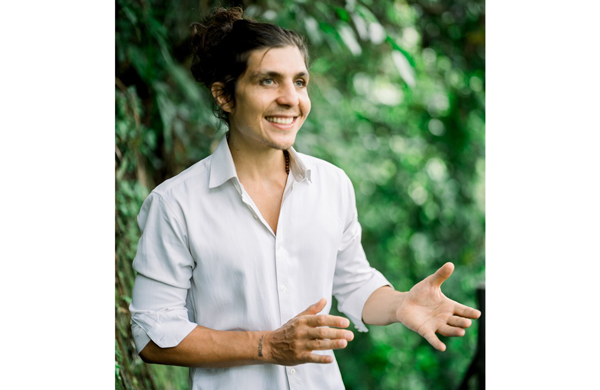
Gissele: who’s a holistic relationship counselor, coach, and existential therapist, and the author of the Amazon bestseller, Lessons on Love.
Gissele: He draws on 20 years of apprenticeship in spiritual traditions from around the globe, including indigenous elders, Buddhist teachings, and yogic philosophy, integrating their wisdom with modern psychology to help couples and individuals build conscious, meaningful relationships rooted in the sacred. When he’s not working with clients, you’ll likely find him having fun with his son,
Gissele: Arjuna and his wife, Adrienne, mentoring a young person or volunteering at a local permaculture garden in Bali, where he lives for the majority of the year. [00:01:00] Please join me in welcoming Adam. Hi, Adam.
Adam: Hi, great to see you, Gissele. Pleasure to be here.
Gissele: Oh, good to see you too. Thank you so much for being on the show. I’m so excited for our conversation, talking about, relationships and how challenging and also amazing and beautiful they can be, especially trying to unconditionally love people.
Gissele: I was wondering if you could start by telling the audience a little bit about how you got started in this work.
Adam: So gosh where to begin? I guess the journey of love is a, a journey of a lifetime. I think we all know that, right? But it’s,
Adam: For me, one of the, opening doors, the big opening doors of, finding love started actually in my childhood, and we’re talking about unconditional love, right?
Adam: This love and, I grew up with a little bit of a, a rough childhood. I was a little bit of a, a crazy teen, a little wild. Lots of some problems with the law and problems with drugs, alcohol. [00:02:00] And when I was 16, I was blessed to find the loving presence of an indigenous elder over on Algonquin territory in Ottawa, Canada.
Adam: And she was a beautiful woman, and she had this power of just, one of the greatest gifts of love is being able to see somebody. To see past, who, the, the mud and the conditioning, and seeing through to the heart. So she saw past what society may have looked at “Oh, here’s this messed up kid who’s like this and like that,” and she saw me at my core, right?
Adam: And so that was like, that allowed me to step into who I truly was, and that started the 20-year apprenticeship with, different indigenous elders, teachers through the p- process of meditation. And that was like the beginning of the opening of love and that’s… Yeah, that, that was the beginning of that part and, there’s other chapters and I’m sure we’ll get to those, but oh, yeah.
Gissele: Yeah. [00:03:00] I love that story. And I also wanna point out how key what you just said is unconditional love is the ability to see people as their true essence, and from my perspective is the divine within them. And so if we could truly love people, we can see them beyond their flaws, beyond what they’re portraying, beyond that, the hurt behaviors. But it’s … it can feel difficult to do that when we ourselves probably don’t see ourselves that way.
Gissele: Can you tell me a little bit about what you’ve learned from what are the, the core teachings from all of these different traditions about the importance of self-love in loving other people?
Adam: Yeah. The importance of self-love is really… i’m gonna draw from the Gita now, and then I’m gonna weave it into the different Buddhist and indigenous teachings. But in the Gita, in the Bhagavad Gita they talk about the Self with a capital S- Self, right? It’s that [00:04:00] divine.
Adam: You talked about the divine within us So when we really tap into that divine within ourselves, like who we actually are, you and me, we are souls. We are beautiful, we are whole, we are complete, and that is us in our essence. So the more that we connect with that essence within us that true essence of us, we are love itself, right?
Adam: So the more that we are able to connect with that through different practices, whether it be meditation, whether it be through service, whether it be through just the simple act of taking care of yourself ’cause your body’s a temple, right? So those things help you get in touch with your essence, and then you’re more able to give that to the world around you, right?
Adam: You– We all know that, we can’t give from an empty cup. So
Adam: tap into the divine within us, and then we’re able to reflect the divine into other people. I just wanna tell just a fun, fun story that just happened to me yesterday evening, [00:05:00] and it wa- it’s a perfect example of what happens when we look at people in the divine.
Adam: So the other day I w- I had to go get water. So in Bali, we have to get like liters of wa-water. We can’t actually like 20 liters at a time ’cause you can’t drink the drinking water here. So I went to go get water at the store, at the convenience store there, and at the convenience store, there’s a lot of builders around the area, and there, so there was this character that kind of looked a little shady.
Adam: Like you could look, see, he looked a little shady and, of course, like my automatic schemata comes up that we’re programmed through from, and then there’s quick automatic judgments that I’m, that I made. And so that’s my little self looking at these, this scenario, looking at that, and then I bypass that with my conscious self, with my divine self, and it’s “This is a divine being here that’s looking at…”
Adam: And I consciously said that in my head, and then I saw him at that. And amazingly, immediately when I did that, the man [00:06:00] got up and helped me pick up my water and then put it on my motorbike to drive away. It was like how my thoughts really truly influenced the situation around us. And there’s a lot of research in heart math, like how your, your heart actually puts out a frequency into the field and affects the vibration of other people’s hearts, and the same is true with our thoughts.
Adam: That’s just a little quick story that I just thought about the that
Gissele: Yeah, fantastic.
Adam: Yeah
Gissele: It actually reminded me of my own experience. So I was once at a Starbucks in downtown Toronto, ’cause I’m Canada, and I remember coming in and it was super busy. And so I’m doing the lineup, and I gotta get back to my meeting, and then somebody comes in, and the energy just feels off.
Gissele: It just feels I don’t know. I felt like I just need to run away, but there are so many people and everything was blocked, and I thought, “Okay, so I can’t run away right now. It’s gonna look weird, and it’s blocked, so what can I do?” And the only thing that I could think to do in that moment is to [00:07:00] align to the essence of love, which meant, for me, just sending out loving thoughts to that being, to that person, and to the people all around. And I did not expect this. This was so weird. So the person then looked right at me, and they kinda had a weird expression, and they said, “I can’t be here.” And then they just left.
Gissele: And some people kinda had a weird expression. The majority of people didn’t even notice. And that, to me, was the beginning of me understanding the transformative power of
Gissele: love, just being able to see to hold the essence of love, in- including for that person.
Gissele: I didn’t know what, what was up with them, but I just knew that I… if I held that energy for them, that maybe it could help ’cause I didn’t know what else to do. I didn’t… Not expecting anything to happen, but it was really interesting to see that [00:08:00] immediate reaction to that energy that I was putting out there because I…
Gissele: There was… That little s- little me was like, “Oh, I can’t just bolt out of here. It’d look weird,” right? So expecting that judgment. But, so thank you for sharing that story,
Gissele: ’cause it, it reminded me. The other thing that really stuck out to me is just how often we do th- things from the little self.
Gissele: I…
Gissele: you’re right, and especially me as a woman, the way I was trained not to trust anyone, because of our family history of abuse. And so my little self always constantly goes first to, Danger. Danger. Who’s the th- what’s the potential danger?” But it takes practice,
Gissele: and that’s what you were trying to say.
Gissele: It takes real practice for us to see it and to bypass. Can you share a little bit about your journey to getting to that bypass? ‘Cause I can’t… I can only imagine that it must not have been just immediately. You don’t… Unless maybe that happened to you, that you became automatically enlightened.
Gissele: But it’s been a minute for
Gissele: me in terms of the journey of having to really shift from that little S.
Adam: Yeah, I think, everyone [00:09:00] it is that takes time, and even if it just happens in an instant, if you believe in past lives, they’ve done the work before.
Gissele: Yeah,
Adam: right?
Adam: Yeah. So for me yeah, it’s been, it’s similar. It’s been a long journey and I did many different practices for years of just it’s like I think, I did meditation different Vipassana meditation for years, different yogic meditations for years.
Adam: Studying with indigenous ceremonies for years and like really apprenticing on the land. I’m not just like talking about a weekend retreat. It’s like literally in, in it. And how I look at it is like we’re polishing a diamond, right? There is it’s when you get a, a diamond at first it’s all rough and ragged, right?
Adam: But it takes time and you’re just chipping away bit by bit.
Adam: And the more you chip, the more sparkles start to shine through and the more you do it. And it’s a process and we have to be patient with ourselves and patient with those like automatic reactions that come up. And like a really helpful practice for, [00:10:00] everyone listening is really to remember that’s not me.
Adam: That’s not me. And it’s like that’s something, like something that like I, like I’ll say with my wife or something like that, if my little self comes up and I’m critical or a jerk or something like that because it happens to me and I, as I’m like, “I’m sorry, sweetie.
Adam: Like that’s not me.” And I’ll literally put it aside and it’s not, it’s not bypassing because it’s like some people are like, “Oh, that’s bypassing.” It’s like, no, it’s just not acknowledging that like it’s like actually who are you at your core, right? And we’re talking about we’re– we opened up this conversation, we’re said we’re divine at our core.
Adam: So that remembrance of oh okay, so I’ve been programmed through different experiences throughout my lifetime that this is the self that’s this conditioned self, but that divine self is limitless. It’s love itself.
Adam: And so just keep reorienting through that and like I cannot say enough about meditation right?
Adam: It’s [00:11:00] ’cause like meditation we have like we have five senses that are going outside, all right? But meditation trains us to go inside, right? And it also trains us to concentrate on our thoughts and to realize that, oh, I’m not the thoughts. I’m actually the one standing behind and watching them flow by, right?
Adam: And so who is that I that’s watching the thoughts, and it’s no matter n- neuroscience, they’ve talked about all these plot places and they can pinpoint where different emotions come, they can pinpoint where the different thought is coming from, but they cannot pinpoint consciousness.
Adam: The person that knows that there’s a, there’s observing, and that’s the soul, and that’s who we are.
Gissele: Yeah. I really appreciate you being honest about the, the fact that that it’s an ongoing practice, right?
Gissele: And in relationships, sometimes you get triggered and you don’t really understand why, and, even though you love your partners and you love the people in your life sometimes there has to be an apology.
Gissele: There has to be a reflection of “Oh, is this who I choose to
Gissele: [00:12:00] be?” And that can feel hard. We can… We judge ourselves so often expecting perfection of
Gissele: ourselves in this work, which is not fair, right? It’s like you said, it’s a journey. What helped you gain the knowing that you are a soul instead of a s- a human self?
Gissele: And the reason why I ask this is because I know in my journey, I could have recited… Like in the past, I could have recited to you all the stuff that you’re talking
Gissele: about, but I didn’t know it. And I knew I didn’t know it because when the challenges came up, I always reacted from the place of the little self, always went back to the nervous system that was constantly tight and reactive the fear-based thoughts. Even though I knew the stuff, like I could recite it from all the stuff that I had read, it wasn’t until I f- until I fully started to embody and truly know and remember. Am I there yet? Absolutely not. I knew when I acted [00:13:00] differently, when I
Gissele: reacted differently to the challenges in my life, that I was beginning to embody.
Gissele: But again, that also took a minute. So I was wondering what helped you realize it and that… have that knowing of us being a soul being rather than just this little s… Because the majority of people are worried about death and all of… taxes and all these things, right?
Adam: And those are things we have to worry about them too, right? They– It’s like they’re also that we have to do that as well. But but I think you, y-you describe very well the, the process of like first learning, right? First there’s like this intellectual understanding. So imagine that you’re trying to drive a car.
Adam: The first thing that you do is you do the test, right? And you’re like reading the book, and you’re learning about all these different things. And then so you’re intellectually getting the understanding of what it is to all the processes you need to do. The same as like learning about these essence. Like you can read different scriptures and they’ll tell you these things, and you’re starting to understand it intellectually, which is helpful, right?
Adam: ‘Cause it gives you that frame, right? And then you [00:14:00] see where you’re off. But it doesn’t mean you’re not getting it. Like it doesn’t mean you’re not fully there. It’s just your– It’s just the process of learning, right? So we have to give ourselves grace in like that, like we’re gonna stall the car every now and then.
Adam: We’re gonna get stalled and maybe bark at somebody every now and then, and that’s okay. Give ourselves grace. And then you said embodied, and that’s really where it is. It’s when we are in the body and it’s a somatic experience, right? We need to bring this within us. And the mind is the first kind of like director.
Adam: Our conscious mind can direct us where we need to go. But like bringing us within the body, and that’s why I keep bringing it back to meditation ’cause it’s like the shortest route to, to connecting to that soul essence. Because like we’re bringing our attention within us and we’re like tapping in “Oh, here’s me.
Adam: I am this mountain. There’s
Adam: these cloud– There’s these thoughts floating by of maybe [00:15:00] it’s negativity, maybe it’s judgment, maybe it’s… But I’m not that. I’m the one watching.” And there, like there begins a moment when you realize “I’m not actually these thoughts floating by. I’m the mountain watching the clouds float by.
Adam: I am that essence.” And so that, that awareness comes through practice, and it is an embodied experience. And the more that we do it, it just happens. Like we’ll realize that we’re m- gonna be more conditioned to be more loving. But as we opened it up, it’s a practice and it’s a process, and we gotta give ourselves grace along the way ’cause we’re gonna scrape our knees many times.
Adam: We’re gonna fall, and that’s okay.
Adam: Yeah.
Gissele: Yeah. I wanted to share sort of my own experience in the sense that… So in, on the meditation, in the cushion, like I could have the most amazing experiences. Once I would come out though, I was still reacting the same way. even when I acted differently, let’s [00:16:00] say I took big steps, like from that embodied place, my nervous system would still…
Gissele: there was so much tension and so much like clenching and so much, even though my meditations were great. And so I kinda had that disconnect of ‘Cause then what I would do is I would amp up my meditation. I would meditate more, and then I’m like I can’t just meditate my whole life away and wait till it changes,” right? And so what advice do you have
Gissele: for someone who might be going through that journey
Adam: yeah. So
Gissele: of trying to connect their inner world with their outer
Adam: Yeah. That’s the process that we’re all moving through, right? And I think, When we’re in the world, right? We’re not monks away from the world, and this is like we’re we’re here to be love in the world. And the process I would say is the meditation is the, like the beginning training ground.
Adam: And then any time that we’re facing challenges in the world, this is a moment to release [00:17:00] ourselves, right? To release ourselves. So if there’s a challenge, say you’re, you meet a conflict with your spouse. You’re, there’s someone that in your work is upsetting you. So the upset is the small self, right?
Adam: That’s the small self is getting upset. So can you relax and release around that feeling? So similar, when we’re on a mat and you’re te- you may feel some tension, you take a deep breath, you breathe in, and you relax into it. And that’s like you calm your nervous system down, right? That’s a very known somatic process, just breathing in and relax.
Adam: Breathe in and relax. And that process of relaxing and releasing calms the mind down, and you’re more likely to, you know– So your nervous system is less likely in fight, flight, or freeze. Then from there you can ask yourself, “What’s the right response in this moment?”
Adam: ‘Cause you’re not reacting, you’re just [00:18:00] responding. It doesn’t mean that you don’t, respond to the person who’s being a jerk in front of you. Maybe you can be really firm, but you can still be coming from a place that, of love that’s not reactive, right? And I’m, I– Like, you can yell at someone with love in your heart, right?
Adam: It really it’s really what is the intent behind it, that really makes the difference, right? So
Adam: Yeah.
Gissele: I think what you said is really important, so that’s why I wanna just kinda stop here. Because I think people believe that when you are truly unconditionally loving or compassionate that people… You’re just gonna be a mat. You’re just gonna let people do whatever they want, and it’s not true. You can have very clear boundaries, but do it as a way to love yourself. And so I love what you said because it’s the energy behind it, right? So you can fire someone but still wish them well, still wish them and send them off with a nice package and say, “You know what? This didn’t work out for us, but maybe your dream job’s somewhere else.
Gissele: Here’s a nice package. We wish you [00:19:00] the very best. We don’t hate
Gissele: you.” Or you c- it could be acrimonious. It could be like, “I, we hate you, we wanna punish you, we wanna…” And so it’s the energy behind it which I think is really key. I think where some of us struggle is the fact of catching it in time,
Adam: Yeah
Gissele: It going from the I’m gonna… I have a reaction, and then I reflect on
Gissele: it versus I’m c- consciously a- aware of how I’m engaging in relationships. And again, that’s one thing that I’ve really had to work through because I was that, that… I’d gotten to a point where I was just, okay, I react and then I apologize later ’cause then I can see it,
Gissele: but that’s also not fair. And so I really had to be aware of how I was showing up and the things that were triggering
Gissele: me. So for example, I… There’s there’s people in my life that we have a very surface relationship, right? And And it’s not [00:20:00] because we want to have a surface relationship, and it’s not that I’m outing people. It’s that sometimes with history, everybody kinda armored up, and everybody’s just protected. And so the superficiality is so that we don’t get deep and that we don’t get… So that we don’t feel vulnerable. But that lack of vulnerability prevents you from having closeness and prevents you from truly being in a position to truly unconditionally love others. What do you think might help situations like that when you are afraid of being vulnerable but have a desire to be vulnerable, to love
Gissele: more?
Adam: Yeah I would say that you don’t need to be Like, I think it’s a beautiful desire, but I don’t think that you need to be vulnerable They don’t need to be vulnerable or you don’t need to be vulnerable for you to unconditionally love them, right? ‘Cause there’s gonna be tons of people that are gonna be complete jerks to you.
Adam: You’re gonna give [00:21:00] them care, consideration, and they’re not gonna give you anything back. But can you love them just the same, right? That is the real practice, and that’s the real process. It’s like, can I love… you have so many great stories of people loving their son’s killer, people loving people that are racist towards them.
Adam: Can you do that? That is the real practice. So
Adam: Do that and to get there, we do have to build our capacity of love within ourselves, and it’s helpful to have close friendships where we have the ability. ‘Cause there’s something really special
Adam: About being with others that we– that can meet you in these places, and they can help you expand your love, right?
Adam: Expand your
Adam: Love, expand your… And that’s why an intimate relationship is a beautiful process to do this because at the same time you may love this person, but they’re also different from you, right? They’re also different from you. [00:22:00] There may be other things, but you’re literally, you’re little– more and more of yourself is dissolving in this relationship because you’re saying I can still love them through this.
Adam: I can still love them through this. Oh, we may not see the same way like this. Okay, I can still love them through this.” And what does that do? That also helps us expand our love that, “Oh this person’s a Christian. This person’s a Muslim. We may not see everything in the same way, but I can still love them for this.”
Adam: And it opens, these circles of love expand and open up through that process.
Adam: Yeah.
Gissele: Yeah.
Gissele: Thank you for that. What I found out for myself is that the more than I love myself, the more that I give to myself the things that I’m looking for in other people. Like, when I’m triggered by someone,
Gissele: I’m like, “Okay, what am I not getting? Like, why is this triggering me?” ‘Cause if it wasn’t about me, I wouldn’t care, right?
Gissele: If it was… If it really wasn’t about me, then I wouldn’t have any impact. I’d be like, “Okay, so that’s just them. You do you, boo,” [00:23:00] right? If you’re hurt, then, like I’m just not gonna be there to be the recipient of your hurt. But if I’m triggered by someone, it means something for
Gissele: me. It means that I’m missing something, that I’m not giving myself or not feeling like I’m receiving something. And so what I’ll do is I’ll give it to myself. And And the more that I do that, the more that I’m present and not abandoning myself and the more that I love my- and accept myself, I no longer need other people to behave in a different
Gissele: way. I no longer need them to show up how I expect them to show up. But the link to that is always me. It’s always okay, so I’m being triggered. It has to be about me, in giving myself the space to explore what it is about the relationship where my needs are not being met, yeah,
Adam: And that’s totally, that’s it. I remember at one point in, in my marriage, I had… My wife and I, we had this real rocky period [00:24:00] and I we had just moved to Bali. There was a lot of high stress, all these things. So whenever there’s changes, there’s gonna be more stress, whether it be a new baby, a new job, there’s gonna be more stress and other stuff is gonna come to the surface.
Adam: So it was a real high-stress time. And we were like just bickering and fighting each other, and there was a lot of like tension between us. And then on our wedding anniversary, we had went to the beach we had just had a fight, and then I went and swam in the ocean, and then my wedding ring like flew into the ocean.
Adam: And then I was sitting there on the side of the ocean and I’m just like looking and I’m thinking, “Gosh.” And I had this like real intuitive feeling and there was this voice within me that said, if you’re not smart, you’re gonna lose something a lot more, more precious than that wedding band,” right?
Adam: And then, so I started to, so I started to do a lot of introspection and I was like, “Okay where in me? What is like creating this tension?” And I realized that, we were being super critical of each other and there was tension. I was like [00:25:00] where am I being critical of myself?
Adam: Where am I being super hard on myself? Where am I being so unkind to myself?” And I was like, “Oh, okay.” And then I amplified my, like my Metta meditation, which is for those of you who don’t know, it’s like loving-kindness meditation. So it’s a beautiful practice. I highly recommend it.
Adam: You can just put your hand on your heart and you say, “May I be filled with loving kindness. May I be held in loving kindness. May I be happy.” And you’re just offering tenderness and care to yourself. And actually, in the Buddhist meditation, it’s so beautiful ’cause you start with yourself, then you extend it outwards.
Adam: Then you think of those around you. You think of your partner, you think of your dog, you think of your son, your child, whatever it is, whoever it is, and then you extend it to your neighbors. Then you extend it to your community, the strangers outside that you don’t even know, and then to those that may be your enemies that you don’t like.
Adam: But it, they see the… It understands that it’s like these widening circles. The more that we extend [00:26:00] our love, the more that we can extend it beyond to like its limitless potential, where even those that are our enemies that are hard, you know, really hard to connect with, we can find that exact same love as we, as w- with, those dearest to us.
Adam: And as you said, it starts with ourself.
Gissele: Yeah. It’s so funny, I love the work of Neville Goddard.
Gissele: I don’t know if you
Gissele: know who that is. It’s a big manifestation thing, and a lot of people focus just on the manifestation part, but if you actually listen to some of his lectures, he does talk about interconnectedness, and he says, “Everybody’s you pushed out.”
Gissele: One of the things I started doing is is really seeing everyone as me.
Adam: Yeah
Gissele: Seeing, my husband as me, my children as me, and where that really helped me was to treat people better. Because if I think of them as me, I want them to have the best tip, I want them to have the best experience, I want them to feel the most loved, I want them to feel the [00:27:00] most accepted. and so that’s really helping me not feel separate from or disconnected, ’cause I think we live in a world right now where we feel so separate from
Gissele: one
Gissele: another that we’re trying to eke out an existence, that we’re trying to eke out being seen and loved by our loved ones and our relationships, that we see ourselves as so separate, and that’s what you said, like the little self.
Gissele: The little self s- sees itself as separate and sometimes as a victim of things or, even if it’s not and things are working for them, it’s still separate. But the, the more that I contemplated if everybody is me pushed out, then they’re an aspect of me, and it helped me feel less alone.
Gissele: I was wondering if you could talk a little bit about what sort of the different traditions talk about interdependence and connection in that unity instead of separation.
Adam: We are… Like, we’re all connected. We hear this from traditions all around the world. Quantum physics is actually starting to see everything is energy. We are actually one. There’s [00:28:00] no separation between you and I, and the ancient traditions knew this. In the Lakota tradition, they say there’s this beautiful saying called Mitakuye Owen.
Adam: It means, “For all my relations.” We are all related. We are all interconnected. So anything that I do, over here in Bali, you know, whether it be to my son, to my neighbor, that is connected with you in Toronto, right? It s- there is a ripple effect that we are all part of this great web of life.
Adam: There’s no separation. And that’s the beauty of love, because love unites us. It brings us together. It’s like it has this unifying quality. Fear divides us, separates us, and that’s why, like, when you are looking at all this, the, the news, all the propaganda, it’s like, it’s literally trying to separate, and it knows, divide and conquer. Separate people, right?
Adam: But when we realize that, hey, at the core of it, you and I are part [00:29:00] and parcel of the same stuff. We are the same thing, and we are… There is a great big sun in the sky, and we are all illuminating rays, part of that great beautiful light. And it’s really nice to know that we are not alone, right?
Adam: We are not alone. We are connected, and every person is part of you, and what a beautiful practice that you offered us, ’cause I’m gonna, I’m gonna start doing that as well. Thanks, Neville Goddard Gissele.
Gissele: Yeah. ‘Cause it, some of his other lectures really talk about, the true power of reimagining people. ‘Cause you talked about
Gissele: enemies, and he was one of the first people that got me to contemplate, number one, what if our enemies were our best
Gissele: friend because they’re forcing us to stand in our own power? And the second thing that he helped me with my, with people that I struggle with is reimagining them. And I’ve done this with conflict. So what you do is you really focus on, okay, so instead of seeing them the way that y- we normally do , let’s say you have [00:30:00] conflict with someone, your mind already tells you, has a picture of them, how they’re gonna behave, what you expect of them, worst-case scenario. But what Neville Goddard would always say is, “Reimagine that situation and that
Gissele: person. See them as the loving person that you want. see the situation in the end that you want to experience.” And I’ve had stuff even with students where, it just seemed like they would s- it was one instance where a student had sent me an email.
Gissele: They were super frustrated with their mark that they receivedand, I tried to email and explain to them and they escalated even more. And I said to myself, “You know what? I’m just gonna reimagine th- that everything is g- gonna work out. I’m sending this student lots of love.” And the only thing that I emailed them back and said is, “I really would love to talk to you. I’d love for us to chat because this relationship matters to me, and it’s important for me that you understand how we got to the grade and for me to hear your voice.” That’s all I said, left it, went to bed, kept [00:31:00] reimagining working out, and I relaxed into it, and I saw that person full of love, and I felt full of love for them. A few days later, n- I, and I hadn’t heard anything, and I forgot about it. That’s usually when things happen for me, when I forget about what the things are happening. And then they emailed me, and they just said, “No need to worry. No need to meet. Everything’s perfect. Thank you.
Gissele: You’re the best professor.” It was just full of
Gissele: love. I was like, “Oh, okay.” And so the the willingness to not see people in that same box, is what kind of got me to go, oh if people are just me pushed out, then I’m the one who’s creating this story about who they are, right?
Gissele: And then they’re feeding that story. So can we reimagine our enemies as people that are misguided,
Gissele: That maybe are, there to teach us something, or that are just… They don’t really remember who they are, like you were mentioning, that small self. and so it’s an important practice, but it does take courage in the sense that you have to be willing to do [00:32:00] it, and especially when you’re f- when you’re afraid.
Gissele: It’s difficult when you are afraid, is you have to manage your difficult emotions first, I would say.
Adam: Yeah, 100%. thank you for that story. It’s so beautiful. And want to highlight, you have to manage your emotions first because otherwise it’s bypassing, right? And then we’re actually– Then these things get stored in our body. So that practice of like just feeling, releasing, taking a few breaths within that tension, and then from there doing these practices of like reimagining, seeing someone as who they are, we talked about it, seeing them as the divine being, seeing them as the di-diamond.
Adam: And literally it’s so beautiful, and I’ve had many experiences like that too, where you like literally you bring it out. You’re bringing… Because your love, your loving energy is like the sun pulling out the seed that they are, pulling out the sprite, pulling out the beauty, and shining a light on what [00:33:00] is already there, right?
Adam: It already is there, but because we’re tuning in, we’re like, we are like tuning forks, right? We’re tuning the vibration. You talked about the story about being in, in Starbucks. Like your vibration is tuning the entire place and like they, there’s research on this, like the one person’s heart like that is emitting love can literally influence all the other people around them through just their– There’s an electromagnetic field around that influences.
Adam: So that is it’s a powerful practice and I think it’s empowering because it lets us know how powerful each and every one of us are, especially in this world that feels like, “Oh my gosh, what’s going on? There’s so much going on. What, can I do in the grand scheme of things?”
Adam: And, this, there’s a story from Thich Nhat Hanh, a beautiful Buddhist monk, beautiful social activist, and he said this story that there’s of a boat [00:34:00] person and the– he’s “Be like the, the boat person.” And the boat person is this one that, that even in a stormy sea, there’s just one person on the boat, if he is calm, can literally calm the entire crew, can calm all the takes one person. And he says, “Be that boat person.” And I think we all, that’s all, all our responsibility right now is to be those boat people.
Gissele: Yeah, absolutely. Absolutely. And I think you mentioned this earlierWe really have to address ourselves. And the reason being is b- you mentioned int- being interconnected. For the longest time in my world I wanted to change systems.
Gissele: I wanted to change all of these different systems, the child welfare system, the youth justice system, all of these things. And then one day, I was really reflecting on… I don’t know. I don’t know what kinda led me to reflect on how I was contributing to these systems, and what I noticed [00:35:00] was how I acted when people were hurtful to me. I wanted them punished. I wanted them to get away from me. I wanted them, like, separate and isolate and punish. And so of course these systems are gonna reflect that experience because that’s how I acted when I was hurt. And so I had to be willing to shift that. I had to be willing to get curious about hurtful people, If I couldn’t love them, could somebody else love
Gissele: them? would I allow myself to be okay with somebody else getting curious about them if I
Gissele: couldn’t? And That took a minute because we have all these reasons why we think that punishing and separating and putting people in jail and murder and war are justified. We have all of these justifications because we feel personally threatened, because we feel that things are happening to us But when you get beyond that fear of death,
‘
Gissele: Cause I think that’s really the ultimate fear, when you get beyond [00:36:00] that, “I’m just this physical body,” I think you open up the space to be willing to get curious about people’s hurtful behavior.
Gissele: I was as w- curious as to your
Adam: Yeah. a co- a few thoughts. One, I just wanna highlight the power of curiosity, right? It’s a really a powerful practice. I know even in your TED Talk you talk about the power of curiosity and just how that that curiousness , one, it’s one of the qualities of all geniuses is being curious.
Adam: And in mindfulness,
Adam: it’s also a practice of just when you can be curious with whatever’s going on inside of you. “Oh, wow, there’s fear here.” And you’re like, “Let’s be curious about that.” It actually, there’s like, like kids are curious and they’re able to meet things that are more challenging because they’re– that curiosity, it there’s this spark, there’s this intrigue.
Adam: So curiosity in itself is a powerful tool to meet more challenging things because there’s there’s no [00:37:00] expectation. There’s no like, a scientist is just curious. It’s just “Oh, I’m like, I’m putting on my lab coat. Let’s see what happens,” right? And if you’re a real scientist and you’re really trying to get to the truth and not just, get your paper and get to what you want, right?
Adam: Be like,
Adam: When you’re really honestly curious about…
Gissele: what you’re saying. Yeah
Adam: Yeah. So that in itself is powerful. And and then the other part which you were saying was about beyond the death and when we really know who we are. So I’ll tell you this, like during the pandemic when everyone was like going like, “Oh my God, what’s going on?”
Adam: I really– I turned to the same manual that Mahatma Gandhi turned to anytime that he was going through challenging times. He turned to the Bhagavad Gita, which is they say is one of the wisest books ever written. And he had said, I’m paraphrasing here, but he had said that, when I’m feeling down and glum and feels like there’s no hope, I turn to the Gita and I’m joyful and filled [00:38:00] with life,” right?
Adam: Because it’s like he found– There’s like it was wisdom. It really gave him true knowledge of how life actually worked. So when this time everyone’s so afraid, right? They’re afraid of dying. They’re afraid of germs. They’re afraid what’s gonna happen with the world. There’s oh my God, like
Gissele: of people, yeah
Adam: so much fear.
Adam: There was like bigger than the virus of COVID was the virus of fear, and everyone was like freaking out,
Gissele: Yeah
Adam: And so what, and at one point I like fell into the thing and I was like, “Whoa whoa.” And I found the Gita and there’s this one verse that that they’re talking… And just so you know, so a little, backtrack of like the Gita takes place on a battlefield, right?
Adam: There’s the, there’s this big war between two warring armies. it’s the war of Kurukshetra and the Pandava armies are the good guys. The Oh gosh. And then there’s the bad guys. I can’t believe I told you. Anyway, then they’re fighting each other, right? They’re fighting each other. And there’s this one warrior who’s, his name is Arjuna, it’s the same name as my [00:39:00] son.
Adam: And they have to– he’s in battle and he’s asking himself like he has to fight the battle in the next day. And he’s looking at the army on one side and looking on the army on the other side and he’s thinking “Oh gosh, like I’m gonna have to fight in this battle.” And then he starts to fret. He starts to do what any of us get what most of us do in times of challenge.
Adam: He gets afraid. He starts to doubt himself. He says, “What am I supposed to actually do?” And his wisdom actually starts to get clouded and he’s like, “Oh, I should just run to the forest. Killing’s bad. I don’t know. This or that. It’s… When this is gonna be good.” And he turns to his wise guide, who is Krishna, who is the manifestation of the divine, and the– he’s telling him like, “What should I do?”
Adam: And the very first wisdom that Krishna tells him, he says “Why are you afraid?” He says, “You are the soul.” He says, “Fire cannot burn you. [00:40:00] Water cannot drown you. You are indestructible. You are limitless. Like this is who you actually are. Do not be afraid.” Like that was the very first thing he says is “This body will come and pass, but your essence, your beauty, that is, is gonna go on forever.
Adam: If you die, no worries. You’ll be a glorious battle. If you win, then great. You’ve cr- you’ve created success for the world. There’s nothing to fear.” And the same thing is said in the Bible, right? It’s do not fear is the most used word like phrase all throughout the Bible.
Adam: It’s 80 times, like 78 times or something. Do not fear. Do not fear. Do not…
Gissele: ‘Cause we didn’t get
Adam: Yes. It’s oh, I didn’t realize.
Gissele: God has to said it
Gissele: a lot. I know it’s, it doesn’t compute.
Adam: Yeah. So that, that’s what I’d say is just remembering who we are is like at the essence is, So it’s helpful to turn to these things, like these things which are like real wisdom because they remem- like there’s where you’re getting your knowledge makes a difference, [00:41:00] right?
Adam: So if we’re getting our knowledge from these ancient wisdom traditions that really tell us actual truth, that helps instruct our life in a better way than maybe, this old paradigm. How old? A very old paradigm that we’re, we are just these bodies, right? But we are so much more
Gissele: Yeah.
Gissele: death seems like the last barrier to overcome as a humanity
Gissele: ‘Cause if you truly believed that you were immortal and
Gissele: that, that we continue on and that like as the Gita was saying, none of these things harm you, then I think we would be more curious, we would be more okay. But we have such huge fears that I think really block us from that unconditional love because When you’re in survival mode, everything just shrinks to the… Your lens becomes super small, and then you’re not thinking about b- getting curious or wondering what’s happening to the other person. You’re just like, “I gotta book it out of here,” or, “I gotta fight my way through.” And so it really prevents us from being [00:42:00] that love.
Gissele: What helps you address or has helped you address fear in your life?
Adam: Yeah. I’ll bring it back. Turning to these wisdom traditions helps me because it’s like environment is so helpful, right? If you’re around people that are courageous, you’re, s- science has shown that environment is one of the greatest influencing forces on our actions. That’s why, they spend billions of dollars trying to throw advertisements of you because they realize that an environment is actually programming you, right?
Adam: So I like to program my own environment, right? By influencing
Adam: myself with what am I actually putting in my mind, right? So like I’m gonna be turning towards things like the Gita, things like these different scriptures. Sorry, you might hear my son crying in the background.
Gissele: That’s okay.
Gissele: baby. Awesome. Yeah.
Gissele: It’s reality
Adam: that’s it. But so that’s like ’cause, It was Mark Divine, really great thinker. He said, if you don’t program your mind, [00:43:00] someone else is gonna do it for you.”
Gissele: Yeah
Adam: So really being mindful of where I’m putting my attention is really something that I do.
Adam: Meditation as well. There’s a few practices that to tense and release. But really it’s like that breathing into breathing in, it’s a somatic experience. So fear, a lot of times what happens, like what is it? We feel a tension in our chest. We’re feeling this clenching.
Adam: We’re feeling, “Oh my gosh.” So if we can actually just get curious, welcome it, right? ‘Cause what happens most of the time, we brace ourselves. We’re bracing. We’re like, “Oh gosh. Oh no, I’m gonna fear. Let me get rid of this fear. Oh, is it… How am I gonna…” And we’re like, and then we start like trying to get rid and that’s like we don’t need to get rid of it.
Adam: Like it’s just in the Buddhism, it says when Buddha come- when Mara comes, which is the darkness, the demon, it’s invite her in for tea. I invite Mara in for tea. So if fear is coming, okay, invite it in for tea. No need to try to like it’s like can we just breathe in, [00:44:00] relax, and
Adam: Set in and let’s really take a deep belly breath, relax into that, and let that somatic experience go.
Adam: And then also so that’s what we can do somatically and then focus our intention also on where it is we wanna go, right? ‘Cause the, the mind is a powerful tool for directing us. So we can focus on love. We can focus on service. We can focus on making this world a better place. The, right now the, the story of Viktor Frankl is coming to mind right now and- So ’cause you were talking about being in survival, right?
Adam: And when we’re in this survival state, it’s oh my gosh, like we’re trying to protect ourselves. But Viktor Frankl is a perfect example of someone transcending that survival state. ‘Cause, Viktor Frankl was in a concentration camp. All of his basic needs were not met. For 14 hours a day, he had to work on, like railroads and camps, bare next to [00:45:00] no food.
Adam: Yet in that space, he was still able to find love. He was still able to be generous, offer kindness and care to others. And what he did was he took his attention off of himself and put it on other people, right? ‘Cause the minute that we’re thinking just about the little me, this is that’s the isolated self.
Adam: But if we move our extension and expand it, as you said here’s an extension of me. This is person, is they’re afraid, and I’m gonna give them care. I’m gonna give them kindness. I’m gonna give them courage. And that’s what he did. And what did he get? Care, kindness, and courage. ‘Cause whatever we give to others, we actually get back ourselves.
Adam: So that is a powerful practice, is to take our attention off of ourselves, put it on something bigger, whether it be a cause, something bigger than ourselves, a person who needs our help. And that really is like a, a fast track to overcoming
Gissele: Ooh, I love that you said that. It made me think when I used to [00:46:00] work in the child welfare field, kids who had experienced abuse and neglect, they always wanted to help other young
Gissele: people even though they had experienced negative things. That’s one of the things they always wanted to do, is help other people that were in their situation, so Their willingness to care about others hadn’t been extinguished even though they had ad- adversity. The other thing that I thought of was, y- you’re mentioning all of these ancient traditions and ancient scripts and elders. Just how much in North America, like part of that racism, part of that, the genocide that happened to indigenous people in Canada and throughout the world the slavery that happened to m- racialized people.
Gissele: A l- a lot of those cultures have all of that wisdom, right? They bring all that wisdom in, so it was so interesting to me how we’ve become so separate from ourselves. We’ve become so separate from that true spirituality that I think it, it was purposeful,
Gissele: right? Because that spirituality really connected us to who we [00:47:00] truly are, and if you’re disconnected to that, then you’re more easily controlled. And so I think it’s really interesting that in North America in particular, we have all of this separation and division and a lack of appreciation from that indigenous knowledge that we’re just gaining back now, I would say.
Gissele: There’s still a lot of that. Why aren’t people over it?
Gissele: It’s like no, it’s because we haven’t yet returned to ourselves,
Adam: yeah, 100%. And it’s really, returning to ourselves is really where it comes down to, right? And that, that– spiritualityIt’s the gateway to that because we’re talking about, oh, wow, okay we’re all divine. We’re not separate, right?
Adam: And when we realize this, like this great truth, right? That, oh, we’re interconnected, we are love, that’s what’s gonna bring us. But we’ve– we’re coming out of this big age of ignorance where we’re– we’ve been so against each other. We’ve been pulling at each other’s skin. but what’s happening n- right now, which is beautiful, is there’s a great awakening [00:48:00] happening in the world right now.
Adam: And,
Adam: And even though it looks like there’s a lot of chaos in the world, there’s also a lot of light happening. And it’s– There’s a, there’s something amazing happening. What I like to look at it is if you look at a washing machine, you put a bunch of dirty clothes in there.
Adam: At first you’re turning it up and you’re like, “Oh my gosh, it’s just getting more dirty,” right? But it’s like that’s has to happen. The dirt was already there, but now it’s just coming to the surface so it
Gissele: I love
Adam: And that’s what we’re seeing, right? It’s just something is being cleaned.
Adam: There’s a great awakening. It’s gonna be okay. Just keep focusing on the light and keep doing our practices, right?
Gissele: Yeah. Oh my gosh. I think I totally agree with what you said. I think i- that all of those things were always there, right? When you have all these people that, that are doing hurtful things. We always… Going back to what you mentioned about the enemies, we always focus on the one,
Gissele: Like people like Hitler, for example, right? [00:49:00] But 10 million people voted for Hitler, right? And this is not to say anything about the German people. That’s just where we were all were as a consciousness. And so all of those people that we talk about, the oppressors, all contributed to that. We all contributed that the desire to punish, that negativity, the hate of our neighbors, and it all begins in the home.
Gissele: There’s so much dissent. I think you and I were talking off camera and, like how many people wanna end war, they wanna end prejudice, but they don’t talk to their own family members. They… There’s so much hate within their family, like immediate family, or there’s so much hate within themselves.
Gissele: We can’t stop war if we can’t do it at a micro level.
Gissele: And so what might help some individuals start to, to be able to look at that in a way that doesn’t cause sort of shame and guilt?
Adam: Yeah. Yeah, this is a lot of heart of my work as a relationship counselor and whatnot, and I think, yeah, like you said, like we wanna change the world, but [00:50:00] how can we do it if we don’t first change ourselves, right? And it really begins within.
Adam: You know, I’m just trying to answer that question specifically about the shame and the guilt.
Adam: And first, I think it really starts with what is your intention? Like, how do you want to really show up in the relationships? And we all want peace. We all want love at the end of the day, right? That’s what we want. And when we’re looking at those closest to us, when we’re looking at our family, that’s the, the quickest point that we can change the world.
Adam: I think I, I told you this story off camera, and I’m gonna tell all of our listeners ’cause it’s a beautiful proverb
Adam: and it starts with there is this this monk and he’s looking to a younger monk and he’s turning to him and he’s really distraught. And he said,
Adam: I’m feeling so distraught. I’ve wasted my life.” And the young man said why?” And he said when I was young, I sought to change the world,” right? ” and when I couldn’t do that, I turned and I was like I’m gonna change my country.’ And that I couldn’t do, so I tried to change my [00:51:00] community.
Adam: Even that I couldn’t do, so I tried to change my family, and that I couldn’t do. And now in my old age, I know that if I would’ve first started with myself, then I– maybe I would’ve been able to change my family. Together, we would’ve been able to change our community, our country, and our world,” right? And this is extending these circles of influence, right?
Adam: And it’s li- the exact same thing as that meta practice we talked about earlier, right? Bringing the love within, then bringing it with our family. And if we can find that peace and harmony with, those that are, like in our family, it’s the greatest point, tension, ’cause it’s there, right?
Adam: Family will bring up a lot of edges, right? So here’s the opportunity, for, for us to polish the diamond, right? ‘Cause it’s right there. It’s right within us, and we have this opportunity. So it’s really getting curious and say, “What is my intent?” So if we’re gonna be complaining about the world, right?
Adam: Realizing [00:52:00] that we have the opportunity right in front of us. It’s so much closer than we think. And if we talk about this And Ubuntu , the great web of life that we are all part of. Indra’s net, another Buddhist thing that we’re all connected. If we realize that if I can bring peace here I’m actually contributing to peace in the entire world.
Adam: And that’s a process. It’s a practice. We do lots of the things that we talked about here today, but it’s just realizing that, it’s like this is this is so important. Sometimes we forget about it, right? We forget about the family. But I really believe that’s one of the greatest… the family is an organism, is an organization, right?
Adam: So it’s if you wanna change systems and organizations start with this closest organization to you, right? Start in your own family unit, and find the love there. Meet the difference there. And and, we said this earlier and I was just, last final point.
Adam: It’s like, one of the greatest manifestations of love is respect, [00:53:00] right? It’s a respect for somebody else, right? And respect is like, “I’m not actually trying to change you,” right? We can see things differently. You may want… And this could be in your family. You may wanna do things this way.
Adam: You may wanna… I’m gonna respect your decision. I’m gonna respect your choice. I’m gonna respect that’s the way you like to live, right? And when we can extend that respect in the family unit, and I said this earlier, we can extend that respect between nations, right? So it’s really a great practice and process.
Adam: So yeah
Gissele: I was wondering if you could define Unconditional love.
Adam: Yeah, for sure. Unconditional love. Unconditional love for me is that no matter what, sun, shine, smiles, frowns, negative comments or loving ones, there’s that all-embracing, that all-embracing warmth that, you are perfect just the way you are, right?
Adam: I love you just the [00:54:00] same. Jesus Christ was the perfect example of unconditional love. He loved his followers, and he also loved the people that were crucifying him . these people were were bringing nothing but pain. Martin Luther King, he was punched in the face and put to the ground, and he got right up to his perpetrator and then smiled and, offered him a hug.
Adam: And that unconditional love that he offered to that man transformed him. And it… A- agape, brotherly love. This man is my brother.
Adam: Even though he’s my perpetrator, he is my brother. And that he brought that onto him, and the beauty of that, after this man punched him in the face He was transformed. He was transformed.
Adam: He completely gave up racism. He completely started becoming an advocate for Black people’s rights, and that is the power of unconditional. That’s what it is, and that’s the power. It’s the transformative power to really change this world
Gissele: I could keep talking to you
Gissele: for [00:55:00] forever.
Adam: I love talking to you too, though. This is the best
Gissele: Okay, so last question. Where can people find you? Where can they work with you? Talk about the book. Anything that you
Gissele: wanna share with the audience?
Adam: Thanks Gissele. I think we’ve been telling a lot of different stories here today and talking about the transformative power of love and, you know of all people, stories are transformative. Like stories can literally change our lives through it brings us a new paradigm, a way of looking at the world.
Adam: For our listeners, I think the best way to get ahold of me is LessonsonLove.org/gift, and I have a gift of five sacred stories that will really transform the way you love yourself, love your partner, and show up in this world and bring more love into it. So LessonsonLove.org/gift. And that’s my gift to you so that you can be that gift of love into the world.
Adam: Yeah
Gissele: Oh, thank you so much. And thank you for sharing your wisdom and for this amazing conversation. As I said, I could keep listening to you all
Gissele: day.
Adam: been an honor. It’s been an
Gissele: you. Thank you. Thank you [00:56:00] so much, and Thank you to everyone who tuned in for another episode of the Love and Compassion podcast with Gissele.
Gissele: See you soon
Adam: Bye