
TRANSCRIPT
[00:00:00]
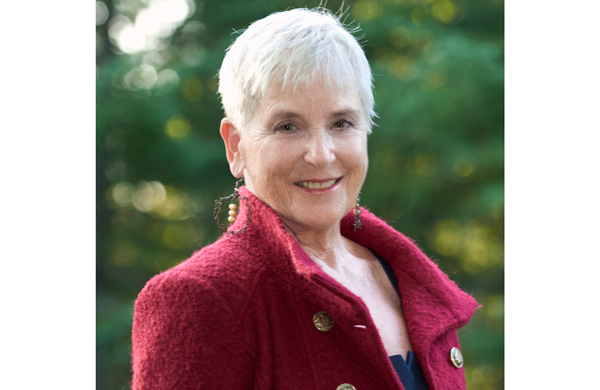
Gissele : Hello, and welcome to the Love and Compassion Podcast with Gissele. We believe that love and compassion have the power to heal our lives and our world. Don’t forget to like and subscribe for more amazing content,today we’re talking about peace and love with Barbara With. She is an international peace activist, award-winning author, publisher, psychic channel, and composer and performer, and co-founder of Conflict Revolution: World Peace One Person at a Time, Starting with Self. Love: A Revolutionary Way to Resolve Conflicts of the Psyche as a Pathway to World Peace based on her work channeling the angels and Albert Einstein. She has authored six nonfiction books on metaphysics, including Imagining Einstein: Essays on M-Theory, World Peace, and the Science of Compassion. Barbara teaches and trains conflict revolution in the classroom and on Zoom, and is currently on a world peace tour, [00:01:00] calling out for the participation of the willing for a worldwide nonviolent action to end the age of war, starting with the self. Please join me in welcoming Barbara. Hi, Barbara.
Barbara With: Oh, hi. Thank you so much for having me. Good to see you again
Gissele : Thank you so much for being on the show. It’s such an important time talking about conflict and talking about division and peace. I was wondering if you could get started by telling the audience how you actually came to do this work.
Barbara With: In a nutshell, I started out actually on a path of music. I started writing music when I was 12, and I went out on the road and rock and roll when I was 17 for 20 years, and that was really my focus. But alongside, these things kept happening. For example, I had a friend whose mother was a channel, and this is back in 1970, so we didn’t call her a channel, but he said, “Come and see what my mom does.”
Barbara With: And so she said that she was an [00:02:00] antenna,
Barbara With: She would light a candle. She had this beautiful picture of Jesus, and she didn’t remember anything she said. And while some of it was predictive so much of it, looking back now, I was, I would say is about self-love. How to love myself. I came from a very traumatized background and, so I saw her for probably 10 years, and when I auto- I was automatic writing spontaneously one day, writing a letter to my friend, telling her how bad it was that she made judgments. And suddenly this beautiful information was coming through my hands that I had not anticipated to say, and because I have my work with Unis, I knew what it was, but I was still very surprised.
Barbara With: And when I asked, “Who are you?” They said, “You can… We are sound So because I had been [00:03:00] working with music for so long, I thought, “Great sound.” And that’s how I became a channel. In 1993 , I wanted to do groups and see what this voice of this antenna had to say to groups of people. And long story short two women in particular were sent to me by God, Theresa and Kim, and they came for readings, and they were like no one I had ever read for.
Barbara With: They were very, “What does this mean? And what does this mean? And what does this mean?” And they’d follow me around to my gigs, and finally it was like, “Here’s the group.” So we started organizing groups in our living room. We’d tape them and transcribe them. And when they asked, “Who are you?” The answer was, “You can call us angels.”
Barbara With: And these angels said they had this theory, if humans would resolve conflict in this way that they were theorizing, the byproduct would be world peace.
Barbara With: And of course, with world peace, [00:04:00] it’s the radiation out of inner peace, family peace, community peace onto world peace. And they needed some humans to test their theory on actual conflict.
Barbara With: And apparently Theresa and Kim and I, w- we dubbed ourselves the Psychic Sorority were the ones. And sure enough, with our first conflict, we were scrambling around for a while in the old way, and I said wait a minute. Let’s get the transcript.” And we read it, and the line was, “If you’re involved emotionally in a conflict, the root of your part is within you.”
Barbara With: And that was the very germination seed of what then became Conflict Revolution. Because in that moment of us sitting at the table and me telling Kim and Kim telling me, and we kinda stopped and went, “Wow that’s revolutionary.” And so I was able to come back to the table and say wait a minute.
Barbara With: Here’s what I can do better.” And Kim was able to do that. And because of that [00:05:00] slight shift, it was huge, but it was, y- we’re not talking about peace talks in Iran or whatever. We each experienced such a monumental change in how the world was relating to us. I went to work that night, and there was a waitress who had never liked me and suddenly couldn’t get enough of me, which made me rather suspect.
Barbara With: But I thought, “This is what they’re talking about. If we do this inner work, we don’t have to go at the conflict at the level it’s being created. It will naturally change.” And our first book, Diaries of a Psychic Sorority,
Barbara With: Led us to a literary agent who called me one day and said there was a tabloid in London looking for an interview with Princess Di on the one-year anniversary of her death.
Barbara With: And again, my ske- skepticism kicked in, and I thought, I just was learning that I could speak to people who had passed on, but they would come to [00:06:00] me.” But I thought, “Let’s see what it says,” so I channeled it typing, and it was so profound. It was just so beautiful. And her message was, if everyone who put flowers in front of the palace would do this, we’d have world peace in a day.
Barbara With: So that was how I got… Now, the tabloid didn’t want it, but my agent and I wrote a list of other famous dead people thinking, “Are there other people who wanna talk from afterlife?” And when we got to John F. Kennedy, he said, “This isn’t your idea. We are a group of souls who’ve come together in afterlife to help you with world peace, and we’ll tell you who’s coming next.”
Barbara With: And in that list, we didn’t even have Albert Einstein. Shame on us. they had to take control of things. And when I channeled him, I spoke, and it was the voice of all my channeling,
Barbara With: And it was the voice of sound. And it took me about three years to acclimate to this, and ac- [00:07:00] actually took me many years to finally acclimate to it.
Barbara With: But I published Party of 12: The Afterlife Interviews in 2001. And in 2005, it was the 100-year anniversary of E=MC squared, and I thought, “Let’s do a little book for Albert, and let’s see what he has to say.” And that became the cornerstone of the deeper work as he delivered a unified field theory with a scientific definition of compassion, we say with a capital C, not the small C, as the fifth fundamental force of the universe, the creative intelligence that uses the other four fundamental forces to impel the creation of matter one step at a time.
Barbara With: So compassion became not just what your blog beautifully covers with people who are looking how to live more in a loving state, how to forgive. It became a [00:08:00] cornerstone, a kind of a God force of this entire model of this unified field theory. And I, at the time, I just thought it was so brilliant, and it convinced me a little more that it was Einstein ’cause I could never think this stuff up.
Barbara With: But that was the book that really got me invited around the world to teach and train.
Gissele : That’s so beautiful. It’s not surprising that you are doing this work because it, starting from music, ’cause music It’s such a unifying force, right? It’s such a way that, people can relate to one another across languages a- across countries, and so it’s, it makes sense. W- what was the reception when you started channeling? What was people’s reaction to the channeling itself? ‘Cause it’s not a traditionally accepted methodology, right? But I also know many people that channel as well, and the messaging that comes across is so beautiful and authentic. But I think some people have doubts around it.
Gissele : So what was the feedback you might have received when you first started [00:09:00] channeling?
Barbara With: I lived in a world of musicians, so it wasn’t, I didn’t live in a corporate world or a that world, and so there was a little more acceptance and flexibility to it. But my attitude has always been, and still remains, that at the root of everything is a mystery. It’s a mystery. We do not know. So I’m not gonna come here to try to convince you this is Albert Einstein.
Barbara With: My whole thing was, you tell me what it is then.
Barbara With: Come and have a reading, and then you tell me what it is, because I’m not really sure, but it sure is beautiful
Gissele : Yeah, and the– and to be honest, the messaging is really the fundamental. If you take something out of the messaging, it really doesn’t matter who it’s from, right? the messaging you’re sharing about peace and world and compassion are things we need in this moment, whether it comes from Barbara or whether it comes from somebody as well known as Einstein.
Gissele : And
Barbara With: and when the girls asked, “Who are you?” And they said, “Angels,” my skeptic again kicked in “Angels? What is [00:10:00] this, angels?” And we decided just that, that we’re gonna judge it by the fruits and the fruits were so profound that we couldn’t deny
Gissele : Yeah. Yeah. Can you tell me a little bit more about the, the compassion with the C? Like, how is it defined in, How does it really fit within the whole concept of peace?
Barbara With: His definition of compassion with a capital C is based on the root of the word, which is a compass. And the meaning of compass, one is that it’s an instrument that draws circles, and another compass is the one that aligns to true north. So he explained, and this is the whole unified field theory, that compassion reaches into the nothing and pulls out all of the mathematics that are going to be you.
Barbara With: And it creates a circular membrane domain that surrounds them so that gives you this finite life that you’re about to experience. And this is all taking place in the center of the [00:11:00] planet. And then, like a compass that aligns to true north, compassion aligns all of our co- let’s call it compilation of consciousness.
Barbara With: So it aligns all of our compilations to true north so we’re all on the same map.
Barbara With: And in a unified field, the microcosm operates like the macrocosm. So those compilations energetically are a reflection of how the Earth operates. So the Earth has an electromagnetic field and so do we. And then the third thing that it does, it in- instills within our being in every cell that we have the truth, which is that we’re all one being.
Barbara With: And I think that’s where the more traditional idea of compassion as love and empathy and kindness, I think that’s in that little category. But the rest of it, he really kept in a kind of a scientific n- revolutionary definition that I’d never heard anywhere before as a part of all of creation. And [00:12:00] it basically it says we are made of compassion
Gissele : Beautiful. Yeah. I- it’s so interesting that, as you brought in m- the whole concept of math, when I think about the F- Fibonacci sequence and how everything is made in swirls, right? Everything is made in a particular sequence. Three, six, nine, and repeating and so on. And we often see math as like a, a course that we took some time in elementary school and maybe in high school and maybe… But there’s all of this, I don’t know, all of this, this connection to numbers and connection to equations and a connection to frequency and energy and all of these things that we don’t see. And I love what you said before we think we have it all figured out because we think we have this knowledge base of what we think are hard facts, but the truth of the matter is there’s so much we don’t know.
Gissele : There’s so much that’s a mystery. Like 99% of it is empty space, and so all of that is mysterious. And so I do love how we’re able to bring that aspect of it, right? I’m curious as to, you define the whole concept of [00:13:00] self-love and how that fits with peace.
Gissele : And the reason why I say that is because there’s a lot of misconceptions about self-love being very selfish and narcissistic, and people don’t see that connection to international peace. But I’m of agreement with you that it’s very much needed. But I’m just wondering if you could share with the audience how the two interconnect and how it really is the path to peace.
Barbara With: On a basic level, I would distinguish those two from selfishness, which is you are making decisions just for your own sake at the expense sometimes of others, and self-love, which is really the thing that all of us have been charged to learn because no one is going to take care of us.
Barbara With: No one’s gonna feel my feelings, no one’s gonna think my thoughts, no one’s gonna make my decisions.
Barbara With: But in the unified field theory, self-love becomes a process, and this is what Conflict Revolution is. It teaches us how to [00:14:00] not just witness ourself e- every day as a practice, but we work with what we call the three human dimensions, and these are the three dimensions that allow us to have this human life on the planet.
Barbara With: And they’re emotion, which we locate in our solar plexus, intuition, we put in our heart, and intellect in our head.
Barbara With: And in the process of aligning to compassion, the… If you’re aligned to compassion, here’s how it looks. Emotion starts flowing up. There’s no good and bad. It’s all the fuel of what’s going to create reality for us.
Barbara With: Again, a bigger definition of emotion with a capital E. So at the root of the lamp and the computer, there is Emotion, with a capital E. But there’s also within that, of course, all of our feelings. But in, if we’re aligned to compassion, emotion is flowing up through us, and it’s [00:15:00] activating intuition, which is always impelling us to take the next step for the good of the whole situation.
Barbara With: And intuition knows that. God knows what is. Intellect doesn’t, but the heart… and I define it, we define it as a small impelling, could be a statement, could be a body urge, telling us to take the next most advantageous step for the good of the whole situation. And this is how we’re meant to operate.
Barbara With: But then it flows into the third, into the intellect, and on a very base level, intellect and ego are needed to define the world. Somewhere on some subatomic part of our intellect, there’s this message going, “That is a computer. That is a computer. That is a computer.” And it’s part of what’s projecting and creating that computer from the math that compassion somehow knew to pull out of nothing.
Barbara With: But what happens is [00:16:00] when this flows up into the intellect, ego has been given the power to be the part of the operating system that actually makes the decision. So if intuition tells you to turn left, it’s not intuition that is driving the electromagnetic command to your hand. It’s the ego and the intellect So Einstein says every conflict that manifests in the world is between intuition and intellect because we’ve been given the power to say no, and we all ha- do this.
Barbara With: Intuition says rest, and intellect says, “I can’t rest. I’ve got 150 things to do.” And then we rush off, and we do those things, and we g- start to have conflicts, and we wonder why, and we blame people. So that is what we term as self-love, is that when we are taking care of our operating system to the highest good of the system, and if you [00:17:00] think about working for the highest good and you think about ego making a decision that overrides intuition, now it’s making a decision for the good of the few, the intellect, at the expense of the many, the whole rest of the system.
Barbara With: So self-love even gets defined in this kind of quasi-scientific way. And going back to the angels, when we do this, the natural byproduct is this projection of that peace, and that’s when the waitress who didn’t like me suddenly did, when the money comes in, when the synchronicity starts because we’re so lovingly caring for ourself and ultimately letting go, God’s in charge of trying to make things happen out here that we get out of the way and the magic is able to happen
Gissele : I love that you said that it really is about connecting to our heart, and our heart will usually take– tell [00:18:00] us the path that where it could work out for everyone. I actually do like making decisions from that space. Once I– when I connected with my own self-love and self-compassion, I was able to have more compassion and love for other people. And now that when I have conflict I can say to myself, “Okay, can this be resolved with the maximum good for all involved?” And usually it’s not anything that I’m thinking of. I just put that– the thought out there, and it does come, and it can come as long as, as you mentioned, I’m not coming from a place of ego.
Gissele : When I’m coming from a place of ego, I will see myself as a victim. I will see myself as wanting to be right, needing to have that, that reassurance. But when I can set that aside, my heart usually always wants to have, okay, what’s the greatest thing that could happen from this situation which is the good for everyone?
Gissele : It doesn’t have to be this or that. I wanted to touch on something that I’ve been wanting to talk about in this podcast but have hesitated on and I’m so grateful that you mentioned it, [00:19:00] which is there is no good or bad. And this is an interesting journey considering the kind of people I have on my podcast.
Gissele : I, I’ve had people that have forgiven their son’s killer and I’ve… former white supremacists and so on. So from a spiritual perspective, I have heard this, that there’s no good or bad. There’s just experience. Our soul chooses. It comes, it’s looking for experience. At a very human level, it’s hard to say that when you see kids getting hurt, when people get assaulted or murdered or racism or, like when… Especially children. it’s a really sensitive subject when children are hurt. It’s kinda hard to have that conversation. You can see it from a higher spiritual perspective that could be true and we’re all part of the divine and are therefore omnipotent and omniscient and all of these things.
Gissele : But from a human perspective, to see someone suffer is really difficult. How can we come to term with those seeming dichotomies in a way that acknowledges the things that people might be going [00:20:00] through but also helps us understand that maybe this isn’t as real as we think it is, or people aren’t as horrible as we’d like to believe?
Gissele : I don’t even know how to frame it.
Barbara With: I came from a background of sexual abuse, so I come from that, and I think there’s two things. One is that w- I think spiritually we are here to unify the field. We’re here to… It’s like Jesus, the Son of God, the Son of Man. So we have two stories. One is the horrible things that my father did to me as a child, which were very true and did inflict tremendous trauma upon me and suffering that took me a long time, and the other is the spiritual belief system you may have about this bigger picture about eternal life.
Barbara With: And I’ve just been doing a series of channeling sessions with a, a man who had, was just murdered not too long [00:21:00] ago, and he was explaining that, and th- the same with me and my father, is that before you come into this life, you have a covenant, and some of that covenant is based on your own, say, karma, for lack of a better word.
Barbara With: Because when we have these compilations of consciousness in life, talking about math, and we make decisions, which we’ve given free will, if P then Q. If I choose to lash out at you, then this series of things will take place. If I choose to forgive you and love you, then this s- and all of that gets compiled in your compilation so that when you die, you make something of a covenant as well that, okay, and, this is why the Buddhists want us all to detach before we die, because what we’re attached to in life carries on, and then we have to go again to work through those attachments.
Barbara With: And he really stressed, this young man who had been [00:22:00] murdered, that you really have to have the whole picture, and that within human life you don’t just go, “Oh those children just chose to be abused in their souls.” It’s we’re here to apply compassion to the actual human experience we’re having, and as the angels used to say, “We’re gonna ask you mothers to detach from your children.
Barbara With: We know that you can’t, but we’re still gonna ask you to do it.” So our job is to detach from this reality as being the primary reality, this human physical form, and expand into a greater consciousness. And in this way, intuition then can lead us to Be in those places where there’s trauma, to be in those places where there’s the need for compassion, showing [00:23:00] up as a light of compassion, much like Jesus did, and then being guided to how do we help better everything.
Barbara With: And in that way, it doesn’t deny the truth. Now, with my father, for example, I came to, in my life before he passed, I came to this incredible release of him. I, he didn’t let him back into my life, but I found that forgiveness, and I found that I put him out on the far circle is what I said. “Hi, Dad, I’ll see you in the afterlife,” ’cause if you can’t take responsibility…
Barbara With: And yet before we came in, I think we had a covenant where he said… I said, “Will you help me be this amazing voice?” And his abuse triggered the dissociation, which triggered me exploring that world. So I never say those things lightly, though. It’s… Yeah, you just can’t
Gissele : Yeah, and that’s fair. And I really appreciate that [00:24:00] because I think there’s room to both honor the, the suffering that we experience as human beings from our humanness, but also acknowledging that, there, there’s a bigger picture that we’re, again, going back to that whole s- the unknown, that we may not fully know, that we may not fully understand. And at some point in my life, I did ask myself, are our enemies our best friends because they’re forcing us to step into our power, to really, understand, how much we love ourselves, to act as the mirror for us? And that goes to what you had said earlier about each of you when you were talking about your conflict, the, the three of you, and you were mentioning, how am I responsible for the part that I’m bringing, and that kind of created change. That has also been my experience in my life, that when I’m having conflict with someone and I’m having an emotional reaction, it’s really is me that it’s being mirrored back, and I’m like, “Okay where do I need to change?” It’s not an easy thing to do. I
Gissele : think the ego always wants to go to, “I’m a victim. It’s their fault. When are they gonna [00:25:00] change?” But when you are willing to shift your energy, I have found that people shift as well, which is really cool and interesting, but like you said, difficult. Difficult, yeah. Yeah. So if somebody was looking to, have more peace in their life right now, ’cause I- again, I go back to I love what you said.
Gissele : It starts with us in, in our families, then our communities, and then the world. But we’re always wanting to “Oh, why can’t we just stop, the war in Afghanistan?” But meanwhile we can’t even stop like the conflict within ourselves or within, with our immediate families. What’s a starting point for someone who wants to experience greater peace within themselves and within their family unit?
Barbara With: Well, let me give you Conflict Revolution 101. So it’s a practice that we do every day, and there’s– I say there’s four essential components to this: the three human dimensions, emotion, solar plexus, intuition, heart, intellect, and then there’s the witness who is watching those things. [00:26:00] So I always got so infuriated when people would say turn inward.”
Barbara With: It’s like, “Okay, but what? What am I looking at? My organs? What are we looking at?” So what we’re looking at is how these three dimensions operate, because we all have a operating system, and most of us, most of that system is in conflict. We’re not feeling all of our feelings. We’re not listening to our intuition.
Barbara With: And then the emotion that we do feel, like you’re saying you get into conflict, it moves up into our intellect, and we immediately start to define it as that person out there is just so disrespectful. And so there’s two operative things. One is that we wanna feel all emotion, not just the g- good ones, not suppress the bad ones.
Barbara With: There are none. And to do that, it has nothing to do with thinking
Barbara With: Has to do with breath and body. So we teach people how to, when an emotion comes up, anger, [00:27:00] depression, sadness, to use the breath in present moment to move it. And if you need some sort of buffer to your intellect, I used to have a affirmation that said, “I don’t need to know why I’m this mad.
Barbara With: I need to just feel and breathe.” And then feel and breathe, and as you release it, it’s always a wave. It’ll always pass. When you’re in the very heart of the worst of emotion, you think it will never pass because it feels like eternity, because you are so connected, so deep into the planet to that part of your dimension, that there’s no thought processes.
Barbara With: There’s not even intuition. It’s just the pure, raw force of creation. And so once we do that, we then weaken those projective thoughts, because that’s what’s so hard. You get mad and you have that thought and you’re looking at your friend. So when you start to [00:28:00] move the emotion otherwise… The second part is the shadow work, which is like what you said.
Barbara With: When you get triggered, identify what you think that person is doing to you. Then we revolve it, thus the revolution, to ourself. And I just had one with my psychic sorority sister of 33 years. we were texting. We had a little conflict, and I thought, “She’s just not making herself clear.”
Barbara With: And then I went back and I read my text. It said, “My text isn’t clear?” So I asked intuition, “What should I do?” And they said, I heard “Reach out to speak to her in person.” And so instead of trying to tell her how unclear she was- I wrote, “Hey, I can’t wait to talk to you on Saturday and go further with this.”
Barbara With: And she wrote me back to say, “Hey, I got triggered. I’ve got these stories in my head. I’m gonna just step away, but we’ll talk Saturday.” And that dynamic right there, and I s- texted her this morning just [00:29:00] weeping how far we’d come in 33 years. That dynamic creates an entirely different energy flow. You’re still in conflict.
Barbara With: Conflict’s never gonna go away. Conflict is a part of creation and life. But when we align to that compassion, honor ourself and our feelings, what I find is people feel the shift immediately when they honor their emotion. When you start to breathe in, embrace, and move that energy forward, now you’re tapping into creation, and your intuition is gonna get stronger, and it happens almost immediately
Gissele : Yeah. Yeah. One of the things I was contemplating in my own journey is how this world that we have all co-created really focuses on the neck up, like just how much we value intellect . And also an unwillingness to feel difficult feelings, an unwillingness to be able to look at our fear and feel [00:30:00] like things like shame and guilt. but I know in having been involved in conflict and have mediated conflict, just how much shame and guilt will force people to not be able to look inward. It’s like a projection. How does compassion help us address the shame and guilt that requires us sometimes to look in and see that maybe we weren’t clear in our communication or that we weren’t necessarily being the most loving and compassionate ourselves?
Barbara With: Because there’s two different things. There’s the actual shame, the f- emotion of shame that is a frequency, then there’s the intellectual thoughts of shame.
Barbara With: So when shame comes up, it triggers a lot of times childhood patterns, for a long time. But when you treat the shame and you honor the emotion of shame with your breath to get it moving without letting it direct itself, into those shame f- [00:31:00] shameful thoughts, because on a very basic level, just aside from the human condition, to have this physical experience, emotion moves up, intuition says, some of the emotion is, “I’m a chair.
Barbara With: I am Barbara. This is the math. Go be Barbara.” And then the intellect takes that, forms the thoughts and the d- definitions, and projects it. So when you’re feeling shame or deep anger or resentment, and it’s being filtered through a, an intellectual message that this is because my grandmother was this or that you’re not being this, you’re creating that reality.
Barbara With: You are cementing that reality, and people don’t understand how much power they have to break that. Doesn’t mean everybody’s suddenly gonna bow down to you or there’s never gonna be conflict, but when you break that and you w- honor the shameful emotion with your breath and [00:32:00] move it like more like yoga, that the intellectual arena frees up from having to project, and now you can, have that little wiggle room where you’re like, “Okay, now let’s see.
Barbara With: I’m doing conflict revolution. Okay, they really are disrespectful of me. Where am I disrespectful of me?”
Barbara With: And I’m telling you 100%, because intuition will tell you something and you’ll do the opposite, and that is such a great disrespect f- for aligning to compassion
Gissele : Love that. I wanted to share some of my own experiences in terms of not listening to my intuition. W- just because sometimes a level of intuition or guidance didn’t make sense in my mind, and then there was other instances… So I got beyond that, so I was able to follow my intuition, things that were most excitement. The thing that I didn’t expect in following my intuition was when I put expectations [00:33:00] on what should come. So for example, when I first left my workplace, I had a steady job and, and I w- I’ve been guided to do this podcast, and I’m doing a documentary, and I’ve been guided to do this center that I have. And when I was guided to do things like write a book, okay, so I wrote a book, or do this talk, and then I do the talk. And so I do all of the things expecting certain specific outcomes. Oh, I should have… be flooded with engagements, or I have lots of money now, and all of these things. And when that didn’t happen, I got mad at my intuition and at my heart and at God, source, universe, ’cause I’m like, “Look it, I’m following what you’re telling me to, but things aren’t showing up.
Gissele : What gives, right?” So what is your feedback on when we have expectations when we’re following our heart and how to perhaps let that go?
Barbara With: I think that is a lifelong journey. I think it’s a lifelong experiential ’cause we are our own guinea pigs, right? We’re the lab rats. And the story that I always tell is my mother, at 94, fell [00:34:00] and needed to go into assisted living. And so we all, m- my three sisters and I, we looked for the place.
Barbara With: We all felt intuitively this was good. It was near her home. Every- she even was willing, which was unheard of. So I was so like, “Oh my gosh, I followed my intuition.” And about the second month in, she called me and said, “Hey, I looked at this newsletter from the place, and they said th- there’s a chance that we might all be evicted in July.”
Barbara With: And I was like, “What?” And it turned out they didn’t tell us that they were the interim company that had been hired by HUD because the original owners of this place had just walked away.
Gissele : Oh
Barbara With: tell us when we signed the lease. And so that, those questions were like, “What in the world? I am this evolved being who followed my intuition.”
Barbara With: And it’s like, okay, whatever. So they end up getting a lot of upgrades, and come July, [00:35:00] my mother’s showing them the new social worker and the new nurse, and it’s like, “Oh, we’ve done it.” And then she fell out of bed and broke her femur, and she couldn’t be there. So I had decided not to sell her home until we knew if she was gonna be able to stay.
Barbara With: So when she broke her femur, the only option short of a nursing home, which I was never gonna do, I found two homeless caregivers, and I brought her home and I installed them,
Barbara With: And she lived another three years, and she loved those women. And despite the, okay, my intuition says Victoria is a good fit, but I put her in the house and she turns out to be crazy.
Barbara With: What am I gonna do? They stayed with her until she died. They were with her when she died. So that lesson for me was, there’s a reason why they didn’t tell us.
squadcaster-djej_1_06-18-2026_140036: Yeah.
Barbara With: know what it is, but I had to deal with it in the moment the way that I did. But that was so [00:36:00] impacting for me that it really helps me so much now to just go, ” What’s my intuition say to do?”
Barbara With: And then I hear it, and then I do it without a lot of that wait a minute. I’m supposed to… This is gonna… I have to.” It’s like, no, just do it, because you can’t see that long run. And this trust that I have in my intuition is what keeps me safe
Gissele : Yeah. But it’s so funny because we are not taught that, right? We’re taught to look for external sources of safety and look for external information and validation and leadership. And so because that isn’t fostered to us in the school system, sometimes with specific parents, it’s like h- having to unlearn a lot of those messages so that we can then be in touch with ourselves.
Gissele : But… A- and I will say that when I look back upon any of those experiences that I’ve had, my life is way better than having followed my intuition, and it was way better than I thought it would be. But the [00:37:00] journey has been… Like, I’m like, “Man, I’m stubborn,” right?
Gissele : Because I’m like I’m like, I have all these expectations and I think this is how it should go, and when it doesn’t go, and I’m like, It’s another opportunity to let go. It’s another opportunity to surrender even more, even though surrender has never felt safe for me, right? Because of lots of childhood trauma and so it’s a process of baby stepping it to surrender. But it feels so good when you can surrender and how, when life demonstrates to you that you are in fact are safe.
Barbara With: And those intricate, intimate baby steps of learning, learning, okay, wait, I can trust my intuition, and then there’s all this fear, and then there’s the fearful thoughts. So it’s breathe away the fear. You can adjust the thoughts, and step by step, we become these new creatures of this new earth
Gissele: Yeah
Gissele : What do you think the new Earth will look like since you mentioned the new Earth?
Barbara With: I think this is my theory ’cause people are like does Einstein think that the worlds are gonna split and there’ll be this one w-?” I think they already do, because what I’ve [00:38:00] found is that the more that I have self-loved, the more that I’ve aligned to compassion, and the more I do my conflict revolution, when I get my aha moment, like when I see where I’m disrespecting myself, and we call it hanging and dang, ’cause it’s like you’re watching and suddenly you see yourself doing that thing and you’re like, “Dang, it’s me,” and then you make the decision to make a different decision.
Barbara With: That is the most powerful transformation. I can tell you all day long all these theories, but until you do this… And when I get that, then the people around me either rise to the occasion d- as a reflection, they’re inspired and they’re meant to, or they disappear.
Gissele : Yeah. Yeah
Barbara With: I think right now what we’re, what I’m finding in my life, because I have never been happier or more at peace in what I think is probably the craziest planet this has maybe ever existed,
Gissele : yeah.
Barbara With: but I’m not…
Barbara With: [00:39:00] Because my safety and my self-love and my validation all come from the voice of God within me, all of that, it’s a… I made this covenant to be here at this time, to make this change, to be the change so that when I walk out into the world, people turn their heads and they’re like, “Wow, you’re glowing.
Barbara With: Wow, you’re exuding.” It’s like that’s the point. I’m living my life. I’m taking care of myself, and in the process I’m exuding. And the people who really are… And I do think there are people who are evil in the sense that their intellects are so just clenched down into, “This is how it has to be, and for the good of me.”
Barbara With: There’s really people like that in the world, and they do have an effect, but when I come up against them, they don’t shake my core. That’s gonna be their karma, not mine. And my exuding of compassion that, like you said, c- love and [00:40:00] compassion are the most powerful forces of the universe, it pushes them away or it changes them, and I just, I’m so excited.
Gissele : Can I say how much I love the dang? Because, or like at least in, in my history, my natural inclination would be, would have been to be mad at myself for making a mistake and be like, “Oh my God,” in the words of Taylor Swift, “It’s me. I’m the problem. It’s me.” But sometimes realizing that, especially when you are doing the work of love and compassion, right? You’re like… Sometimes your brain is more likely to say, “Oh my God, you’re a fraud. I can’t believe it.” But just like I love the dang, “oh man. Oops. I guess I guess I didn’t do that right.
Gissele : How can I change?” I… It really… I love the language. It softens it to the point where you’re able to say, “You know what? I’m doing the best and I’m always keeping my eye on how can I be more loving and compassionate, and sometimes I just don’t have it. Dang. Maybe this next moment I will do a better job.”
Gissele : And so I think that enables us to [00:41:00] soften and the more that, in my experience, the more that I am kind and loving to myself, the more that I actually am way more tolerant. I don’t need people to change or to be different because they’re not giving me anything. I’m getting everything from myself, and that doesn’t mean I don’t love people or they don’t love me, and that’s wonderful. But the essence of my peace, of my love and all of that is from within, so I don’t need people to behave in a specific way so that they can give me something,
Gissele : which to me,
Barbara With: what you just said is so huge. And while we’re going through it, it feels like all those things. It feels like, “Oh my gosh, I can’t believe how I’ve just, not listened or didn’t…” But we don’t take into any account in that moment, look at us making the effort to be self-conscious, as we say, conscious of ourself.
Barbara With: Huge. Huge
Gissele : yeah. It’s so [00:42:00] interesting, like I will say now to myself, “I’m so proud of you.” Like when I overcome something really difficult or when I try to do better, even if I mess up, I’m so proud of you. And these are only things that I heard when I was like financially or educationally successful.
Barbara With: Right
Gissele : But now I say them to myself even for minor things when I’m like, “You know what?
Gissele : We overcame that or we tripped over that rock, but we remembered and we’re better this time,” or, “We treated that person with a lot of love and compassion,” or, “We made a different choice this time,” or whatever. even if I take three steps back and one step forward, I’m still proud of myself for taking that step forward and from learning from those step back, ’cause last time it was five steps fa- back, right? And so it’s that, the ability to say to myself, “I’m proud of you. I believe in you. You’re worthy.” It’s just so powerful, and we have that within us, right? Isn’t that
Gissele : so [00:43:00] fascinating? But we don’t… and you talked about evil people. I think, again, those people are so disconnected from their own hearts ’cause once you connect to your heart, there’s no way that you can’t see the beauty and the humanity in someone else. There’s no way that you can’t relate to their stories and to their suffering and to their humanness, right? Like you must be fairly disconnected from yourself in order to just see somebody suffering and go, “Oh, like to
Gissele : me that doesn’t make… Yeah. Oh,
Barbara With: evil
Gissele : Yeah, which is
Barbara With: But that goes back to the beginning conversation where I have to believe on some level, as much as I don’t like this and I’m on a world peace tour for the rest of my natural life to bring this forward, those two have a covenant. They have something I don’t understand.
Barbara With: It doesn’t excuse that behavior, but it detaches me from having to think I gotta get in there and f- fix them or, something beyond what my intuition can guide me to do to help [00:44:00] that person or what have you. So it is that balance
Gissele : Yeah. A- but a- and I appreciate and love what you said because my experience has been one, when you hold the highest energy of love in front of people that are hurtful, they transform. I’ve seen it. It’s really interesting. It’s something I’m exploring actually in, in my documentary because I’ve had those experiences and you’re like, “Wow.”
Gissele : And yet I can’t always do it.
Gissele : Do you know what I’m saying? And yet sometimes I just I want to choose to hold that energy. I want to choose, but in those moments, I feel… At times I feel like, oh, no, the ego Gissele is just way, she’s just way too loud. She needs to feel like a victim right now, or she needs to feel whatever difficult moments.
Gissele : It’s okay. And
Barbara With: We call it stomping on sidewalks
Gissele : Exactly.
Barbara With: gotta go st- go stomp. Go stomp for a while
Gissele : what I’ve learned is that’s okay too, right? Like that… so I
Gissele : have to [00:45:00] acknowledge, my human self, right? And I think that’s one of the challenges we think that we have to be perfect at being loving and compassionate. We have to be the Dalai Lama or these people that are spiritual people, and you’re like I’m stomping the sidewalk today.
Gissele : I’m not being the Dalai Lama today. I’m just being my human self.” It– but in the next moment I can choose more love and more compassion, right?
Barbara With: And Princess Di said something too that struck me so much in that first interview was that she was making this case about we have to stop elevating famous people. We have to stop looking outside ourselves like, “Oh, Deepak Chopra, he’s the whatever,” or this and that, because we’re all stars in heaven.
Gissele : Yeah. Yeah. Yeah.
Barbara With: And so I think that’s a big lesson for
Gissele : Thank you for mentioning that because that’s one of the things that, I read a, a recent report from the Muhammad Ali Center, and they did a report on compassion, and they were talking about how people don’t want to learn from [00:46:00] celebrities and gurus and stuff like…
Gissele : ‘Cause it’s all fake. They don’t know who to trust, and so they just wanna learn it from regular people. They wanna see other people and how they’re, fumbling through being more loving and more compassionate and how they’re trying to, you know– ’cause they also wanna… They want that authenticity, that real voice, right? But it’s true. It’s like we’ve had that for a long time, that guruism where we kept pe- putting people up in pedestals when, like you said we’re all part of the divine,
Gissele : right? We all have that-
Barbara With: Any time that we take somebody and put them on this pedestal and think that they’re the one, that imbalance right there, because they’re not. And I would say to anyone, “Don’t do anything that whoever is teaching you isn’t doing themselves.”
Barbara With: Otherwise, and that’s always been my philosophy, and I don’t know if it’s why I’m not a rock star, except that, intuition again, thank God, what a terrible business that turned out to be. [00:47:00] but to find the people who actually… I had this woman at work. I used to work at a nonprofit, and she taught time management.
Barbara With: She could not manage her time out of a paper bag. So always look for that, and I’m a big proponent of self-teaching
Gissele : Yeah. Yeah. I like people and follow people that say and I’m a big… This is something that I do myself, which is the power’s within you. You can follow somebody’s path, follow different people’s guidance or whatever if that helps you. But ultimately, everything we need is like Neville Goddard says, each of us has a seed within us, and that seed knows everything that you need to do.
Gissele : All you have to do is water it, right? So everything comes from within us. We’re just not quiet enough, so we follow all these different people and follow their paths, but their paths aren’t ever gonna get you to where you need to get to. You have to follow your guidance from within. It knows the way , right?
Gissele : And so if you’re following [00:48:00] a program but it helps you go inward, amen.
Barbara With: Right
Gissele : If it’s a path to where you gotta follow their path and that’s the way, eh, that, that’s not for me. So for me, it’s more like, okay, are you teaching me to go inward? Are you telling me to really go and follow my heart, my intuition, my guidance? Then that to me is yeah that’s everything. Wait, there’s different people, different ways you can get there, and that’s, like you said, the beauty of the experience. I can try different things and I can use people for support and whatever. Like the… Otherwise, we would’ve come here in this world by ourselves.
Gissele : So obviously we’re meant to support one another and uplift one another. But to me, that’s a sign of a teacher that is t- getting you to find that from within yourself,
Gissele : rather than focusing on a guru or a leader or whatever because I don’t think that’s the path people follow, the path… And that’s their path, but maybe it’s not your path.
Barbara With: And the angels told us years ago that this work that we were doing, ’cause we were all like, “We’re gonna be on Oprah.” It’s like, [00:49:00] no, the work that you’re doing is not a stopping place. This is not about accumulating a bunch of followers. It’s about making a one-to-one connection and then moving on.
Barbara With: If they need more information, they can come get it, but… And so I’m as much as, there was that part of me that wanted to be a rock star, it’s like I’m way okay with that
Gissele : And I also wanna emphasize something that is very instrumental that you said, which is You focus, as much as you’re doing this worldwide tour and you’re talking to people, what I heard you say earlier was that you’re focusing on every relationship that you have. E- every, every person that you’re interacting with, you’re interacting with them from that place of love and compassion. That has ripple effects that we don’t see on television or whatever that we’re acknowledging, and that is so huge because I think people feel like I need to be Barbara,” or, “I need to be whoever. I need to be Oprah.” But the truth of the matter is, if you focus on the one-to-one relationships with the people in your life and in your [00:50:00] environment, and treat it from the place of love and compassion, that has incredible ripples and universal ripples. And I think that’s why we have so much conflict in our world. It’s difficult for us to find that peace within ourselves and with the people immediately in our lives. Like, how many people have conflict within their families, and yet they’re like, “Oh, end the war in Afghanistan”? You can see how difficult it is if
Barbara With: Yeah, very
Gissele : if you can’t talk to your aunt or, like everybody’s excommunicated this other part of your life.
Gissele : It… You’re not gonna have peace in Afghanistan. You’re not gonna have peace in the world because that’s just a reflection of ourselves. And that’s, Barbara, that’s a hard lesson, isn’t it?
Barbara With: This is the hardest work you will ever do, but the rewards are phenomenal
Gissele : Yeah. Yeah, fair enough. So last question, where can people find you? Where can they work with you? What do you wanna share with the audience?
Barbara With: barbarawith.com, And it’s W-I-T-H like the preposition, Barbara With. I have up in my right-hand corner of my website, it’s called the [00:51:00] Conflict Revolution Challenge, and you can go and download the basic instructions. And then I also have a 12-week journal that you can download to keep track of what you’re learning in your own guinea pig type of way.
Barbara With: And if someone would like to have a reading use the coupon code EINSTEIN, and you can get 40% off of an hour reading, and they pack a punch. And my website leads to my music website also, which is barbarawith.com, and my other publishing company, Synergy Alliance, where we published our first book, and there’s just…
Barbara With: There’s so much. It’s just so deep and so rich that you could, you can learn a lot just going through the website. But reach out through the website and the contact and ask a question
Gissele : Thank you so much, Barbara, for sharing your wisdom and all your knowingness about love and compassion, we had a great conversation around how we can take steps in helping the world become a little bit more [00:52:00] peaceful. And thank you to everyone who joined for another episode of Love and Compassion Podcast with Gissele. See you soon