
TRANSCRIPT
Gissele: [00:00:00] Welcome to our award-winning podcast, Love and Compassion Podcast with Gisele. We believe that love and compassion have the power to heal our lives and our world. Don’t forget to like and subscribe for more amazing content.
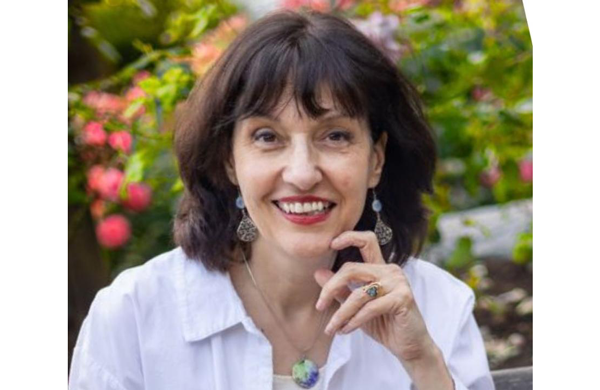
Gissele: Today we’re talking about compassion and grief, and we’re talking to Maria Belanic, who is a bereaved mother, certified grief educator, and a coach who supports grieving parents discovering how love and loss can exist in the same breath.
Gissele: Her eldest sons , Stephan was diagnosed with an incurable blood cancer at 16. After an 11 year struggle he died. Six months later Maria’s dad also died. What followed was limbo. 10 years of trying to fix her grief pretending she was fine when she wasn’t.
Gissele: Today Maria guides other grieving parents to carry love and loss together without pretending that everything is okay. You don’t have to be fine. Hi, Maria. Thank you for being on the show Hi. [00:01:00]
Maria: Hi, Gisele. It’s such an honor to be on your show. Thank you.
Gissele: Thank you.
Gissele: Thank you very much. I was wondering if you could start telling the audience a little bit abouthow you guys found out about the diagnosis and how the journey led to you actually helping other grief parents.
Maria: Okay. The diagnosis was actually something that we hadn’t even expected.
Maria: As a teenager, he was 15, 16. He was having not so much health issues, but things that the doctors go, “Oh, it’s a growth spurt. It’s this and that.” They couldn’t really explain what was happening. And of course, they found out that one of his organs was larger than what they had thought of, so they sent him for tests and things like that.
Maria: And that’s when it came back that he had a blood cancer, and then they found out that it’s really quite rare ’cause it only affects men in their later years. And my son was the youngest that they had ever seen it, [00:02:00] and they had no idea what it entailed and where it was going, ’cause most people most men who had it died within two to three years.
Maria: So to live with it for 11 years was actually something the doctors hadn’t seen
Gissele: And walk us through the process. So he fought for 11 years. That must have been really difficult for him and for you guys as well. And then at the end trying to grieve the loss of your son while at the same time trying to also grieve the loss of your dad.
Gissele: I’m wondering if you could share sort of what the journey was like? W- were there feelings of anger and frustration? And I know that as a parent myself, I love my children so much, as I’m sure you do too. It would have been really difficult for me to trust life, to trust God, source, universe。 and to try to understand such a significant loss as a parent.
Gissele: We always expect them to mourn us later on not expect [00:03:00] to bury your own children. So that’s probably one of the most difficult challenging concepts to get our heads around.
Maria: It is. It’s actually unimaginable to envision that your own child will die before you do, and it’s something that basically breaks the order of what we expect life to be.
Maria: And part of that, I always call the cancer journey became like a roller coaster that was our normal. It became part of our life. So after a while, you just… like the treatments, the tests, the hospital rooms, the crisis after crises became that cycle that you go, “Oh yeah, this is what life is all about” aspect.
Maria: So I didn’t even envision anything about the cancer and kinda went, “This is what it’s going to be,” always. Yet, there’s that underlying of bracing of, is what’s gonna [00:04:00] happen next? And you’re constantly bracing for the crises cons– And sometimes it’s not even the crises. In Stefan case, even a common cold like vomiting could kill him.
Maria: And so part of that was there’s this tension, this stress that is layered on, and it just… I guess you don’t notice it anymore because you’re living in it. And so what you’re really doing is surviving without really a plan except how do we get through this day? How do we get through this crisis? And that’s what the focus is on.
Maria: And when he did die, ’cause it changed to acute myeloid leukemia when he was 27, and when he did die, it was a shock Even though I was told that he was going to die cause he was given 24 hours to live, and he actually lived for three months afterwards. And I always go, “That was probably because I had asked the [00:05:00] doctors not to tell him that he was dying.”
Maria: I… And my sort of estimate was like no one really h- needs to hear those words. We I always go even in Stefan’s life, even with everything that he had gone through and experienced, he had become a registered massage therapist. So he, yeah, in his life, he was still striving. Because in our minds it was like, “Yeah, we’re just going to live with it.”
Maria: I had changed the verbiage around cancer to say condition. So we had become used to this blood condition which it was like, “Oh yeah, this is what life’s g- always going to be. Doesn’t matter how old you are, this is what…” And so that’s what the attitude was. And it kept him moving forward into what do you want to do with your life?
Maria: And so when the doctors had told me that, and I had to watch him [00:06:00] slowly, slowly get weaker and weaker within those three months. And I’m sure even Stefan knew what was happening. And it wasn’t that we were ignoring it. I just feel why do we need to verbalize something? I am a firm believer of until it’s your last breath, why take hope away from anyone?
Gissele: Yeah, I definitely can agree with that. I’ve never shared anything on this podcast before aboutmy family’s experience. But both my cousins the children of one of my aunts died of cancer.
Gissele: and I remember one of the things that my aunt had said to me was that, so he– So it was a boy and a girl my cousin Rosella and my cousin Robert. They both died at different times. Rosella died first, then he did. And and I remember her saying to me that he had gone to his appointment, and then I think he ended up being hospitalized after that appointment.
Gissele: But he was planning on coming home. he had all of these things that he was planning to do in his agenda or his [00:07:00] calendar of things, and he never got a chance to do them. And so it’s … As you were talking about the fact that he was starting to… He was building this life where, he as a registered massage therapist and so on.
Maria: There’s all these sort of interruptions about, I guess life had other plans. I don’t even know. But it really can feel quite shocking to, to imagine that the person is there, and then that the person is not. What helped you manage your grief?It didn’t happen all at once. I always go, “I lost 10 years of my life after Stefan died.” I lived in a blur basically where I was functioning on autopilot. But underneath it all, I was numb, I was empty, I was disorientated. And there’s a point where we can pretend that we’re fine, that we can do all the things that are expected.
Maria: Like we can work, we can function But we’re not fully present [00:08:00] in life, and I know that I did things like I did fundraisers on Stefan’s behalf for his legacy. I, I was working. All of these things were automatic. And yet if someone were to say, “How is your grief?” I really don’t remember anything because everything seems a blur.
Maria: Life became this before and after. Before Stefan died, which in some ways seemed like a fairy tale. Was it a life that I had lived? Right? It just seemed like it belonged to another world, and I was living in this twilight zone. Not knowing what was gonna happen, afraid that this was going to be my forever, living in this pain.
Maria: And of course all I heard from other people was, “When are you getting back to normal? Why are you still stuck?” All of these things I think felt like an assault to me, and that just [00:09:00] caused more of a retreat, and almost reclusive behavior where you don’t want to go out. You just do what you can do, but you don’t wanna be around anyone.
Maria: And it’s also that aspect of thinking, “What’s wrong with me?” And part of that is always go, there’s we have our own gremlins that have these voices that will say, “If you were smarter, you would have found a cure. If you were worthy, Stefan wouldn’t have died.” So all of this kept playing in my mind, keeping me awake, plus what people had said, and you’re kinda like, “What is wrong with me?”
Maria: And the more we feel unworthy and something is wrong with us, A, we try to fix it or we go deeper into ourselves, and that’s why I say the 10 years of my life were a blur Until one day when I was looking in the mirror, really a f- not recognizing who I was, and [00:10:00] looking at basically the two options. This fear that this is my forever.
Maria: We all see that those movies where we see the person who’s grieving and people are going, “Oh, that poor person.” They were fine beforehand, and then when their child died, look at them now aspect scary person. Or the other option was healing, and we use the word healing as if, we have a broken bone and it heals.
Maria: And even with a broken bone, even the healing is never really the same as before the break. And so I viewed healing as almost forgetting. How could I forget my son? How could I move on and almost never… like he was existing beforehand. And those two were a struggle between my heart and my head, and the whisper that came to me was, “What if grief [00:11:00] stayed?”
Maria: And that seemed to offer me a third option, and that’s where I recognized that the grief and the love coexist, where I didn’t have to forget about my son. I didn’t have to forget about all that I had experienced, what he had experienced. It’s like anything that I had seen doesn’t become unseen anymore.
Maria: It still stays in my memory I could allow the love, and not see healing as forgetting but healing my heart with love. And that’s where it came… the pain didn’t stop. I know that there is this aspect of grief where people believe that grief gets smaller with time, and it doesn’t. Grief softens in the sense of the pain softens with time.
Maria: It remains the same size. My pain is the same as when he died. It has softened so that [00:12:00] love is bigger than the pain
Gissele: I wanted to comment on the fact that so often the feedback that we get during times of struggle is not helpful, right? So when are you gonna move on? As if people have a specific timeline of as to when things should happen. And and I think part of that comes from that people don’t know how to manage those difficult feelings.
Gissele: They feel uncomfortable. They don’t know how to hold space for people’s s- grief and suffering, and so they need you to get over it so that they don’t feel uncomfortable, so that they don’t suffer with you. And so I just want to acknowledge that, that discomfort because people aren’t…
Gissele: as a society, we’re not very good with holding suffering, right? And that is so true.
Maria: and thank you for bringing that up, Gisele, because it really is. We are uncomfortable with pain, and no one has ever taught us. Even from childhood we can see that too.
Maria: Whenever we get hurt, it’s like okay,” like stop crying, stop this, right? It’s to the [00:13:00] fact where emotions are not allowed. And my reframing of grief is give yourself permission to exhale. Give yourself permission to allow yourself to grieve. There is no judgment in how we feel, what our emotions are, because they are just emotions.
Maria: And at times, what someone portrays as sadness could be anger in someone else, or just how we express that emotion comes out differently
Gissele: Thank you for that. I also wanted to go back to your comment because I completely understand it. The… as, as a parent, we often judge ourselves, and we think we should have known things, and had we noticed earlier or had we, done thing better or is it my bad genetics or whatever, there is an element of guilt that happens that we couldn’t fix it, that we couldn’t change it, or we didn’t notice.
Gissele: What helped you find kind of forgiveness for [00:14:00] yourself? And i- or are you still working through the process?
Maria: What it was is the compassion. One of the aspects is what I found is that I was silent, and what I mean by silent is these were my thoughts. This is why I call them the gremlins, right? Your– you can’t sleep at night, and the gremlins come and basically your thoughts go over and over.
Maria: You replay everything of, “What could I have done differently?” What should I have done? What…” All these scenarios. And it was actually when I wrote it down on paper, when I was journaling, and I actually wrote my thoughts down And I actually said them out loud too, like I read them out loud afterwards. And one of the things that I’ve come to acknowledge is when we verbalize out loud what some of our thoughts are We actually look at kinda going, “Wow, that’s kinda silly.”
Maria: Like seriously if I [00:15:00] was smarter… like I’m not a scientist . I’m not a- Yeah … doctor. They haven’t found a cure how was I supposed to be? Yeah. It’s not even my field of expertise. And here I’m thinking that, tsk, I’m just supermom. Like of course I coulda done anything. And so that broke that aspect. And the worthiness aspect really is w-…
Maria: something that is so ingrained in us, I think from childhood in a lot of aspects of many people have this aspect that we’re not worthy because we’re conditioned to almost say your worth is tied up to what you do, to what you accomplish instead of your worth is your worth because you exist, not because of anything you have done.
Gissele: Yeah ooh beautiful and powerful. And I also wanna comment on the expectations of mothers right? Y- you know I thought about that [00:16:00] movie Lorenzo’s Oil and how it, like she had to put this oil togeth-. Like how many people would’ve been able to do that right? Like what are the chances and but we have this expectations of mothers that they should know, that they should be able to do these things an you know lift the car and do all of these things.
Gissele: When my kids were little I had trouble breastfeeding. Like I really did and I did it for six months and like just as, as much as I could s- to get it in there but it was really, there wasn’t a lot and and so I had to kinda supplement with formula and I felt so terribly guilty. So guilty because I couldn’t do what other women could do
Gissele: It’s like it was once I actually started to just say, “You know I’m gonna have some kindness for myself. I’m doing the best I can. I’m doing all of the things except…” The only thing I didn’t do was m- med- medication ’cause I didn’t know how it was gonna impact the baby. So I’m like, “I’ve done all the things.
Gissele: Like I can just reflect back that I’m doing the best I can and I can supplement with formula i- if that’s what my kids, my children need” And so we put all these [00:17:00] expectations on mothers to be like these superhero superhumans when we’re just doing the best we can And I think that’s where we start to kinda judge ourselves and then you know then also hear this judgment from people in the world right?
Gissele: So makes it hard to be forgiving towards yourself.
Maria: So true and I totally get where you’re coming from because many years ago same thing. But it was also that expectation that of course you can breastfeed your child. I couldn’t. And like yourself it was like oh no and it came to the, the thought process of, “You know what?
Maria: My child is eating.” That’s all that counts. A- and that’s how I frame, reframed it when I couldn’t breastfeed. It was like, you know what? I can still bond ’cause I’m holding him in my arms and the bottle fed. At least he’s getting fed, otherwise I’d have a child that would be starving.
Gissele: Yeah.
Gissele: Yeah. Yeah, and that’s when you start to really focus on gratitude, grateful for formula, right?
Gissele: My [00:18:00] sister and I were formula fed, right? Because my mom had to go back to work. There was no sort of maternity leave in Peru but the judgment really is, it makes it really difficult.
Gissele: I wanted to ask about anger and your relationship with anger during that time. ‘Cause not only did you lose your son, you also had to manage the loss of your father at the same time. Could you talk a little bit about that, like kind of your relationship with anger, and has it changed? Were you angry at like people or did you just kinda bypass anger and go straight to sadness and grief?
Gissele: And-
Maria: And thank you for asking that ’cause there is. There are so many different types of emotions. there were aspects of the, the journey where I, I remember in Stefan’s last couple of days I was ang- actually angry with one of the nurses. And that was only because I’d asked her to give Stefan extra medication ’cause I could see him in pain.
Maria: And she was kinda like, “Oh, no,” “He doesn’t…” And I’m like no, he’s in pain.” I don’t really care. I want him [00:19:00] o- I don’t want him in pain. And even one of the doctors that was it’s already happened,” those kind of things because it was in the moment of what their actions led to.
Maria: For me watching Stefan I was “I don’t care if he doesn’t talk to me. I don’t want him in pain.” And that was one of the things that some of the other doctors had said, is that some of the parents wanted their children to be cohesive so that way they could talk, and they didn’t see the pain they were in.
Maria: My aspect was I don’t care if he’s knocked out as long as he’s, I don’t, he’s not in pain And even afterwards, it wasn’t as if I was angry with my faith for h- for Stefan dying. It was more of a, we didn’t discuss this, and when I die, I definitely wanna have a conversation ’cause that wasn’t the plan. I’m more of a curiosity.
Maria: I must say I probably was angry with my spouse in the sense of I didn’t [00:20:00] feel that he had stepped up to where his son needed him. So that again was something that had been ongoing for ages. And so grief didn’t really show up as anger. It showed up as this missing. Not even this… there was this sadness because th- of the missing missing my son’s physical being here.
Maria: That was the aspect that I equated with grief in the sense of I don’t get to see his smile. I don’t get to see him, what his future’s going to look like. Yeah. All of that. Even as today he would be 42 years old. And so that is something that you’re like, “What would life have been like?”
Maria: That aspect. It was more this aspect of wanting him still here [00:21:00] and that aspect of … I guess it still came back to worthiness and in faith. If I had more faith, would he have been alive? And I th-… And it’s not really about faith, it’s more that perception of when you belong to a community sometimes there’s this judgment of did you pray enough?
Maria: Do you really have enough faith? Do you this? And my attitude has become It’s not so much about our faith, it’s good things happen to bad people, to good people. Things in life happen, and it has no bearing on are you a good or a bad person. Things just happen. And when we can accept it that way, it makes it, in my belief, it makes it a little bit easier because I look at the whole world and sometimes I’m going, “I don’t understand why all these things are happening.”
Maria: Yeah. There’s no rhyme or reason. And do you blame someone? [00:22:00] Yes, if it’s their actions, then totally. I would get angry on that. I wasn’t angry with the medical aspect unless I saw that they had made an error. And so yeah, that was about the only thing.
Gissele: Yeah. And just talking about grief, it’s so funny how it kind of shakes…
Gissele: a loss, and there’s, there could be any sort of loss. We’re talking about like a death of someone, but there are so many different losses in life, right? There’s so many things sometimes to grieve. You can grieve, like a, a relationship. You can grieve a career loss. You can grieve many things.
Gissele: And so loss is a part of life because everything is so temporary. But because of the way that we have structured our society, we want everything to be certain. We want a certain level of things. And w- we wa- feel we can control all of these things, but that’s once again a reminder that all of these are temporal and then, how do you address and deal with that loss, right?
Maria: So [00:23:00] true. And in regards to my father had actually lived with Parkinson’s for 25 years. So he had his own journey. And he was … he was 83 when he passed away. Part of that aspect I believe, was when his…. And Stefan was the first grandchild. I also believe that he died of a broken heart.
Maria: It was almost like, “Here’s my grandson who died. Why am I hanging onto life?”
Gissele: Yeah. Yeah. That makes sense. In terms of the, The grief part of it, the missing people. We create all of these habits around people. I notice this when… and it’s not the same thing. I noticed it when I lost my dog, and I loved my dog so much.
Maria: And I noticed the things that when I would get home, I’d be like, “Oh I gotta take Baron out,” or, “I gotta do this.” And so we build all of these habits and expectations, and it feels like something is missing when they’re not there. It feels like there’s a hole that, you don’t wanna fill with something [00:24:00] else, but it just feels like, oh, we’ve created all this life around including this person, and then what will life look like in the future when they’re not there, And that’s part of human nature, we don’t envision not having whether it’s a person or pet in our life
Maria: There’s the assumption that of course they’re gonna live forever . Yeah. And even I always go, “Even though we know that there’s life and there’s death,” we have this aspect that we ignore death until it happens and then we are very frightened of it And I always go, “I’m okay with my own death.”
Maria: It’s… And at times when we’re okay when death is a procession of life, of someone naturally passing away because of old age We may be sad. We’re going to miss them Of course we’re gonna miss their conversation Their, th-… Any essence of them [00:25:00] That is natural When it’s out of order or if something happens that it suddenly gets unexpected it changes an aspect So we’re jolted almost And that jolt is a shock to our system And at times I believe some of us want to find answers and we go down this rabbit hole of why?
Maria: And we know that we start, when we start with why there is never really an answer ‘Cause I play this with my I guess she’s grand niece She’ll she’ll say something Then I’ll go, “Why?” Then she’ll say something and I’ll go, “Why” And she’ll repeat the same thing because it’s whys can ever end
Gissele: Yeah
Maria: And it’s rabbit hole that-
Maria: it’s not that we didn’t know It’s we wanted different outcome One that would make us happy
Gissele: y- you talking about like the expectations that people have about their lives so we expect that, w-… If you’re 99 you’re like, “Okay she lived a [00:26:00] long life”, right But somebody young it doesn’t make sense And it actually goes against our desire to control things, right?
Gissele: Like we’re okay if a person dies at 99 because they’re old . We’re not okay with children dying. Like we are okay if if there’s a specific order again because that makes life predictable but when life becomes unpredictable it becomes very frightening for people And so part of life I think is dealing with the uncertainty- …that we really have no control over it as much as we’d like to believe that oh I know what the weather’s gonna be, I know you know like what things cost in like all of those illusions of control The truth of the matter is we’re along for the ride.
Gissele: And it can make us feel really scared and feel very vulnerable
Maria: It does and part of that right now I live in a part of the country that has a state of emergency because of wildfires. Where I am its, it’s okay ’cause I live in the one of the major [00:27:00] cities There are others that I always call especially when we’re dealing with natural disasters where you get that call that you have to evacuate That shocks the system.
Maria: Yeah. And it puts, in some ways puts into perspective what’s important But it also puts in this perspective of what is loss Because there’s so many different layers to loss And as you said every day we deal with loss except we don’t see it as loss
Gissele: Yeah. I’d like to touch on ’cause it… I think this is really important and I’m curious as to what your thoughts are.
Gissele: How do you deal with those shocks to the system? Because the body internalized the shocks to the system, and you can consciously rationalize the shocks to the system, right? But there’s still that experience. What helped you get past the shock to the system to the point potentially that maybe you’re not hypervigilant or constantly on guard about what the next thing is going to be?
Maria: Yeah. Thank you for [00:28:00] asking because it really is important. And most of the time we don’t realize that the body absorbs the shock, and it stays in and it comes out in different ways because we haven’t addressed it. And what I’ve have acknowledged and learned is the body needs movement. It needs as I call it, the exhale.
Maria: Because a lot of times when we’re in shock, we’re going, like almost like we’re holding our breath. We’re not literally holding it, but we are in some ways going with these shallow breaths, like constantly. And the exhale means to actually deeply breathe out and allow the body to release this tension that is holding in.
Maria: So whether that’s movement walking in nature, walking, jogging, hiking, dance, anything that has movement, and also with our breathing in the groundedness [00:29:00] of connecting back to our body. It’s not so much meditation as in some ways visualizing what our body needs, seeing the light that’s within us, and allowing that light to grow and expand, but also in releasing what our body doesn’t need.
Maria: If that makes sense.
Gissele: Per- yeah. Absolutely. And that has been my experience as well that usually, like if I’m in a state of like stress, like y- you have both a body response, a tightening, and a mind response where your mind, the gremlins happen and, – … you don’t wanna feed the gremlins, that’s why they turn, they turn worse.
Gissele: But I find that if I can move my body, that sort of allows my body to relax enough for me to control my mind. I can’t do both ’cause if you got a tight body and you’ve gotta un- like a gremlin mind, it’s hard to do both, right? You’re like your body’s tight and then you’re like, ” I gotta try to f-…
Gissele: help myself in my thoughts.” Whereas if you at least get one out of the [00:30:00] equation and allow yours- your body to say it’s safe to just go for a walk. It’s safe to just breathe,” and the breath is so important. Then you can start to address those thoughts that you were talking about, the gremlins.
Gissele: Because the gremlins really, like they can seem very powerful until you train yourself to… And I use the word train on purpose because for me, I’ve had to kinda train my mind. To choose a more positive outlook.
Gissele: Yeah.
Maria: And that is so important. And one of the, the aspects is especially when we’re in the situation, it looks like that we have no choice.
Maria: Especially when we’re deep in it. It looks like, I totally get that becau- I’m feeling it well. In some aspects, I know personally for myself, I was actually looking for someone or something to save me. We’re looking for this external something to come and save me from my pain.
Gissele: Yeah.
Maria: No one’s coming, sad to say [00:31:00] And it has to do with, as you say, it becomes a choice but that choice only comes when we’re willing to sit in the stillness And to hear our own whispers because we each have our own whispers are we listening? And That comes from either being grounded Being stillness and that stillness could even come from As we say within movement But even movement with voice because there is like a grief Yoga which actually teaches that when we do the movements and the breathing We actually make a sound so that way if you know that it’s released from the body I spoke about it. And it’s in that stillness that we tap into our intuition I call them the inner whispers that are going to Show you the choices that you have and then you can choose [00:32:00] and part of that I believe in choosing Is not judging one choice over the other It’s whatever choice works for you And if that means you’re going to choose sitting in the pain Then so be it If that means that you are going to say How can I soften my pain and That’s okay too So one of the things I always believe is that When we have choices Don’t judge your choices
Gissele: That’s very beautifully put What would you say right now To someone who might Be going through Grief Going Through The Thick Of It In doesn’t really feel that they Have many Choices
Maria: I Would definitely Say if You Can Find Support Of Someone Who Is Willing To Witness And that is Really sometimes The support That we need Grievers Do Not Need To Be Fixed Because There Is Nothing To Fix Because We Are Not Broken We May Feel That We Are broken i Know I did In Those Ten Years My Blur I Felt That [00:33:00] Something Had Broken That I Needed To Be fixed when we recognize that there is nothing to fix and what we need is someone to listen to us and Listening is Actually witnessing Because it’s not About Feedback it’s not About Advice It’s the allowing or give- holding that space, that safe container in, so to speak, like a safe space where a person feels safe in saying what their gremlins are telling them.
Maria: Because a lot of times what we’re really looking for is: Where can we share what our inner thoughts are? ‘Cause our inner thoughts are what is keeping us frightened and scared. And as you said, the longer that we feed our gremlins, the bigger they become. And when we can share them, we can make them small and where they belong.
Gissele: I want the audience to understand how important what you just said is. It… and it’s the power of [00:34:00] presence and just being able to hold space for people’s discomfort and suffering, right? Without the need to fix, without the need to change or repel. But I go back to what we were talking about earlier is we have not been taught to sit with our uncomfortable feelings, with our own suffering, let alone be able to hold space for the suffering of others.
Gissele: That’s why we need them to fix themselves and to get over things so that we can be okay. And I notice that a trend with my parents, right? As a young kid because th- they … Their parents didn’t hold space for them and their difficult feelings, and so they couldn’t hold space for my difficult feelings, and they needed me as a kid to fix myself, to hold space to ground myself and re- regulate myself, which a kid cannot do, right?
Gissele: And so we have all these expectations of people around suffering. We don’t come together like we used to in the village to grieve together to mourn together, to just hold [00:35:00] space. I never seen my dad cry except at his mother’s funeral. And that’s unfortunate, i- from my perspective, because we are born with a full breadth of emotions, right?
Gissele: We have tear ducts to allow us to cry. We can laugh. We can feel sad. We can feel angry. We have all of this depth. But if you weren’t allowing yourselves as men and women to feel the full breadth of emotions, you really can’t then hold space for other people from my perspective. What do you think?
Maria: I totally agree with a caveat in the sense of we’re all going to have our emotions in whatever our personality is, like our characteristics So some of us may be a little bit more stoic and don’t have this expressive sort of outlook, and neither is right or wrong.
Maria: It’s how we showcase our emotion. Sometimes it’s learnt, sometimes it’s just [00:36:00] something that is that part of the person’s personality And there is that aspect of when we’re grieving, that we want someone to see the grief. We want someone else to share in the pain, and it is so right that we need community, and that is lacking.
Maria: And that is the reason that I became a certified grief educator and also a coach, is because there isn’t that many people who can sit with someone else in their pain and go, “I see you.” ‘Cause really, that’s what a griever wants. A griever wants someone to say, “I see you. What you’ve experienced is so terrible, so awful.”
Maria: It’s not about fixing, ’cause I cannot fix anybody else’s pain. We can’t change that. What we can do is walk along beside them, and this is one of the reasons why I say we actually walk with grief, because grief becomes our companion, and we get to [00:37:00] choose what the relationship is.
Gissele: thank you for that answer.
Gissele: I, I really appreciated that perspective. And I also love that you are also not making grief wrong, right? You’re not making it something that needs to go away. The grief can coexist with the love, because the love is always there. And so we don’t have to make that go away, but we also don’t have to drown in it.
Gissele: I think the issue is when we drown in the grief, that when we can’t get past w- a point that we can’t function. And so what you’re inviting the audience to think about is how can we befriend grief, not in a way that drowns us, but as a way of, acknowledging the experience and also adding love to it,
Maria: and that’s the, the aspect that I believe is at… like my son Stefan died 17 years ago. There are days when getting out of bed is still hard, because it’s almost like yesterday that he passed away. There are days where I go out [00:38:00] and I’m enjoying it. I don’t even feel my grief It’s always there, but it’s softened.
Maria: And that is what I want to help people understand is the sense as you said, grief isn’t gonna go away. It’s how do we carry it with us as we live life fully? ‘ Cause one of the aspects, and I lived it in my blur of 10 years of being a- so afraid of being in the pain because those are the only two options that we’ve ever been told of.
Maria: Either you’re going to sit in the pain forever or you’re going to heal and you’ll forget and everything will be like this bed of roses, so to speak. We hear everyone going you have to get through it.” There is no getting through it. It’s living with. And when we change the verbiage, when we say we’re living with, it allows someone who has experienced loss [00:39:00] to keep those memories, but allow not the pain to hurt them as much anymore, and also to give themselves compassion on the days where it comes up and it is painful.
Maria: And you can say, “Okay, you know what? I’m gonna honor my grief today. I’m gonna honor my grief for five minutes. I’m gonna honor my grief for an hour,” and you designate that time for And so that allows us to live life forward
Gissele: And I think it also allows you to not feel pressure, right? There’s…
Gissele: there, there’s this pressure that feels like, when are you gonna get over this already? And you put that pressure on yourself if you hear that from other people, it’s oh I should be over this by now. And it’s love grief none of that … It has its own timeline and so th- there’s a sense of relief that comes from oh I don’t have to rush this.
Gissele: I can experience my grief but als- can also allow it not to drown me or to, to completely just make me nonfunctional. I wanted to ask about since you mentioned there are [00:40:00] days when you experience joy did you ever experience guilt in y- you know living life to its fullest ’cause I think that would probably be something that I would struggle with the most is tha- is that allowing yourself to be enjoy, to be allowed li- to live a life to its fullest.
Maria: Oh many times especially beforehand. Because one of the, the aspects is that as soon as we laugh or enjoy ourselves the comments are, “oh you’re so much better now. You’re over it.” And then all of sudden you feel guilty like.. Yeah …. Oh what have I done? Have I…? And so you feel guilt that you can actually laugh or even feel joy because it feels that it is disrespecting your person.
Maria: And again it’s because people aren’t aware of what’s happening and we are, we’re grief illiterate. One of the aspects is again joy and sadness can coexist and it really is about [00:41:00] acknowledging and giving permission to say yeah I can feel different emotions at the same time. I can be sad one minute and the next minute I could be laughing or vice versa.
Maria: And that is I going to say almost like a disrespect when we’re saying to other people that, “Oh, you’re laughing now so you must be better. Your grief is over.” No, it’s in that moment they’re present in that moment and have found some joy allow people to feel all their emotions at any given time
Gissele: Yeah.
Gissele: And I think peoples who give you that response of, “You must feel better,” it’s for them right? It’s- … oh good i no longer have to be worried about what sort of emotion you’re going to feel right and so i the other part of it too as I was thinking if I had passed away and I do believe in this isn’t just the end I would want my loved ones to [00:42:00] live in the most joy possible not to necessarily wanna bury themselves with me but To Live and experience and love life and live it to its fullest until it’s their time to cross over and so I think about that in terms of Oh you know If that was me I would want them to do that So I’m sure they must want this for me as well
Maria: That I don’t really touch because a lot of times when people go, “oh they don’t want you to be in this” and my response is You don’t know what they want.Very
Gissele: true Very True
Maria: All right Part of that is again it’s the permission to Give The Griever The freedom to choose What They’re Going To Be When We Are Imposing Our Own Thoughts your person wouldn’t want you to be this Even if That Were True when we Say it out loud to someone Who’s In Pain sounds Like A Slap yeah
Gissele: I can see that Yeah I Think it Would b- it Was more like Me I would say that to myself
Maria: Yeah
Gissele: Because I would be like thats What I would Want But You Raise [00:43:00] a Really Important Point so im gonna mention it which Is We often give Other People what we think we would want For Ourselves
Maria: Yeah And Its okay to want it for yourself And even to say it to YourselfIf that is truly what you BelieveBecause a Lot Of Times we say things to ourselvesAnd we put More Guilt On Us
Gissele: Yeah Fair
Maria: fair So AgainIt howIsit Being saidis itPartofyour gremlinthatissayingwellyou
Maria: shouldrightorisitcomingfromYour whisper
Gissele: Love A couple of last questions. I’m asking everyone in this season what their definition of self-love is.
Maria: So I’ll start with you self-love means… to me, is really accepting of who I am right now, knowing that I am worthy because of who I am just for my own existence.
Maria: But it also, self-love is understanding about my own boundaries. What boundaries do I have that protect me and my space?
Gissele: Beautiful. Thank you for that. Last question, where can people find you? Where can they work with you? What do you wanna [00:44:00] share with the audience?
Maria: So definitely anyone can find me at mariabalanek.com and/or at hope@mariabalanek.com.
Maria: That’s my email. And definitely that is a space that I provide, is for people who are grieving, who want support, and who want someone who is going to listen without fixing
Gissele: Thank you so much, Maria, for this amazing episode and for, for your perspective on how to make the grieving process more compassionate. thank you to everyone who tuned into another episode of Love and Compassion podcast with Gissele. If you wanna support the podcast, you can go to buymeacoffee.com/ loveandcompassion .
Gissele: Thank you so much.
Maria: And thank you so much, Gissele. I love what you’re doing.
Gissele: you.